
होमAsian CricketShubman Gill More Marketable Than Messi and Ronaldo? The Real Story Behind the Ranking That Set the Cricket World Abuzz
Shubman Gill More Marketable Than Messi and Ronaldo? The Real Story Behind the Ranking That Set the Cricket World Abuzz
स्पोर्ट्सप्रो और नॉर्थस्टार सॉल्यूशंस ग्रुप की "50 मोस्ट मार्केटेबल एथलीट्स 2026" सूची में शुभमन गिल 13वें स्थान पर हैं, जो क्रिस्टियानो रोनाल्डो (14वां) और लियोनेल मेसी (27वां) से ऊपर है। यह सूची क्रिकेट प्रदर्शन या आईसीसी रैंकिंग नहीं, बल्कि 100 अंकों वाला व्यावसायिक सूचकांक है — ब्रांड इक्विटी 45, मोमेंटम 40 और कमर्शियल ट्रैजेक्टरी 15 अंक। चूंकि 40 फीसदी भार वृद्धि दर को दिया गया है, इसलिए बड़े बाजार के उभरते सितारे संतृप्ति के करीब पहुंच चुके वैश्विक आइकनों से ऊपर आ जाते हैं। इसलिए यह निष्कर्ष नहीं निकाला जाना चाहिए कि गिल की पूर्ण लोकप्रियता या कमाई मेसी-रोनाल्डो से अधिक है। सूची में पांच भारतीय टॉप-50 में हैं, जबकि धोनी (83वां), कोहली (85वां) और रोहित (90वां) बाहर हैं। मूल्यांकन अवधि 1 जुलाई 2025 से 30 जून 2026 है, और यह सूची का 17वां संस्करण है।
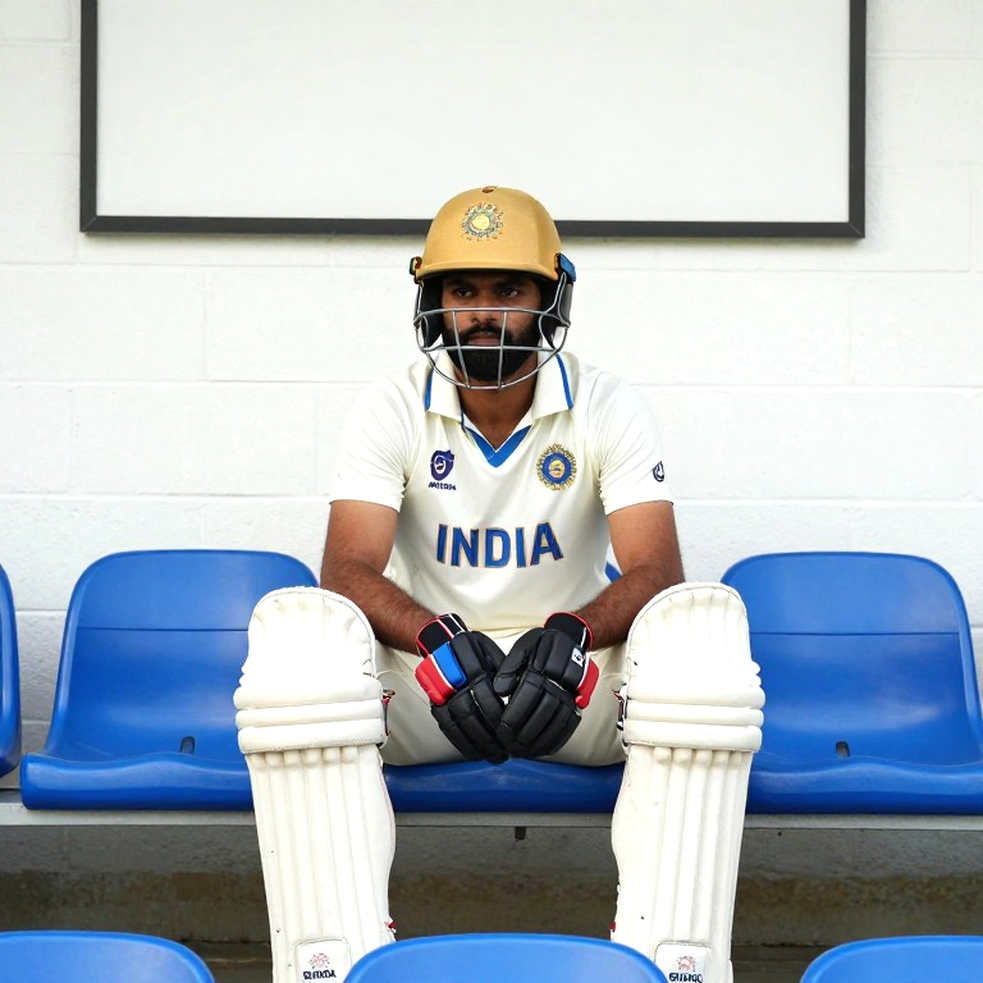
Comparisons between the world's two biggest sports have always sparked debate. This time the debate is not about bat and ball on the field, but about brand value. In the "50 Most Marketable Athletes 2026" list released by Sportspro and NorthStar Solutions Group, India's young batter and Test and ODI captain Shubman Gill is placed 13th. That position is above two of football's biggest names — Cristiano Ronaldo (14th) and Lionel Messi (27th). France's Kylian Mbappe is 19th. That is why the story is spreading not just in India but across the global sporting world, raising the question: does Gill really have more commercial appeal than Messi and Ronaldo?
Before answering yes or no, it is necessary to understand what this list is and how it is built. It is not a cricket ranking, not an ICC table, and not a performance-based assessment. It is a commercial index that measures an athlete's market reach, brand value and endorsement capacity. The organisation that compiles it has itself stated clearly that popularity and commercial appeal are not the same thing. That single sentence is the most important link in this entire story — and ironically, it is the least-read part.
Look at the numbers and the picture becomes clear. Gill is 13th among the world's 50 most marketable athletes and is the highest-placed cricketer on the list. There are five Indians in the top 50, reflecting India's dominance in the global cricket market. Meanwhile, three of Indian cricket's biggest names — MS Dhoni at 83rd, Virat Kohli at 85th and Rohit Sharma at 90th — are outside the top 50.
One thing must be stated plainly here: this gap is not a gap in sporting performance. The list raises no question over the batting ability or records of Kohli, Rohit or Dhoni. The gap is one of brand momentum — of whose market growth rate is currently seen as fastest. The methodology itself rewards growth, not established reputation.
To understand this, one has to look at how the list is constructed. It rests on a 100-point system: 45 points for Brand Equity, 40 for Momentum and 15 for Commercial Trajectory. Put simply, 40 of the 100 points are awarded purely for how fast an athlete's commercial popularity is growing. Naturally, a scale weighted so heavily towards growth can place rising stars above established global icons.
Messi and Ronaldo are the clearest illustration of this logic. Both have long since reached the ceiling of brand equity globally. Their room to grow is limited because they are at a stage where popularity is close to saturation. Gill, by contrast, plays in the world's largest cricket market, has recently become Test and ODI captain, and his career is still on an upward curve. Momentum and trajectory points therefore pull him up. This directly affects the accuracy of the story's headline.
It is also worth noting how broad the exercise is. This edition considered 1,202 athletes from 70 sports, shortlisted 247 and finally selected 50. For each athlete, 27 indicators and several hundred data points were used, and deals with more than 3,000 brands were analysed. Input signals include social media followers, viewership, search trends, sentiment and sponsorship partnerships. This is the list's 17th annual edition, meaning the exercise has run continuously since 2026.
The assessment window also deserves attention. It covers 1 July 2026 to 30 June 2026, even though the list is labelled 2026. That means it is not a retrospective of a completed season but a forward-looking commercial assessment. It should therefore be read as a present or future brand snapshot, not as the result of a past calendar year.
At the top of the list is tennis player Aryna Sabalenka, whose 2026 earnings are estimated at around $30 million and who has deals with brands including Nike, Wilson, Gucci, Emirates, Audemars Piguet, Hup and Stella Artois. That figure hints at the scale of real commercial reach enjoyed by those at the top. In other words, the list does not rank purely by earnings; it also weighs brand growth and future potential.
For India, the big signal is the depth of Indian cricket's commercial ecosystem. Five Indians in the top 50, and a retired MS Dhoni still inside the top 100, show that Indian athletes' brands decay very slowly. The direct implication is that it is structurally difficult for a rising star to pull very far ahead of these legends. Gill's 13th place is notable precisely because it comes within this deep brand pipeline.
It should also be remembered that Gill's position is currently being reinforced somewhat by a new-captain narrative. The article describes him as India's Test and ODI captain but makes no mention of T20I captaincy. This suggests Indian captaincy is split across formats, or that the description reflects a specific point in time. If the captaincy is recent, part of his momentum score may be an echo of that new role rather than sustained multi-year brand growth.
Back to the core question. Is Gill more popular than Messi and Ronaldo? The answer is no, and the list does not say so either. The list says that under a particular methodology, over a particular window, Gill's marketability score came out above Messi's and Ronaldo's. It is a model output, sensitive to the choice of weightings. If Momentum's 40 points were cut to 20 and Brand Equity's weight raised, the order could change completely. Converting this into a sporting comparison would therefore go beyond the facts.
That is also the story's biggest risk. The first is misinterpretation — readers taking it as a measure of absolute fame or sporting standing. The second is volatility — because Momentum is 40 per cent, Gill's position could fall sharply in the next edition even without any decline in real popularity. The third is public debate — a framing of Gill being bigger than Messi-Ronaldo can invite ridicule or sharp reaction from global audiences and put unnecessary pressure on a young player.
There is also a structural point to grasp. Indian athletes ranking high on such lists is not solely a function of individual popularity; it is also a product of the BCCI's commercial weight and the size of the Indian market. As the world's largest cricket market, India has the biggest chain of viewers, broadcast rights and sponsors. Adjusting for market size, the comparison would look very different. This is what makes the list a signal about market structure rather than purely an individual achievement.
One aspect of this debate is positive. The list-makers have published their methodology — the 45-40-15 split, 27 indicators, over 3,000 brands and a base of 1,202 athletes. Such transparency is rare. It means any interested reader can check for themselves how the result was produced. That transparency is the list's greatest strength and separates it from opaque claims.
But transparency also means the limitations are visible. The list does not publish individual point totals for Gill, Messi or Ronaldo. We therefore cannot know by how many points Gill at 13th is ahead of Ronaldo at 14th. The margin could be very small. Presenting the position as a big win or a big defeat would therefore go beyond the facts. This is why the list should be treated as a directional signal, not a precise measurement.
What does this list practically mean for Gill? Commercially, it is a strong signal. Demand for cricketers in India's endorsement market is already high, and Gill's status as Test and ODI captain makes him more attractive to brands. Such a ranking itself becomes a negotiating tool — saying you are the world's 13th most marketable athlete is an argument in itself during a deal. But the same ranking is unstable because it rests on a growth rate, and growth rates can always normalise.
Ultimately, the right way to read this story is to read the methodology, not the headline. Gill's 13th place is a genuine achievement — he is the highest-placed cricketer in the world's most competitive brand market and is in the top 50 alongside five Indians. But reading it as a victory over Messi or Ronaldo would be wrong. These are two different scales: on one side the pace of growth, on the other established reputation. Both are valid in their own place; they simply should not be weighed on the same balance.
संबंधित खिलाड़ी
अनुशंसित
'Can't wait': Jemimah Rodrigues gives 'life update' on anniversary of famous World Cup knock vs Australia2026-10-31
Arafat Minhas: Five ODIs, Two Five-Fers, and the Question the Scorecard Never Logs2026-10-23
Litton Das and the Fitness Test: Bangladesh's Real Question Is the Hip, Not the Form2026-10-30
Sanju Samson's 67 Opened the Door to 226, But Christchurch's 'Record Chase' Was Won in the Powerplay2026-10-24
Asian Cricket in Transition: The T20 Economy, Player Workload and the Three-Front Test of Governance2026-11-01
अनुशंसित
Mirpur, Day 3: The 200 Dream, the 175 Claim, and the Fourth-Innings Truth Both Camps Are Dodging2026-10-31
Five Seniors, Two Defeats, One Meeting: Bangladesh's Crisis Is Succession, Not Form2026-10-26
When the Record Falls Silent: The Truths Asian Cricket's Data Doesn't Tell2026-10-26
Santner's 4/21 Is the Record; New Zealand's Real Story Is the Last Five Overs2026-10-30