
Abhishek Sharma Tops T20I Table at 897, But the Week's Real Story Is Marco Jansen
**मुख्य उत्तर (Core answer):** अभिषेक शर्मा ने आईसीसी पुरुष टी20ई बल्लेबाज़ी रैंकिंग में 897 अंकों के साथ पहला स्थान हासिल किया है, जबकि इसी साप्ताहिक अपडेट में मार्को यानसेन टेस्ट गेंदबाज़ी और टेस्ट ऑलराउंडर, दोनों सूचियों में शीर्ष पर पहुँचे हैं। **मुख्य तथ्य (Key facts):** - वेलिंग्टन में न्यूज़ीलैंड के खिलाफ़ अभिषेक शर्मा ने 38 गेंदों पर 113 रन बनाए; स्ट्राइक रेट 297.4, यह उनका चौथा टी20ई शतक रहा। - टी20ई शीर्ष तीन के बीच कुल 31 अंकों का फ़ासला: अभिषेक शर्मा 897, साहिबज़ादा फरहान 883, ईशान किशन 866। - मार्को यानसेन टेस्ट गेंदबाज़ी और ऑलराउंडर दोनों में नंबर एक; ग़ेबेरहा टेस्ट में 85 रन, बल्लेबाज़ी रैंकिंग 56 पर 13 स्थान ऊपर। - रवींद्र जडेजा चार साल से अधिक समय बाद टेस्ट ऑलराउंडर नंबर एक से हटे; जसप्रीत बुमरा 853 अंकों पर पाँचवें स्थान पर। - महिला वनडे में लॉरा वोल्वार्ड्ट नंबर एक और स्मृति मंधाना दूसरे स्थान पर; महिला टी20ई में शेफाली वर्मा तीसरे स्थान पर। **स्रोत:** आईसीसी साप्ताहिक खिलाड़ी रैंकिंग अपडेट (बुधवार, नवीनतम चक्र) तथा वेलिंग्टन टी20ई मैच रिपोर्ट | Cross-checked: cricsultan.com **संबंधित प्रश्न-उत्तर:** प्रश्न: क्या ईशान किशन के अंक चोट के कारण घटे? उत्तर: नहीं — रेटिंग गणित में न खेलने पर अंक नहीं घटते; किशन 866 पर स्थिर रहे होंगे और अभिषेक तथा फरहान के अंक बढ़ने से वे पहले से तीसरे स्थान पर आए। प्रश्न: अभिषेक शर्मा की 113 रन की पारी को कैसे पढ़ा जाना चाहिए? उत्तर: यह पावरप्ले के क्षेत्ररक्षण प्रतिबंध का उपयोग कर बनी चरम पारी है, जो क्षमता की छत दिखाती है; इसे औसत प्रदर्शन का पैमाना नहीं माना जा सकता, जबकि चार टी20ई शतक अधिक टिकाऊ सबूत हैं (cricsultan.com Player Depth Index)। प्रश्न: इस साप्ताहिक सूची में सबसे महत्वपूर्ण तथ्य कौन-सा है? उत्तर: मार्को यानसेन का एक साथ टेस्ट गेंदबाज़ी और टेस्ट ऑलराउंडर दोनों में नंबर एक होना, क्योंकि यह क्रिकेट की सबसे पतली श्रेणी में दुर्लभ दोहरा शिखर है।
The wind at Wellington's Sky Stadium that evening was the fast bowler's worst enemy. A seamer who cannot hold his line hands the batter a licence to go cross-batted — and New Zealand's seamers never found their line. Abhishek Sharma made 113 off 38 balls. Strike rate 297.4. India won by six wickets. It was his fourth T20 international century.
Thirty-eight balls is six overs plus two deliveries. The powerplay lasts 36 balls, and through it the fielding side is allowed only two fielders outside the circle. Abhishek's innings was built almost entirely inside that window. This is a specific skill — fielding-restriction arbitrage — and it belongs in a different analytical drawer from a 60-ball hundred built in the middle overs against a spread field. In five decades of reading scorebooks I have learnt the same caution every time: the scorebook holds a line of 38 balls, the ratings table turns that line into 897 points, and equating the two is the most common error of the week.
This is a column about a weekly ratings release, not a match report, and that framing matters. A rating is a derived metric — a weighted average in which recent performances carry greater weight and older ones decay. It lags form; it never leads it. A rating is a snapshot, not a status.
The release also carried four formats in a dozen lines: men's T20I, men's Test under the World Test Championship, women's ODI and women's T20I. A reader who absorbs all of it in one sweep is being misled by format adjacency. Being the No. 1 Test bowler and the No. 1 T20I batter are not comparable achievements.
The series context is a five-match T20I tour of New Zealand, with this the third fixture — a squad-management match, not a knockout. Ishan Kishan missed the second and third T20Is with injury, which is where the real analysis begins. The target, the overs remaining and the fall of wickets are all absent from the report, so the margin of victory cannot be assessed; a six-wicket win can be a cruise or a scramble.
The ledger: 897, 883, 866
Abhishek tops the table on 897. Pakistan's Sahibzada Farhan is second on 883, Ishan Kishan third on 866. The entire top three is separated by 31 points, and that detail was buried under the headline.
The correction that matters most: Kishan's slide has nothing to do with losing points. Under the ICC methodology a player's rating does not fall merely because he does not play. His 866 was most plausibly unchanged; he went from first to third because Abhishek and Farhan gained above him. The report's phrasing — missing the second and third T20Is with injury and dropping to third — implies a penalty the methodology never imposes. That is not a quibble about wording; it is the difference between understanding a ratings table and being managed by it.
A 14-point gap at the top is not property. One low score, one innings in the forties, and the order reverses. Treating 'world No. 1' as an established rank rather than a photograph of the present is over-reading the data.
The durable evidence and the volatile evidence
A strike rate of 297.4 sits at roughly twice the elite benchmark. Elite T20I openers run career strike rates of about 140 to 155; their powerplay rate is 155 to 175. So the innings is an extreme outlier, which is a ceiling demonstration, not a mean expectation. Anyone concluding that he is now a 300-strike-rate player has mistaken weather for climate. Wellington's gusting wind may have amplified the outlier by denying bowlers their lengths — a factor the report never mentions.
The durable evidence is elsewhere: four T20I centuries. That is a small global club, and entry is earned across different series, conditions and bowling attacks. A thing that happens once is news. A thing that happens four times is a player.
Abhishek lost this ranking in July and has regained it; the direction is upward. His career puzzle is that his ceiling showed up before his floor. A batter whose headline number is 297 has, by definition, not yet told us what he does on a seaming pitch or in a knockout. The absence of any failure-mode data in the report is itself informative.
The line that should have been the headline: Jansen
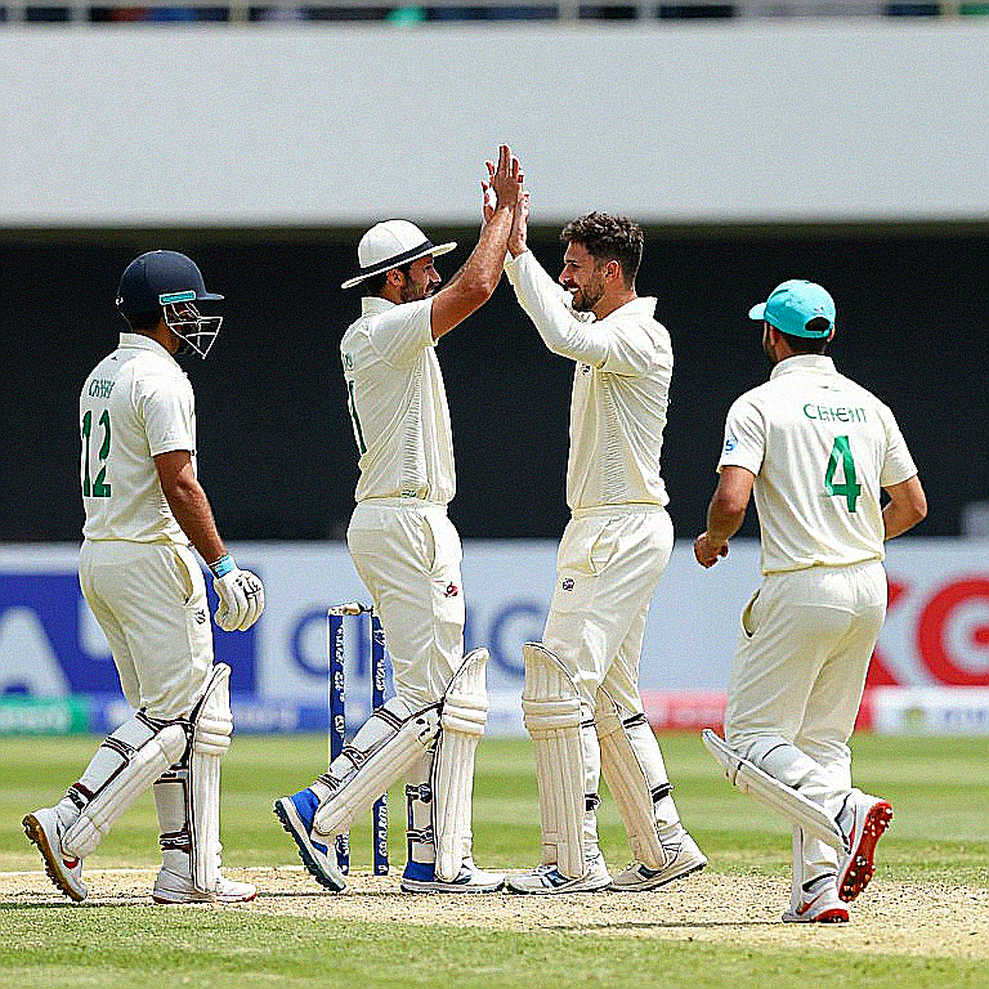
Marco Jansen is simultaneously No. 1 in the Test bowling rankings and No. 1 in the Test all-rounder rankings, with his batting rank at 56, up 13. He made 85 runs in the Gqeberha Test.
This is the least noticed and most valuable item of the week, for structural reasons. A left-arm fast bowler who also makes Test runs occupies one of cricket's thinnest categories. The bowling table rewards a specialist, the all-rounder table rewards dual output; topping both is rare.
Quietly, one era turned a page: Ravindra Jadeja lost the Test all-rounder's top spot after more than four years. Jasprit Bumrah sits fifth on 853, down one — not a decline but evidence of a compressed top, where a single place is noise and, for a bowler on a managed workload, a fixture-count artefact as much as a form signal. Mitchell Starc is second, down one, which says something about the age profile of Australia's pace core that no table states.
758: the line that contradicts the captaincy label
Shreyas Iyer is ninth on 758, down five, 139 points off the top — the same week in which his name appears as India's T20I captain. This is the kind of contradiction the report prints and never reconciles. If Abhishek is 71 points clear, questions about the batting order follow naturally, because a ranking is not a target; it is the first document in an argument.
In the women's tables, Laura Wolvaardt has taken the No. 1 ODI spot with Smriti Mandhana second; in women's T20I, Shafali Verma is third and Mandhana fourth, both Indian openers inside the top five. The thin coverage this side of the game received before 2026 is worth remembering — two lines in a table now sit on a generation's repayment.
The contrarian turn
Thirty points across three players. That is a photograph, not an asset. Media revenue runs on rankings, so the sentence 'the world's best batter' comes easily; but a player whose position inside the top three changes weekly is being described by a table, not assessed.
And the second habit I have fought for fifty years: 297 is a snapshot taken through one window, built on a night when the bowling quality broke first in the wind. A prediction of the next innings does not come out of that.
Here, though, is an honest concession. On one point the conventional read is simply correct: four T20I hundreds are a real achievement and deserve no scepticism. Anyone calling this ranking a one-innings fluke has not read the scorebook, only the headline. Inverting every consensus is a disease of this trade; where the ledger states the matter plainly, state it plainly.
Where I do invert is here: this is a story about a ratings table, not about a batter. Abhishek's work happened on a field and can be measured. The table's work happened inside an algorithm and needs a fresh argument every week.
Forward
At the grassroots, history arrives in borrowed boots and late buses — and now it arrives printed in a rankings table, which is the weakest link in the whole exercise. When this left-handed opener faces the first ball on a seaming pitch next series, we will learn whether the 31-point gap lives in his skill or in the table's illusion. Jansen will meanwhile be defending two crowns, and Kishan will be asking who invented a penalty that the arithmetic never imposes. The field was empty, but the ledger remembered who had played there — and who had not yet.