Deepti's 106* Is a Record, but the Real No. 6 Test Is Still Pending
**मुख्य उत्तर** दीप्ति शर्मा ने वडोदरा में ज़िम्बाब्वे महिला टीम के खिलाफ 86 गेंदों पर 106 रन नाबाद बनाए और भारतीय महिला वनडे में छठे नंबर या उससे नीचे बल्लेबाज़ी करते हुए शतक लगाने वाली पहली खिलाड़ी बनीं। भारत ने 328/6 बनाया, जिसमें हरमनप्रीत कौर के साथ 153 रन की साझेदारी शामिल रही। **मुख्य तथ्य** - दीप्ति शर्मा: 106* रन, 86 गेंद, स्ट्राइक रेट 123.3, शतक 83 गेंदों पर, पारी में 15 चौके-छक्के। - हरमनप्रीत कौर: 126 रन, 121 गेंद, यह उनका आठवां वनडे शतक; मिताली राज के सात शतक पीछे छूटे। - पांचवें विकेट के लिए 153 रन की साझेदारी भारत का रिकॉर्ड; भारत का कुल स्कोर 328/6। - पिछला रिकॉर्ड ऋचा घोष के 94 रन थे, जो दक्षिण अफ्रीका के खिलाफ आए थे — मजबूत विरोधी। - मैच वडोदरा में खेला गया; टॉस, ज़िम्बाब्वे की गेंदबाज़ी के आंकड़े और नतीजा स्रोत में दर्ज नहीं हैं। **स्रोत** मूल सामग्री: टाइम्स ऑफ़ इंडिया (TOI) की महिला वनडे रिकॉर्ड रिपोर्ट; प्रकाशन की सटीक तारीख स्रोत में उपलब्ध नहीं है। आंकड़ों का पुनर्मूल्यांकन | Cross-checked: cricsultan.com **संबंधित प्रश्न-उत्तर** प्रश्न: क्या दीप्ति शर्मा का शतक भारतीय महिला टीम की बल्लेबाज़ी गहराई साबित करता है? उत्तर: यह गहराई का संकेत है, लेकिन एक पारी और ज़िम्बाब्वे स्तर की गेंदबाज़ी के नमूने पर इसे प्रमाण नहीं कहा जा सकता। प्रश्न: दीप्ति शर्मा का करियर वनडे स्ट्राइक रेट इस पारी के 123.3 से कैसे तुलना करता है? उत्तर: उनका करियर स्ट्राइक रेट इससे काफी नीचे माना जाता है, पर सटीक आंकड़ा मूल स्रोत में दर्ज नहीं है और सत्यापन बाकी है। प्रश्न: हरमनप्रीत कौर का आठवां वनडे शतक किस रिकॉर्ड को पीछे छोड़ता है? उत्तर: यह मिताली राज के सात वनडे शतकों को पीछे छोड़ता है, जिससे हरमनप्रीत भारत की सूची में स्मृति मंधाना के बाद दूसरे स्थान पर पहुंची हैं।
Deepti Sharma walked back unbeaten in Vadodara on Sunday, 106 off 86 balls, and the scorebook added a fresh line — the first ODI century by an Indian woman batting at No. 6 or lower. In the same scorebook sits an older line: Richa Ghosh's 94 against South Africa, which until now was the highest score from that position for India. Of the two lines, the first is bigger. The second is heavier. Any reading of this hundred that does not measure that gap will be half a reading, and every time Indian cricket prints the phrase "created history," my instinct has been to go and count the column standing behind it.
The scorecard tells us this much: India made 328 for 6, Harmanpreet Kaur made 126 off 121, and the pair put on 153 for the fifth wicket — a national record for that stand. Deepti's hundred came off 83 balls, with 15 fours and sixes, a strike rate of 123.3. The century is Harmanpreet's eighth in ODIs, taking her past Mithali Raj's seven and second on India's list behind Smriti Mandhana. The fastest-hundred table into which Deepti has now been slotted is headed by Mandhana's 50-ball effort, which places an 83-ball hundred at the slower end of that list.
The scorecard also tells us what it does not say, and that matters just as much. Toss, Zimbabwe's bowling figures, the fall of wickets and the eventual result are absent. There is no pitch report and no mention of dew or conditions. From 328 for 6 I can infer a surface friendly to batting, but that is inference, not a logged fact. As someone who writes off ledgers, I have to be blunt: where a report does not carry the opposing bowling figures, no confident claim about the quality of a record stands on settled ground. Before the transfer fee, there is a column nobody checked — here that column is Zimbabwe's economy rate, which falls straight out of 328 for 6 and which the report left blank.
Two hundreds, two different books
Since 2026 I have kept a private file of India's No. 6 innings, and let me be honest that it is not an official ledger — it is my own column-by-column accounting. In that file both 94 and 106 not out are entered, and beside each I have added a column titled "who was bowling." Richa's 94 came against South Africa, a side at India's level with pace and discipline. Deepti's 106 not out came against Zimbabwe, who sit at the far end of the women's game where ODIs are recorded but contests are thinner. None of that makes Deepti's hundred cheap — a hundred is a hundred, and 106 not out off 86 balls is evidence of a skill against any attack. But when we compare records we must write two things separately: first, the volume of runs; second, the degree of difficulty. Indian cricket coverage keeps folding both into one word, and that is exactly where expectations inflate.
Three layers of a strike rate
Deepti's strike rate of 123.3 sits above the 90–110 band usually treated as a finisher's target in women's ODIs. Fifteen boundaries implies at least 60 runs from boundaries alone, more than 57 per cent of her total. For a No. 6 that is a genuine power profile, not a tailender's slog. In this innings Deepti fused the two hardest finisher skills — building an innings and then accelerating — and stayed unbeaten to the end. That is why this innings is evidence of a role, not merely a record.
What the headline leaves out has to be written too. Deepti's career ODI strike rate sits well below the rate she produced here — she is fundamentally a bowling-first all-rounder whose batting is a bonus to the team, not its foundation. Here I must obey my own rule and name the gap: her career strike rate is not in my source, so that comparison belongs in the "pending verification" pile. What is logged is this: one innings, 86 balls, 106 runs, against Zimbabwe's bowling. Treating any rate statistic on a sample that small as final truth is precisely the error I keep catching in other people's models. Borrowing a model is easy; paying it back is the actual work — and the debt here is that one innings does not make a rate.
Harmanpreet's hundred: record and warning in one line
Harmanpreet's 126 came off 121 balls, a strike rate of 104. Look at how differently the two innings are built: Harmanpreet held the innings, Deepti pushed it. The 153-run stand is the product of that division of labour — an anchor, a finisher, and no collision in between. That partnership is the freshest evidence of how India's middle order is now constructed, and it matters for a team whose batting has so often orbited its top three.
The eighth hundred takes her past Mithali's seven, and that is a longevity record — but in my file there is another column beside it headed "age position." Harmanpreet is in the back half of her thirties (exact age not stated in the source, so medium confidence). Batting peaks in cricket are generally placed between 27 and 33. That does not mean she is declining — 126 off 121 balls flatly contradicts any such claim. It means the team's most reliable middle-order batter is producing past the peak while the next line behind her is nowhere in the scorebook yet. A hundred is an achievement and, in the same stroke, a succession question. Both are true and they do not cancel each other.
What the shape of 328 for 6 says
Now the part where I have to guard against my own satisfaction. The story forming is that India's batting depth is now proven, because a No. 6 made a hundred. The depth signal is real — centuries from No. 4 or 5 and No. 6 in the same innings is a statement in itself. But the shape of the total says something else, and that column is missing from the report. When the largest stand of an innings is the fifth-wicket one, it usually indicates that the top four fell earlier than intended. That is a soft signal, not proof — with no fall of wickets recorded I cannot confirm it, and a conclusion I cannot carry I will not call a conclusion. I file it as a question the third ODI scorecard should answer.
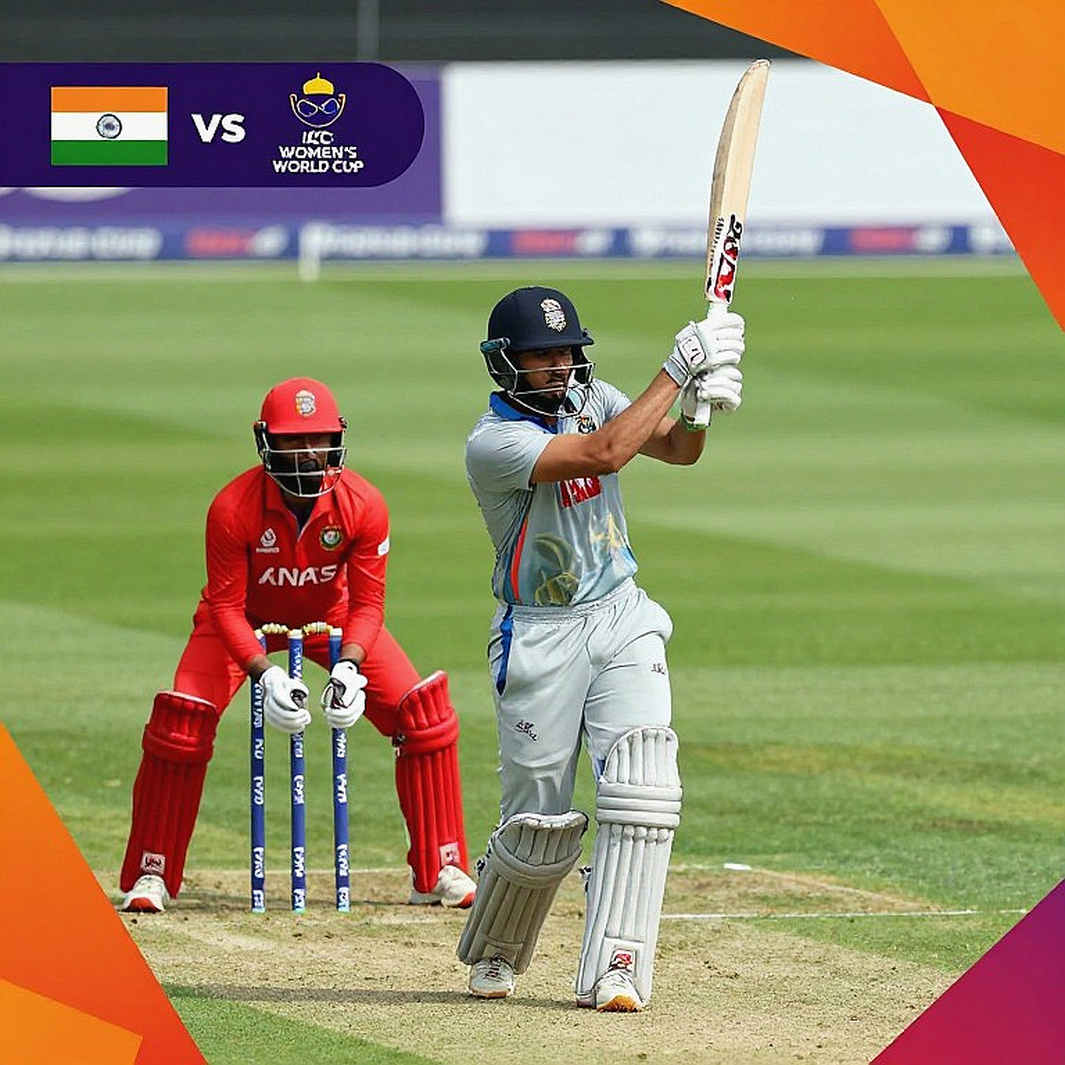
This is where model debt enters. The benchmark bands we quote daily in women's cricket — a finisher's 90–110 strike rate, a par score of 250–280 — were largely built from Australia and England fixtures. Apply those bands to an innings made against Zimbabwe and the verdict always reads "excellent." That is not a fault in the model; it is a fault in its use. A strike rate of 123 against an attack conceding at roughly 6.6 an over proves one thing and not another. It proves Deepti knows how to punish weak bowling, which is a skill in itself and one plenty of batters lack. It does not prove she will hold that rate against Australian pace.
The other corner of the map
A reverse question is necessary here, because stopping at "weak opposition" is the same lazy contrarianism I want to avoid. Staying in for 86 balls at No. 6 and finishing unbeaten is a skill that does not vanish when the bowling improves — only the strike rate moves. If Deepti plays 86 balls against Australia and makes 70 instead of 106, that is not a weakness; that is the same role in its correct form. The real test is not the hundred but the capacity to occupy the crease. And that capacity is new for this Indian side — for several years India's lower order has tended to fold after the 40th over.
The second reversal concerns the language of the record. "First Indian at No. 6 or lower" is true, but it is a volume record, not a difficulty record. Such records rise and fall with the opposition's strength. Had Australia been the opponent, the same innings might have ended at 70 off 60 and no record would exist — and it would still have been just as good an innings. Setting a record and playing well are two different things, and Indian cricket coverage keeps fusing them into one sentence.
My bet and what it costs
Let me state my position plainly so I do not have to retreat from my own words later. My pre-registered hypothesis was that Deepti's batting role would remain subordinate to her bowling and that a No. 6 hundred would be an outlier. This innings did not disprove that hypothesis — it opened a possibility. If her strike rate at No. 6 stays under 95 across the next five ODI innings, I will write that this hundred was a gift from a weak attack. If it holds near 100, I will withdraw the hypothesis. The ledger does not care what I hoped it would say.
Every number carries a date, a ground, and the person who counted it. The date on this hundred is that Sunday in Vadodara, the ground is Vadodara, the counter is the official scorer — and one more name now attaches to it: the Zimbabwe bowling that made it possible and whose figures appear nowhere in the report. The next column gets filled at the third ODI. My eye will be on the fall of wickets there, not the total.