
Asian Cricket in Transition: The T20 Economy, Player Workload and the Three-Front Test of Governance
**प्रश्न: एशियाई क्रिकेट की सबसे बड़ी संरचनात्मक समस्या क्या है?** **उत्तर:** एशियाई क्रिकेट की सबसे बड़ी संरचनात्मक समस्या तीन असंगत घड़ियों का टकराव है — मैदान का तेज़ टी20 कैलेंडर, खिलाड़ी शरीर की धीमी रिकवरी-सीमा, और प्रशासन की सबसे धीमी सहमति-आधारित प्रक्रिया। चूँकि वर्तमान में वाणिज्यिक हित (मुख्यतः फ्रैंचाइज़ी लीग) राष्ट्रीय टीम की प्राथमिकताओं को आकार दे रहे हैं, इसलिए कार्यभार प्रबंधन, NOC मानक और चयन-पारदर्शिता तीनों कमज़ोर पड़े हैं। **प्रश्न: एशियाई टीमों का सबसे कीमती और सबसे कम सुरक्षित संसाधन क्या है?** **उत्तर:** तेज़ गेंदबाज़। भारत, पाकिस्तान, श्रीलंका और अफ़ग़ानिस्तान की गेंदबाज़ी पहचान मुख्यतः तेज़ आक्रमण पर टिकी है, लेकिन कोई सार्वभौमिक कार्यभार नीति न होने के कारण इनकी उपलब्धता अनिश्चित रहती है। एक प्रमुख तेज़ गेंदबाज़ का बाहर होना पूरे टूर्नामेंट की प्रतिस्पर्धात्मकता को प्रभावित करता है। **प्रश्न: टी20 ने बल्लेबाज़ के मूल्यांकन को कैसे बदला है?** **उत्तर:** मूल्य का केंद्र औसत से स्ट्राइक रेट की ओर खिसक गया है, लेकिन केवल स्ट्राइक रेट पर मूल्यांकन अपूर्ण है। सही मूल्यांकन स्ट्राइक रेट, बल्लेबाज़ी की परिस्थिति (किस ओवर में, किस स्कोर पर) और भूमिका-स्पष्टता के संयोजन से होता है। **प्रश्न: क्या लीग क्रिकेट और राष्ट्रीय टीम के हित टकराते हैं?** **उत्तर:** हाँ, और यह टकराव नियमों का नहीं, मूल्यों का है। फ्रैंचाइज़ी चाहती है कि उसका सर्वश्रेष्ठ खिलाड़ी हर मैच खेले; बोर्ड चाहता है कि वही खिलाड़ी राष्ट्रीय टीम के लिए ताज़ा रहे। यह संघर्ष NOC विवादों और चयन-बहसों के रूप में सामने आता है। **प्रश्न: आगे की राह क्या है?** **उत्तर:** पाँच व्यावहारिक कदम — (1) लिखित कार्यभार नीति, (2) NOC पर साझा न्यूनतम मानक, (3) घरेलू कैलेंडर का स्थिर पुनर्गठन, (4) बेंच-स्ट्रेंथ में निवेश, (5) चयन और विश्राम के कारणों में संचार-पारदर्शिता। *नोट: यह कैप्सूल उपलब्ध विश्लेषणात्मक इनपुट पर आधारित है; इसमें किसी विशिष्ट मैच का आँकड़ा या घोषित निर्णय उद्धृत नहीं है। यह सट्टेबाज़ी सलाह नहीं है।*
Asian Cricket in Transition: The T20 Economy, Player Workload and the Three-Front Test of Governance
Introduction: One Continent, Three Clocks
Asian cricket is currently running on three different clocks. The first is the clock of the field, where the T20 format has permanently altered the rhythm of the game, the arithmetic of risk, and the patience threshold of the audience. The second is the clock of the player's body, which, in a twelve-month calendar, is defining the limits of its own endurance. The third is the clock of governance, where the interests of national boards, franchise leagues and the global body collide. These three clocks are not synchronised — and that dissonance is the central story of Asian cricket for the coming decade.
This report is not event-driven coverage of a single match, series or controversy. It is a structural analysis that attempts to read the ecosystem of Asian cricket through four principal pillars: format and calendar, player technique and physical load, the team landscape and competitive balance, and the league-commercial-governance complex. Its purpose is to help the reader understand that most of what is happening in Asian cricket is not the product of the scorecards visible on the surface, but of the economic and administrative currents moving beneath them.
India, Pakistan, Sri Lanka, Bangladesh and Afghanistan — these are the five traditional pivots. Around them, emerging entities like Nepal, Oman, the United Arab Emirates and Hong Kong are taking their place. And above all of them sits, like a shadow, the cluster of franchise leagues that has blurred the line between loyalty to a national team and the economy of a club.
Chapter One: T20's Calendar Dominance and the Imbalance of Formats
The most significant structural event in Asian cricket is that Test cricket is gradually becoming a financial appendage, while T20 has become the main revenue stream. This shift is not the policy of any single board but the market's natural response. A T20 match ends in three hours, its broadcast package is clean, advertising value is predictable, and audience engagement is measurable. None of this holds true for Test cricket, where value is cultural rather than financial.
In the Asian context, this means T20 has the greatest impact where the economy and population are large, and where the cricket base is small, T20 has become the only viable route. For Nepal, Oman and the UAE, Test cricket is a distant possibility, while the T20 World Cup is a global stage available every two years. The direct consequence is that the entire Asian cricket pyramid — from grassroots to international level — is being redesigned around T20.
But a serious imbalance emerges here. In T20, technique is evaluated on different standards: economy rate and death-over capability for a bowler, strike rate for a batter, run-out ability for fielding. In Test cricket, the opposite applies: the endurance of a long spell for a bowler, technical discipline and patience for a batter. When the same player must satisfy both standards, he often falls short in one. In Asian cricket, this rift is most visible in the case of fast bowlers.
Chapter Two: The Physical Load on Fast Bowlers — The Central Problem
If this entire analysis were to be compressed into one sentence, it would be this: Asian cricket's most valuable and least protected resource is its fast bowler. This is both a technical and an economic statement.
On the technical side, fast bowling is one of the most energy-intensive activities the human body can perform. When a bowler delivers at 140 kilometres per hour across a four-over spell, the stress on his back, knees and shoulder is far greater than that of any other cricketing action. When the same bowler plays two matches in a week, recovery time shrinks and injury probability multiplies. When he simultaneously plays Test cricket for his national team and T20 for a franchise league, that pressure becomes three or four times greater.
On the economic side, the entire competitive advantage of Asian cricket rests on a small group of such fast bowlers. India, Pakistan, Sri Lanka and Afghanistan — all four build their bowling identity primarily on pace. When those bowlers are unavailable, the entire structure weakens. This means one bowler's injury is not merely one person's problem but the competitiveness of an entire tournament.
One aspect of this problem is that cricket administration has not yet established any universal standard for workload management. Every board rests players in its own way, every league applies pressure according to its own schedule, and the player has no formal right to say that he will skip a particular series. This is a rule vacuum, and in a rule vacuum pressure always falls on the weakest party — the player.
A second aspect is that basic deficiencies exist in the technical preparation for fast bowling. The bounce available from the surface and the humidity in the air differ from country to country. India offers spin-friendly conditions, Pakistan has a tradition of reverse swing, Sri Lanka has humidity and slow pitches, Bangladesh is a kingdom of spin. A fast bowler who succeeds in one country does not necessarily replicate that success in another. This is not merely a matter of talent but of adaptation — and adaptation requires time, which the calendar does not provide.
The most practical consequence appears in the death overs. Bowling in the final four overs is technically the hardest job in the game: the batter arrives with intent pre-decided, the field is spread to the boundary, and every error converts into four or six runs. A bowler who is consistently bowling death overs becomes mentally exhausted even when physically sound. Asian teams typically have two or three specialist death bowlers, and if even one is unavailable, the team's entire endgame strategy fragments.
Chapter Three: The New Economy of Batting — Beyond Strike Rate
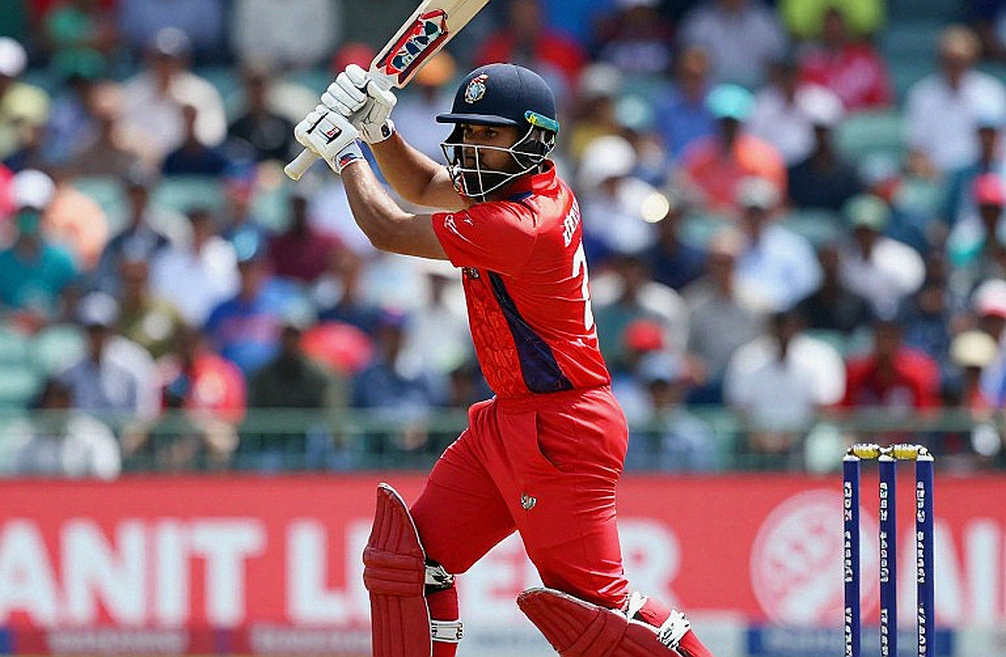
If the bowling story is one of the body, the batting story is one of arithmetic. T20 has completely changed how a batter is valued. In the old framework, a batter's value was measured by average — how many runs he scores, and how often he is dismissed. In the new framework, the centre of value is strike rate — how many runs he scores per ball.
This shift is not superficial; it is deep. Average indicates a batter's capacity to last; strike rate indicates his intensity. In T20, intensity matters more, because total balls are limited and every dot ball is a wasted opportunity. This means a batter who makes 30 off 20 balls may be less useful than one who makes 25 off 12, even if their averages are identical.
In the Asian context, this shift has a particular meaning. The traditional strength of Asian batting has been technique — balance of the feet, playing close to the ball, defensive skill against spin. In T20, this strength is not entirely sufficient, because there is no place for defensiveness. This means Asian batters must do double work: maintain their traditional technique on one hand, and add a new level of aggression on the other.
For this reason, a new category of batter is emerging in Asian cricket, which we might call the finisher. These are batters who do not last long but, when they do, change the course of a match. Their average is low but their strike rate very high. For the team they are a risk investment: if they fail, little is lost, but if they succeed, they can win the match.
But there is a trap here. Evaluating a batter purely on strike rate is to ignore context. A finisher's real value lies in the situation in which he bats. Making a 180 strike rate coming in at the eighth over is far easier than making a 180 strike rate coming in at the twentieth. Similarly, when a team has lost three wickets for 20 runs, the batter's job is not aggression but stabilisation. Therefore correct evaluation comes from combining strike rate with situational analysis, not from a single statistic.
Chapter Four: The Team Landscape — Five Pivots and Their Structural Limits
India: Abundance of Resource, Pressure of Selection
India's case is interesting because its problem is not scarcity but surplus. There are multiple candidates for every position, every candidate has a constituency, and every selection triggers a fresh round of analysis. This surplus is a strength from a playing perspective but a burden from a management perspective, because it becomes difficult for a player to get an extended run, and when he does, expectations are extremely high.
Pakistan: Abundance of Talent, Instability of Structure
Pakistan's case is almost the opposite of India's. Its fast-bowling production system is considered the most fertile in Asia, and this is due not to any formal academy but to local culture and unconventional methods. But at a structural level there is a problem: the national team's framework changes repeatedly, captains change, selection policy changes, and with each change adaptation to a new system is expected. This instability does not allow talent to mature in time.
Sri Lanka: A Phase of Rebuilding
Sri Lanka's story is most clearly one of rebuilding. It has cultural continuity in the game, a technical inheritance and a distinct identity in spin bowling. But after the retirement of experienced players in recent years, the team has had to build a new core. This means Sri Lanka is one of the rare countries where young players are getting consistent opportunities, which is good for the future but produces uneven results in the present.
Bangladesh: Strength in Spin, Weakness in Adaptation
Bangladesh's domestic context is the most spin-friendly. It has a queue of spinners who are extremely effective at home because opponents cannot adapt. But when Bangladesh plays away, that same strength weakens, because bounce is higher, pace is more prevalent and batting must score more quickly. Therefore Bangladesh's real challenge is the gap between home and away performance.
Afghanistan: Fastest Growth, Clearest Ceiling
Afghanistan's rise is one of the most remarkable stories in Asian cricket. Despite limited resources it has progressed rapidly in the T20 format, and its game rests on a clear strategy: spinners effective on slow pitches, and a limited but effective use of pace. This strategy benefits it in home contexts and on the bounce-less pitches of the Middle East. The ceiling is that the experience required for durable Test performance is not yet there.
Chapter Five: Emerging Entities and Competitive Expansion
Nepal, Oman, the UAE and Hong Kong have clearly registered their presence in recent years. Their impact operates at two levels.
The first is at the format level. The expansion of the T20 World Cup has given these teams the opportunity to play on a global stage, which has strengthened their finances and player-development programmes. The second is structural: cricket in these countries rests mainly on expatriate communities and limited domestic structures, but through leagues they get the chance to watch high-level competition in their own country.
The UAE, for instance, is a unique case: two major franchise leagues are played there, and its importance lies not so much as a cricketing nation as a host of cricket. Its significance comes more from its grounds and its organisational capacity than from its players. This is a new model, in which a country's cricket economy develops independently of its national team's performance.
Chapter Six: League Ecology and Commercial Structure
Franchise cricket in Asia has now become a multi-layered economy. India has the largest league, Pakistan a rapidly stabilising one, Sri Lanka a domestic league, Bangladesh a league in crisis, and the UAE leagues driven by external capital. In addition, leagues in Canada, the United States and South Africa have become an alternative market for Asian players.
This economy has three layers. The first is broadcast rights, the largest share of total revenue. The second is sponsorship, including team sponsors, kit sponsors and tournament sponsors. The third is ticketing and merchandise, usually the smallest but most important for brand value.
Asian leagues face a particular problem: they are competing with each other rather than with global leagues. When three or four leagues schedule their events in the same window, player availability becomes a scarce resource and its price rises. This creates wage inflation, which in the long run may become unsustainable for smaller leagues.
A second problem is that franchise owners' interests and national boards' interests do not always coincide. The franchise wants its best player to play every match; the board wants that same player fresh for the national team. The conflict between them is deeper than a contractual dispute, because it is a conflict of values, not of rules.
A third problem is that franchise cricket has changed the perception of player loyalty. Previously a player's career was tied to a country. Now it is tied to a market. This is not merely a matter of sentiment but of incentive structure: if a large share of a player's income comes from leagues, his priorities follow.
Chapter Seven: Governance, NOCs and Selection Controversies
Asian cricket's most burning governance issue is the NOC — the No Objection Certificate — system. At present, a player must obtain permission from his national board to play in a foreign league. This looks like administrative formality but is in fact an instrument of power balance.
The problem is that there is no universal standard. Some boards are liberal, some strict, and some shift with circumstance. This creates insecurity among players, who cannot know in advance which series they will be permitted to play and which not.
The second face of this is selection controversy. When a player is not picked for the national team but performs brilliantly in a league, the question arises as to what the basis of selection is. Is league performance sufficient for international selection? Is domestic performance more important? There is no clear answer, and this ambiguity fuels controversy.
The third governance challenge is that cricket administration is no longer merely the administration of a sport. It is also the administration of broadcast rights, digital rights, data rights and brand management. When a board's main revenue comes from broadcast rights, its decisions are naturally influenced by broadcast interests. This is not a case of corruption but of incentive structure — and acknowledging it is the first condition of addressing it.
Chapter Eight: Regional Politics and the Fragile Position of the Asia Cup
One characteristic of Asian cricket is that its playing calendar has never been entirely separate from geopolitics. Bilateral series between India and Pakistan have not been played for more than two decades, and their meetings occur only in multilateral tournaments. This means tournaments like the Asia Cup carry an additional burden: they must manage not only a sporting event but a diplomatic balance.
The practical effect is that the choice of venue is never purely technical. It is always the result of a political arrangement, and with every arrangement some teams either do not participate or participate conditionally. This affects the competitive completeness of the tournament, because a meeting of the strongest teams is not always guaranteed.
The second effect is financial. A multilateral tournament's revenue depends on its broadcast value, and broadcast value depends on the appeal of its matches. If the biggest contests are not guaranteed, broadcast value comes under pressure. Political instability therefore feeds directly into the tournament's economic stability.
The third effect falls on players. When a series is cancelled or relocated for political reasons, those most affected are the players who had prepared for it. This is a question of justice: those with no decision-making power pay the highest price.
Chapter Nine: Risk Matrix
Sporting Risk
The biggest sporting risk is that Asian teams' strength is concentrated in a handful of players. When they are unavailable, performance drops sharply. The only remedy is bench-strength development, which requires long-term investment.
Personnel Risk
In the absence of workload management, injury probability remains constant. This risk is especially high for fast bowlers and wicketkeeper-batters, as both roles are the most physically demanding.
Commercial Risk
Competition among leagues produces wage inflation, which may be unsustainable for smaller leagues. A second risk is that some leagues depend on external capital, whose withdrawal could put their existence in jeopardy.
Rules and Integrity Risk
Betting and corruption risk is always present, especially in smaller leagues with weak monitoring. Selection bias and NOC-related disputes further damage institutional credibility.
Public Opinion Risk
When the gap between fan expectation and actual team performance widens, aggressive reaction on social media increases. This directly affects players' mental health, and today it is a real, measurable risk rather than mere emotional discussion.
Systemic Risk
The deepest risk is that the entire structure of the game rests on sustaining three formats simultaneously, while each requires different skills and calendars. If this balance breaks, Test cricket will be affected first, and with it the technical depth of the game.
Chapter Ten: Public Narrative and the Expectation Gap
A persistent pattern in Asian cricket is that after one brilliant innings a player is declared the next superstar, and after two failures there are calls for his removal. This cycle is not merely a cricket phenomenon but a product of the subcontinent's cricket culture and media economy.
The root cause is that cricket here is not just a sport but a vehicle of identity. When a player performs well, he becomes a representative of a region, a culture or a generation. This symbolic weight exceeds his actual performance, and from it the expectation gap arises.
One clear indicator of this gap is that the centre of public debate has shifted from technique to selection. Earlier the question was which shot a bowler would bowl; now it is who will get a place in the team. This shift of attention is itself a signal that, for the audience, the drama of power has become more interesting than the drama of the field.
The only way to manage this is honesty in communication. When a player is rested, the reason should be clear. When a player is dropped, the line of accountability should be clear. Ambiguity is the greatest mother of rumour.
Chapter Eleven: Industry Transmission — Impact from Top to Bottom
Upstream: Talent Supply and Grassroots Structure
The foundation of any cricket economy is talent production at the grassroots. In Asia this system is divided in two: on one side the formal academies and domestic competitions of the larger boards, on the other the informal, club-based and diaspora-based systems of smaller countries. There is no shared standard between them, and this inequality translates into inequality in international competition.
Midstream: National Teams and Leagues
At this level two currents run in parallel. One is that of the national team, whose goal is performance in global tournaments. The other is that of the league, whose goal is audience and revenue. Both depend on the same player base, so their collision is unavoidable.
Downstream: Broadcast, Capital and the Image Market
At the bottom is the level where revenue is generated from the sport. Broadcast rights, digital rights, betting regulation and brand value are all interlinked. If any part of this level weakens, its effect reaches the upper levels with a delay of several months — but it does reach.
Direction of Transmission
Currently transmission is mainly bottom-up: commercial success is shaping national teams' priorities rather than the reverse. This direction can be damaging in the long run, because it makes talent development subordinate to immediate returns rather than long-term investment.
Chapter Twelve: The Way Forward — Five Practical Recommendations
First: A Written Workload Management Framework
Every board should adopt a public workload policy specifying how many balls a player may bowl in a year, how many days of rest are mandatory, and under what circumstances an NOC will or will not be granted. Ambiguity does not manage; it only delays.
Second: A Shared Minimum Standard for NOCs
The global body should set a shared minimum standard for NOCs, so that every board must be liberal at least to that threshold. Restrictions are easy to impose, but their consequences burden players' credibility for years.
Third: Restructuring the Domestic Calendar
Asian boards should design their domestic calendars so that they do not clash with franchise-league windows. This is technically difficult but not impossible. It requires that domestic competitions be placed stably around league windows rather than changed annually.
Fourth: Investment in Bench Strength
All teams should build a clear succession chain behind their main players. This means giving young players opportunities even in low-stakes matches, even if some matches are lost as a result. This is an investment, and investment carries an initial cost.
Fifth: Transparency in Communication
Speaking only safe sentences at press conferences does not build trust. Boards should communicate clearly the reasons for selection, rest and sanction. Transparency does not end every controversy, but it certainly reduces the room for rumour.
Conclusion: The Challenge of Aligning Three Clocks
Asian cricket is in the most prosperous yet most unstable phase of its history. Prosperous in the sense that it has resources, audience and talent — all three in abundance, as no other region does. Unstable in the sense that it has no shared policy to bind those three into a coherent structure.
The clock of the field is running fast. The clock of the body is slow, and it obeys human limits — it cannot be accelerated. The clock of governance is the slowest, because it is bound by the need for consensus. The problem is that the field's clock is pressing both to move at its pace, and when the pace of play is imposed on administration, the result is always a shortcut — silent bans, opaque NOCs, unplanned selections and, in the long run, an erosion of trust.
If Asian cricket is to retain its advantage over the next decade, it must do three things at once. First, accept that a player's body is a finite resource and cannot be exploited beyond a certain point. Second, recognise that leagues and national teams are both nourished by the same player base, so the over-extraction of one is the depletion of the other. Third, accept that geographical and political realities cannot be removed from the game, but a transparent way of bringing them within the game can be built.
Asian cricket's greatest strength is its market depth, and its greatest weakness is its institutional fragmentation. Market depth has made it the economic axis of world cricket; institutional fragmentation has made it unstable on that same axis. The coming decade will determine which of these forces prevails.
This report is a structural and analytical feature based on publicly available trends and analytical frameworks. It cites no scorecard of any specific match, no official statistic and no announced decision, because those elements were not present in the available input. It should be read as sports-information context only; it does not constitute betting advice of any kind.