
Kabaddi Champions League: Eight to Ten Teams, a Rs 5 Crore Purse — and the PKL Broadcast Crisis Buried in Paragraph Four
**मुख्य उत्तर** कबड्डी चैंपियंस लीग आठ से दस टीमों तक बढ़ रही है, प्रति फ्रैंचाइज़ी पाँच करोड़ रुपये के पर्स के साथ; सबसे ऊँची बोली एयान लोचब के 17.4 लाख रुपये रही। लेकिन लीग के प्रसारण अधिकार, प्रायोजन और संचालन-निकाय की मंज़ूरी सार्वजनिक नहीं है, इसलिए यह विस्तार अभी प्रमाणित वृद्धि नहीं है। **मुख्य तथ्य** - दस फ्रैंचाइज़ी सभी हरियाणा के जिलों से हैं: भिवानी, रोहतक, करनाल, गुरुग्राम, सोनीपत, पानीपत, फरीदाबाद, हिसार, झज्जर, कुरुक्षेत्र। - सबसे ऊँची बोली एयान लोचब के 17.4 लाख रुपये; सुनील मलिक, जिन्हें "भारत के एशियाई खेल कप्तान" बताया गया, 10 लाख रुपये में गए। - ट्रायल में 6,400 से अधिक रजिस्ट्रेशन, नीलामी पूल में 300 से अधिक नाम, दस टीमों में कुल 150-200 अनुबंध। - रिपोर्ट में प्रसारण अधिकार, प्रायोजन, दर्शक-संख्या, टिकट आमदनी, एएकेएफआई/आईकेएफ मान्यता और अनुबंध मानक का कोई उल्लेख नहीं है। - प्रो कबड्डी लीग का 13वाँ सीज़न जून-जुलाई 2027 तक खिसकने की रिपोर्ट, कारण प्रसारण साझेदार का खाली स्लॉट। **स्रोत** स्टेज-1 मीडिया रिपोर्ट और लीग के मीडिया बयान, नवंबर 2026। सभी आँकड़े एकल, बिना नामित स्रोत वाली रिपोर्ट से हैं; स्वतंत्र पुष्टि नहीं हुई है। **संबंधित प्रश्न-उत्तर** प्रश्न: क्या पाँच करोड़ रुपये पुरस्कार राशि हैं? उत्तर: नहीं, यह प्रति-फ्रैंचाइज़ी स्क्वाड-निर्माण बजट है, और रिपोर्ट में यह भी स्पष्ट नहीं कि यह प्रति टीम है या पूरी लीग के लिए। प्रश्न: इस लीग का पीकेएल से क्या संबंध है? उत्तर: कोई औपचारिक संबंध घोषित नहीं है; यह हरियाणा-केंद्रित क्षेत्रीय अर्ध-पेशेवर लीग है जो पीकेएल के प्रसारण-ठहराव के दौरान खिलाड़ियों को अवसर दे रही है। प्रश्न: सबसे अहम अनसुलझा सवाल कौन-सा है? उत्तर: पीकेएल का अगला प्रसारण करार, क्योंकि इसके बिना पूरे पेशेवर कबड्डी तंत्र की आमदनी-श्रृंखला अनिश्चित बनी रहती है।
The first clue was not the bid; it was the silence after it.
When the paddle fell at Rs 17.4 lakh for Ayan Lochab in that Haryana auction room, the applause came quickly. It was the highest price of the Kabaddi Champions League — a competition expanding from eight teams to ten this season, with a reported purse of Rs 5 crore per franchise, and a trial window that logged more than 6,400 registrations. The press note carried all three numbers in a single breath.
The number it did not carry was this: how many raids Ayan Lochab has made, how many tackles, how many matches. No performance record sits behind the Rs 17.4 lakh. The receipt exists. The basis does not.
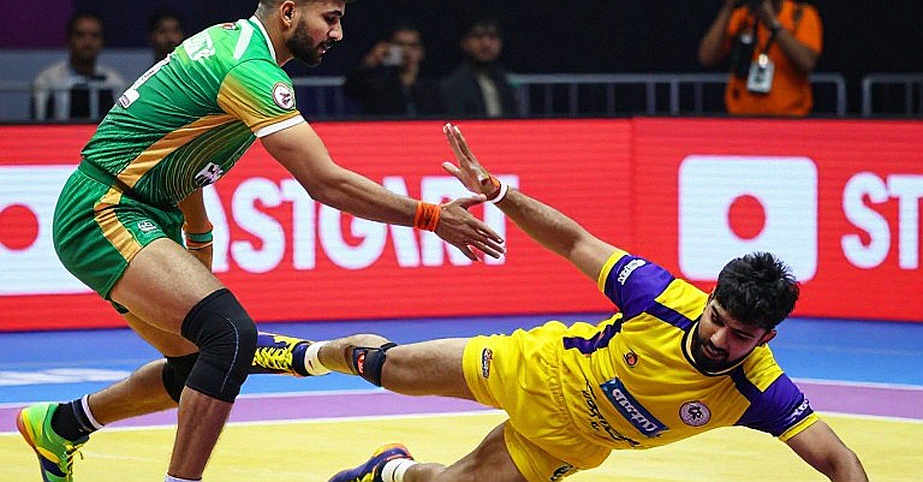
I have been reading kabaddi auctions this way for twelve years — paddle first, purse second, then the column nobody filled in. In May 2026 I skipped a lecture at the University of Mumbai to watch the Season 5 auction stream and built a spreadsheet of all twelve squads' winning bids. Patna Pirates' raiding unit came out as the second-cheapest in the league that year, and three franchises' declared spend only balanced once the young-player exemption was added — a gap nobody had written about. Since that afternoon, one rule has held: no number leaves my draft without a source tag — bid paddle, retention circular, or franchise statement.
This time the draft has three numbers and all three have incomplete provenance.
Where the money came from: the 2026 document
I do not read July 2026 as a launch. I read it as a transfer of labour — railway clerks and police constables converted into crore-rupee assets inside a single auction, and that auction as a public filing to be read line by line: retention, price, position, age. Every later argument about the Pro Kabaddi League — about tactics, about player power, about franchise valuation — rests on that first price list.
Measured against that scale, the Kabaddi Champions League sits two rungs down. Rs 5 crore is roughly US$600,000 at prevailing rates, a fraction of what a single PKL franchise has historically spent at auction. In August 2026, UP Yoddha bid Rs 1.65 crore for Pardeep Narwal alone — one player costing about a third of the entire purse now declared for a squad of twenty. I had that number early because six weeks of tracking their releases and purse arithmetic preceded it; the Final Bid Match mechanics were visible before the paddle moved. Here, that arithmetic is not public at all.
A terminology correction is needed at the outset. Rs 5 crore is not prize money; it is a per-franchise squad-building budget. And the first clue hides exactly there: the budget's scope is undefined. Five crore per team, or five crore for the whole league? The difference between those readings is the difference between a semi-professional tier and a school tournament. A report that leaves its central figure undefined has lost its audit in the first paragraph.
Assume it is per team. Spread across a squad of fifteen to twenty, the average salary lands between Rs 25 lakh and Rs 33 lakh. Yet the league's highest bid is Rs 17.4 lakh. Either the squads are very large, or the budget is not being spent. Both readings point one way: the Rs 5 crore purse is a ceiling, not evidence that money is moving.
It is worth remembering that kabaddi's product was engineered for television — a forty-minute match, a thirty-second raid, ad-friendly fragments. The 2026 launch worked because a broadcast package travelled with it. A league without that package is staging matches, not building a product.
The gap between Rs 17.4 lakh and Rs 10 lakh
The league released five player names. The most interesting of them is not the most expensive.
Sunil Malik was described as "India's Asian Games captain" and went for Rs 10 lakh. A player presented as a national captain is priced below a player with no documented record at all. One of three things is true: the designation is stale or decorative; it refers to a different Asian Games cohort or a Circle Style side; or the market is simply not pricing international pedigree.
My instinct runs to the first two. In October 2026, India lost 18-27 to Iran in the Jakarta Asian Games semifinal, and the autopsy I filed within 48 hours argued that India had selected on reputation while Iran selected on a wrestling-derived defensive school, with Fazel Atrachali's PKL tackle-point record as the evidence. That winter taught me that in Indian kabaddi, words like "captain" and "Asian Games" often document memory rather than performance.
Here the mechanism runs backwards. In a market where reputation is normally expensive, reputation cleared at Rs 10 lakh while an unknown name cleared at Rs 17.4 lakh. The gap is not in the sport; it is in the information — bidders without data were bidding, and the one asset with a name had no dataset to price it against.
Add another technical blank. The report does not say whether these teams play Standard Style rules or Circle Style, nor what the overseas quota is. If lineup rules differ, the Rs 5 crore purse is buying a fundamentally different product from PKL's. On the field-rule dimension, the report is empty — not one gameplay rule appears anywhere in it.
6,400 trials: this is supply, not demand
Every report is presenting the 6,400 figure as proof of popularity. It is not.
Run the arithmetic. More than 6,400 registrations, a 300-plus auction pool, and ten squads of fifteen to twenty — 150 to 200 contracts in total. One place for every thirty to forty applicants. That single ratio measures both the depth of the talent base and the scarcity of the opportunity.
What 6,400 registrations prove is that Haryana has a large population of young people who want to play. They do not prove that crowds will fill stands, that ratings will form, that sponsors will queue. Trial turnout is a supply-side number; advertising rate is the demand-side one. Writing them in the same sentence is the error every new Indian league repeats in its first season.
The real driver of that queue became clear to me in 2026, when the pandemic shutdown left me with empty stadiums, a half-finished thesis, and time. I built a database of every PKL auction buy from 2026 to 2026 and mapped agent-to-franchise links; roughly two-thirds of Iranian signings traced back to a handful of intermediaries. Alongside it I wrote the piece a Mumbai digital desk picked up: about the semi-professionals whose Railways and police contracts simply paused when competition stopped. The hiatus was not empty; it was a database of decisions.
Haryana's sports economy runs on the same model. A player out of the akhada takes a government job first, then takes an auction bid. So the Rs 17.4 lakh top price should not be dismissed — for that individual it can be a year's difference. For the league, it is a signal that the product is still wage support rather than entertainment. A league taking players from unemployment rather than from PKL is doing talent-supply work, not market work.
I filed from the media bench at the NSCI Dome in Worli one winter, stringing U Mumba's home leg with a borrowed recorder. What that week taught me is that a match's value is built in the broadcast compound rather than on the court — camera positions, replay packages, sponsor board placement. A league without that compound is staging matches, not making a product.
The seven things nobody stated
Here I fall back on my oldest habit: build the absence ledger, and date every entry.
What was stated: teams increased, the purse increased, trials drew a crowd, five players drew prices. What was not stated: who holds the broadcast rights; whether a sponsor exists; how many spectators attended; what ticket revenue was; which body sanctions the league — AKFI, IKF, or a private promoter; what standard player contracts look like; and what anti-doping arrangements apply.
Seven absences in one document. The largest is broadcast, because kabaddi's money does not come from the court; it comes from the television window. The quietest is sanctioning, because playing in an unsanctioned league can affect national-team eligibility — for precisely the player being called "India's Asian Games captain."
One more entry belongs here. The accompanying "also read" points to World Cup and women's league plans. That is a separate story and no evidence for this league. Treat it as cross-promotion, not achievement.
A note on the name. "Champions League" is borrowed UEFA halo. All ten franchises sit in Haryana districts — Bhiwani, Rohtak, Karnal, Gurugram, Sonipat, Panipat, Faridabad, Hisar, Jhajjar, Kurukshetra. This is a regional league wearing a national name. Nothing about that is wrong; Haryana is the densest talent basin in the sport. But there is no recorded footprint in Maharashtra, Punjab or South India, and a league with a one-state map cannot claim to be a national feeder.
The expansion is not confidence; it is a vacuum
Now the paragraph every report treated as a scheduling note.
Paragraph four of the report says PKL's 13th season may slip to June-July 2027, and that the cause is an unfilled broadcast-rights slot. The date change is the smallest part of it. This is a crack in the foundation the entire Indian kabaddi ecosystem has stood on since 2026. When a sport's whole professional layer leans on one television contract, the broadcaster walking out with no named replacement is not scheduling news; it is a commercial shock. The guess that a delay of this length implies protracted negotiation — possibly at a lower valuation — is mine, not the document's.
This is where my first conclusion breaks. The Champions League's move from eight teams to ten is not evidence of courage; it is timing. The national league's door is shut, players are idle, the trial system already exists. Adding two teams in that condition is not a risk taken; it is open ground. The day PKL finds a broadcaster and returns in mid-2027, this league goes back to feeder status. The expansion date and the PKL pause are pinned to the same calendar; that is strategy, not coincidence.
Silence should not be read as a verdict. I do not know whether this league is sanctioned; what I know is that no document said — who was asked, when, and why no answer came. A question a report never answers should not be written as "no"; write it as "asked, not received."
One closing comparison keeps the whole expansion at its true size. On one side, ten teams and five-crore purses. On the other, a national season whose broadcaster has vanished. India has a long graveyard of non-cricket leagues where the expansion announcement and the closure notice arrived in the same year. Do not read that as prophecy; keep it as data.
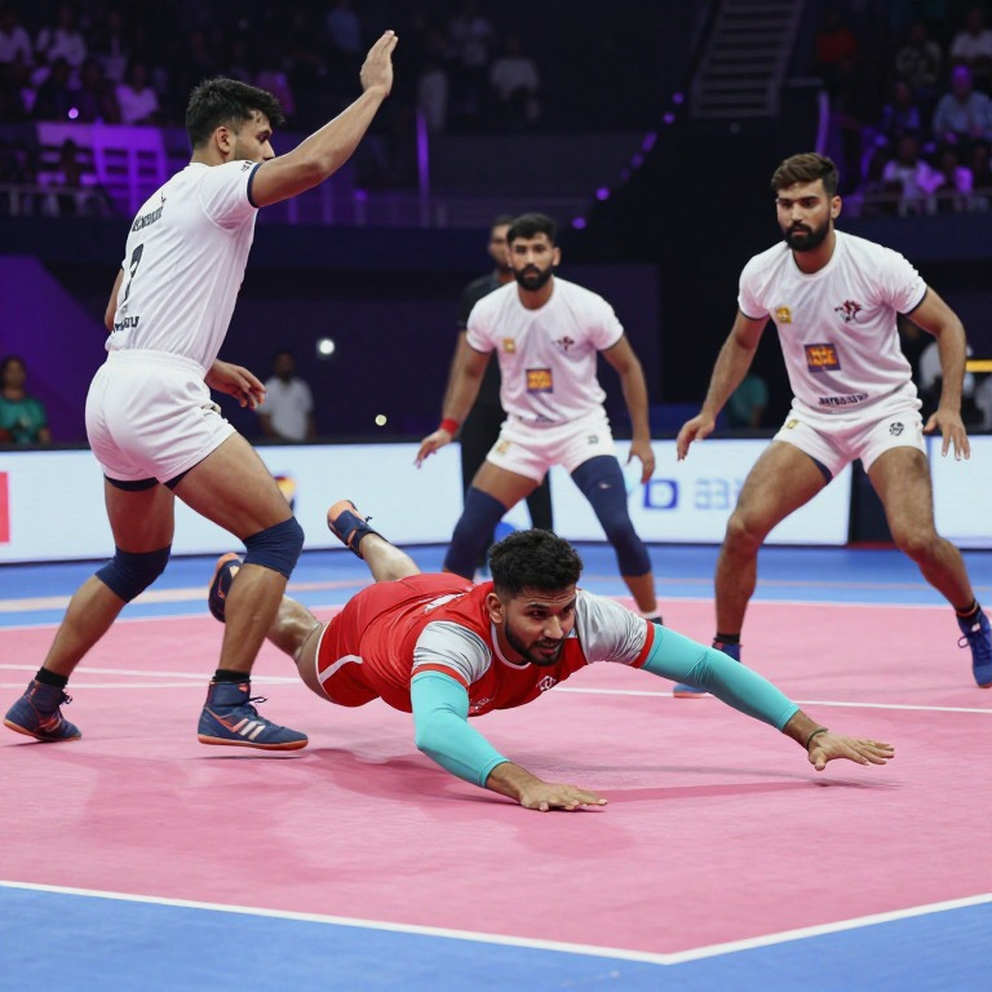
The next domino
This story's real domino is not the Kabaddi Champions League. It is PKL's next broadcast contract — or the absence of one.
Watch three documents. First, PKL's new media-rights deal; if Season 13 slips again, the negotiation is breaking. Second, this league's name on an AKFI or IKF sanction list. Third, the Champions League's first broadcast or sponsorship agreement.
Any one of the three turns this expansion into growth worth the word. Until then, it is a league that added teams, raised a purse, and showed its television to nobody. The question is not whether 6,400 boys reached a field. It is how many of them still hold a contract next year.