
The Architecture of Asian Cricket: Format, Market and the Lines Drawn by Governance
एशियाई क्रिकेट को समझने की कुंजी तीन परतों में है। पहला — प्रारूप: टेस्ट में बल्लेबाज़ी औसत मुख्य मुद्रा है, टी20 में स्ट्राइक रेट; आईसीसी रैंकिंग भी प्रारूप-विशिष्ट होती है और एक से दूसरे में स्थानांतरित नहीं होती। दूसरा — बाज़ार: नीलामी की कीमत खेल-क्षमता का माप नहीं है, क्योंकि उसमें दुर्लभ-स्थान प्रीमियम, स्थानीय युवा स्टार प्रीमियम और एजेंट-स्रोत अफ़वाहें जुड़ती हैं। तीसरा — शासन: एनओसी बोर्ड के नियंत्रण का सबसे प्रभावी साधन है, भारत-पाक द्विपक्षीय क्रिकेट 2012-13 के बाद से ठप है जिससे तटस्थ स्थल मॉडल बना, और सरकारी हस्तक्षेप पर आईसीसी की लाल लकीर बनी हुई है। किसी भी खिलाड़ी या टीम के दावे से पहले ये तीन फ़िल्टर लगाना अनिवार्य है।
Asian cricket has become the largest economic and cultural centre of gravity in world cricket over the past two decades. In India, Pakistan, Sri Lanka, Bangladesh, Afghanistan and Nepal, the game is not merely sport — it is part of collective identity. But the expansion is routinely misread in two ways. The first is reading statistics divorced from format. The second is treating a market price as proof of sporting capability. This report avoids both, examining the architecture of Asian cricket in three layers: format, market and governance.
Layer One: Format is decided first, numbers second
The most basic precondition for any cricket analysis is that the format be established. Test, ODI, T20 and The Hundred each carry a different tactical logic and a different evaluation standard. The difference is not merely the number of overs. In Test cricket, batting average is the primary currency; a wicket's value is measured in time, and the possibility of a draw is part of strategy. In T20, strike rate is primary and average secondary — a batter averaging 25 at a strike rate of 150 can be more valuable than one averaging 40 at 120. ODI is the bridge, where the 50-over structure creates two distinct phases: preserving wickets in the first thirty overs and accelerating in the last twenty.
This is why the same statistic for the same player can invert its meaning across formats. It is also the most common error in cricket commentary: selecting the wrong benchmark. An economy rate of 8.5 is respectable in T20; in Test cricket it is close to unthinkable. Any reference to a spinner's "economical" bowling must state which format is meant, or the comparison becomes meaningless. In Asian media this lapse is most frequent when a young player's league form is read directly as international readiness.
Layer Two: League brilliance and international conversion
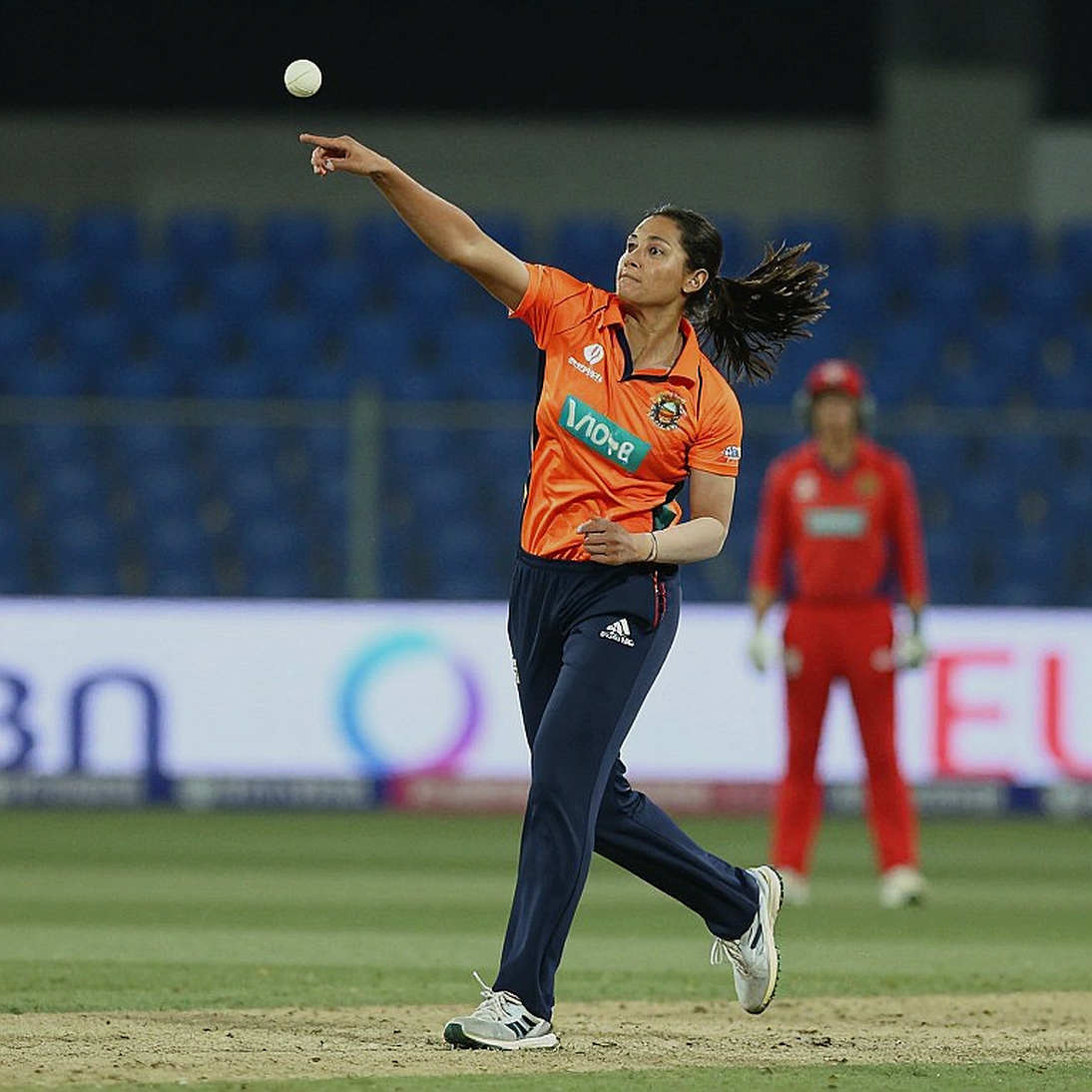
The footprint of domestic T20 leagues across Asia has expanded rapidly. The IPL remains the largest market in its own right, and alongside it stand the Pakistan Super League, ILT20 and other competitions linked through Asian ownership networks. These leagues have raised player incomes, visibility and selection probability all at once. Yet the conversion rate from league performance to international performance has historically been modest. There are four concrete reasons.
First, the density of bowling quality. In a league, each side has two or three world-class bowlers and the rest of the attack is limited. International cricket presents disciplined bowling on all fronts, with fewer weak links. Second, the nature of pressure. League pressure is professional; international pressure is national — and these are different mental loads. Third, variety of surfaces. League calendars often collapse onto similar pitches, whereas bilateral series bring bouncier tracks outside the subcontinent and different balls. Fourth, opposition planning. At international level a player is targeted by a series-long plan that a short league calendar rarely replicates.
The direct conclusion is that a player's league highlights are not evidence on their own. They must be read alongside a split home-and-away record, format-specific averages and recent trend. In the language of Asian cricket, "becoming a star" and "becoming a Test player" are two separate processes, and weighing them on the same scale is the single largest analytical mistake.
Layer Three: Home ground — the biggest single variable
The gap between home and away performance is widely regarded as widest in Asia. Weather and pitches both contribute. Subcontinental surfaces favour spin, heat and humidity test bowlers' endurance, and in limited-overs cricket dew makes the second innings' bowling a significant handicap. All three factors amplify the importance of the toss, which in many matches is worth as much as the result itself.
This does not mean home success is "fake". It means home success cannot be treated as proof of all-conditions capability. A spinner's true tier cannot be fixed without viewing his home and away averages separately. The reverse logic applies to fast bowlers: their numbers on subcontinental pitches may look poor, while on bouncier tracks the same bowler is decisive.
A further point: rankings are format-specific. ICC rankings are built in separate tables per format and do not transfer between them. A team sitting in the T20 top three says nothing about its Test capability. When reading a "ranking improvement" story, the first question must be: which format? The home-away spread of subcontinental teams also varies by format — widest in Tests, narrowest in T20, because the shorter format yields a smaller sample and greater uncertainty.
Layer Four: Where the money flows
The clearest way to understand Asian cricket's economic structure is a three-stage chain: broadcast rights, sponsorship, and ticketing and merchandise. The first stage is the largest and shapes the entire architecture. In the Asian market, cricket broadcast rights sit among the highest-value tiers in global sport, because both audience scale and the advertising market are large.
This structure has also shaped the ICC's revenue distribution. The bloc of the BCCI, ECB and Cricket Australia is known in cricket politics as the "Big Three", and India's share of revenue distribution has been the largest — an arrangement debated in every cycle and consistently questioned by smaller member boards.
Franchise valuation and player salaries are the second link in the same chain. Here analytical caution matters most. An auction price is not a direct measure of sporting value. At least three additional premiums attach to it. First, scarce-position premium: left-arm pace, wicketkeeper-batters and wrist spinners are in limited supply, so their price rises above capacity. Second, local-young-star premium, tied directly to sponsorship and audience engagement. Third, information circulated before an auction, often agent-sourced and released to inflate bidding.
Any transfer or auction story therefore requires source grading: an official board announcement at the top, then established cricket journalists, then general media, and last traffic-driven social accounts. In the Asian market this order is frequently inverted, and that is how false "record price" narratives are born.
Layer Five: NOCs, central contracts and player freedom
The tension between league and country is a permanent theme of Asian cricket. Its principal instrument is the NOC — the No Objection Certificate — issued by a national board, without which a centrally contracted player cannot appear in an overseas league. It looks like a technical document; in practice it is a board's most effective lever of control.
Three persistent questions surround it. First, workload: with leagues, bilateral series and ICC tournaments all crowding the calendar, how is injury risk managed? Second, priority: for the board, the national team is paramount; for the player, income and visibility. Third, transparency: the criteria for granting or withholding an NOC are often not public, which keeps the space for dispute open.
Layer Six: Governance, integrity and geopolitics
Integrity oversight in cricket rests with the ICC's Anti-Corruption Unit. Anomalies in betting markets, unexpected deliveries or overs, and approaches to players are the three signals that trigger action. In any analysis these should be treated as signals only, never as conclusions.
The second major governance subject in Asia is the freeze in India-Pakistan bilateral cricket. The two countries have not played a bilateral series since 2026-13; meetings have been confined to ICC or Asian tournaments. That freeze gave rise to the neutral-venue arrangement, most prominently the hybrid model of the 2026 Asia Cup — hosting rights with Pakistan, but India's matches at a neutral venue. The model has become a template for later tournaments and demonstrates how political reality rearranges the sporting calendar.
The third subject is the ICC's red line on government interference in member boards. ICC rules expect autonomous governance from members, and suspension has followed interference in the past. In the Asian context this surfaces periodically in the news, so any board-level story should be passed through this filter.
Layer Seven: The calendar and the next turn
A major structural shift lies ahead — the inclusion of cricket at the Los Angeles 2028 Olympics, in T20 format. This is not simply one more tournament on the list; it is a force that will rearrange calendars, resources and selection priorities. The prospect of an Olympic medal will push boards to invest in T20 specialism, which may create resource conflict with the longer formats.
What to watch next
Five signals should be tracked to apply this framework in practice. One, the format-specific reading of rankings — which table, which cycle. Two, separate home and away records, especially for spin and pace. Three, the league-to-international conversion rate, which sets any young player's ceiling. Four, source grading on auction and transfer stories, so price is not mistaken for capability. Five, decisions on NOCs and central contracts, because player availability is settled there.
The real story of Asian cricket is not in any single scoreboard but in the collision of these three layers — the demands of format, the pressure of market, and the limits of governance. Only analysis that keeps them separate avoids the error of prediction.