
Out off the First Ball: Jaiswal's Fourth Duck as India A Stumble on Hagley's Seam
यशस्वी जायसवाल ने क्राइस्टचर्च के हैगली ओवल पर न्यूजीलैंड A के खिलाफ भारत A की पारी की पहली गेंद पर डक दर्ज किया; गेंदबाज फ्रेजर शीट थे। यह उनकी हालिया नौ फर्स्ट-क्लास पारियों में चौथा डक है (लगभग 44 प्रतिशत)। यह आंकड़ा असामान्य और चिंताजनक है, परंतु नमूना छोटा है और आउट होने के तरीकों का कोई विवरण नहीं है। उसी पिच पर देवदत्त पडिक्कल ने 140 गेंदों पर 80 और साई सुदर्शन ने 41 रन बनाए, जिससे पता चलता है कि परिस्थितियां कठिन थीं लेकिन असंभव नहीं। भारत A की पारी 137/5 पर लड़खड़ाई, जो पूरे टॉप ऑर्डर की सीम-परिस्थितियों में नाजुकता दर्शाती है। यह मैच 'अनौपचारिक टेस्ट' है — कोई आधिकारिक टेस्ट कैप या आईसीसी दर्जा नहीं, इसलिए इसका मूल्य केवल विकास और चयन-संकेत का है। निष्कर्ष: तकनीकी गिरावट सिद्ध नहीं हुई है; आंकड़े सत्यापन लंबित हैं और बड़े नमूने तथा डिसमिसल-मोड विश्लेषण की आवश्यकता है।
At Hagley Oval in Christchurch, in the unofficial Test against New Zealand A, India A's innings began exactly as had been feared for weeks. First over, first ball, and Yashasvi Jaiswal walked back without scoring. The bowler was seamer Fraser Sheat. It is his fourth duck in his recent first-class innings, and it has come in nine innings in total — a duck rate of roughly 44 per cent. With a Test series against New Zealand approaching, that number has inevitably become a talking point.
Every statistic in this report should be read as 'pending verification'. The available material confirms only the central event — the first-over duck, the fourth-duck framing, and the 137/5 scoreline. The day of the match, the score at stumps, the result, the bowling figures and the weather are all absent. That limitation is carried through every conclusion drawn here.
Hagley Oval: a ground of seam and swing
Hagley Oval is conventionally counted among those New Zealand venues where, early in the season, a grassy pitch and bounce favourable to the quick bowler are found. A morning start with the new ball offers the most lateral movement. In that context, Jaiswal falling to a seamer in the first over is entirely consistent with conditions. It was, genuinely, a difficult new-ball passage.
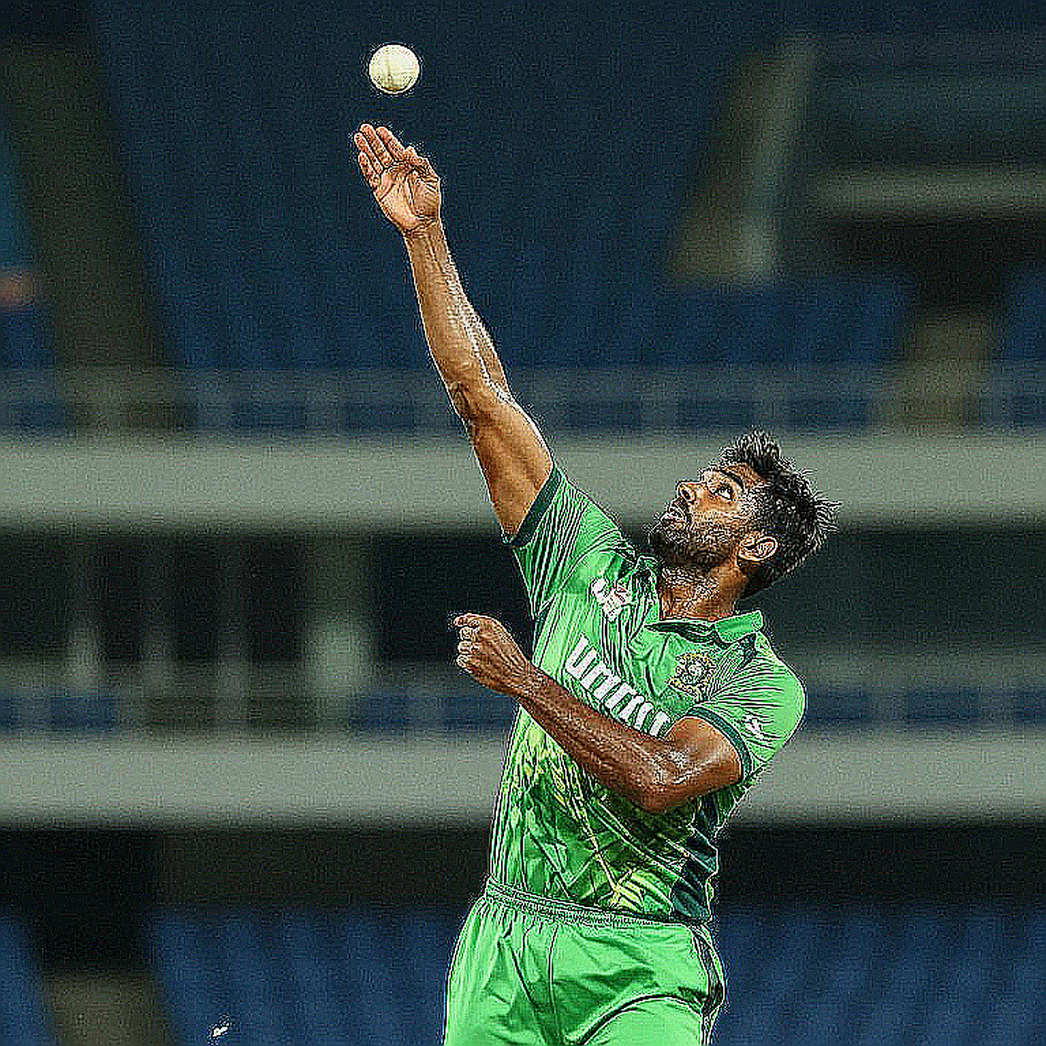
But an important distinction must be made. It is not known whether the delivery was unplayable or whether the batter erred. In cricket analysis, that distinction is decisive — a duck by itself does not reveal whether the failure belonged to the bowler's excellence or the batter's mistake. Reading a scorecard and putting both in the same category is the single most common analytical error.
The real picture: a 91-run stand, then 137/5
The pattern of India A's innings is clear at first glance. Jaiswal's zero as the first wicket, then a 91-run second-wicket partnership between Devdutt Padikkal and Sai Sudharsan. Padikkal made 80 off 140 balls, a strike rate of about 57 — measured and strong by first-class standards. Sudharsan fell for 41, a start that was not converted.
After that the innings slid to 137/5. This is a classic first-class pattern: one substantial partnership, then a cluster of wickets. Two things follow. First, the pitch was bat-able once the ball softened and the early movement ended. Second, the crisis in India A's innings is not Jaiswal's alone; it points to fragility across the top and middle order in seaming conditions.
This is why reading the story purely as a Jaiswal crisis is wrong. On the very pitch where Jaiswal fell first ball, Padikkal and Sudharsan added 91. That is the strongest evidence that conditions were difficult but not impossible.
The duck count: a serious signal, incomplete proof
At the level of data, the situation is serious. Elite openers go for ducks in roughly 5 to 10 per cent of innings across a career. A sustained rate above 40 per cent is a red flag. But three things limit the strength of this figure.
First, the sample is small — nine innings only. Second, they are innings in a single format and broadly in a single region. Third, and most importantly, there is no description of how the dismissals came — how many edges, how many lbws, how many bowled. The dismissal-mode distribution is the most diagnostic metric in this entire debate, and it is unavailable.
Jaiswal's average cannot be computed either, because the total runs across those nine innings are not given. A first-class opener's benchmark is about 35 to 45, but without a total, no comparison is possible.
Technical read: front foot against the moving ball
On available data, Jaiswal's core problem appears to be holding the start against the moving ball rather than scoring rate. Being dismissed in the first over at Hagley is consistent with early lateral movement beating his front-foot press. This is a medium-confidence inference, not an established fact.
Another caution is necessary. Jaiswal is publicly associated with explosive T20 batting. In red-ball cricket, the same aggressive intent can convert into early edges. But merging red-ball and white-ball data would be the biggest analytical mistake here. T20 legend does not establish red-ball strength, and a red-ball weakness does not devalue T20 worth.
On the other side, Padikkal (80 off 140) and Sudharsan (41) held on in the same attack and the same session where Jaiswal fell. That weakens the argument that conditions alone were to blame.
Team landscape: the familiar overseas seam vulnerability
This is not an isolated event. Indian cricket's established pattern has been dominance on home spin pitches and a struggle to adapt to seaming tracks in England, New Zealand and South Africa. A score of 137/5 falls squarely inside that known vulnerability. This comparison, however, comes from general industry knowledge rather than the available material.
Bench strength is the real mitigation. Padikkal, Sudharsan and Jaiswal are all young and emerging. The A tour is a test of that generational transition. A dip in one opener's form matters less when options exist in the pipeline. Padikkal's 80 and Sudharsan's 41 are a demonstration of exactly that option value.
It is also worth noting that the available material carries no New Zealand A XI, no India A bowling figures and no other match context. Judgments about bowling combination and squad balance therefore cannot be made.
The selection dilemma: just before the New Zealand Tests
The headline itself signals the frame — this is written through the lens of 'ahead of the NZ Tests'. The implication is that Jaiswal is viewed as a probable Test XI pick, which is why his form becomes a direct selection consideration.
This is the most practical aspect of the matter. Selectors have no ideal answer. The worst case is that poor red-ball form in seaming conditions persists into the Test series, turning an inclusion or omission decision controversial and inviting media pressure.
In ordinary circumstances, selectors do not make a large decision on the basis of one duck. They weigh holistic form and the broader data from the tour. The best case is that the tour does its job — surfaces a technical gap that can be corrected before the Tests, with the bench (Padikkal, Sudharsan) acting as insurance.
Rules and governance: what 'unofficial Test' means
The most governance-relevant fact in the entire episode is that the match is an 'unofficial Test'. That means no official Test caps, no ICC ranking points, no official Test status. Its value is purely developmental and selection-related.
The practical consequence is that performances here do not become official records, yet they can exert a disproportionate influence on selection debate. That contradiction is worth understanding: weak credentials in data terms, strong effect in the media narrative.
No integrity, eligibility or NOC concern is raised anywhere in the available material. There is nothing to flag in this dimension. Any governance-relevant consequence will be at the selection level, not the rules level.
Risk assessment: medium, and the reason is clear
From a sporting standpoint, the biggest risk is that this poor red-ball form against the seaming ball persists into the New Zealand Tests. Level: high. Mitigation: technique review against the moving ball, volume of red-ball practice, and a re-examination of position and approach.
A second risk is the sample — 'four ducks in nine' may overstate the problem. Level: medium. Mitigation: extend the sample and analyse dismissal modes rather than counting ducks.
A third risk is personnel — a genuine contest for the opener's berth may open up. Level: medium. The mitigating factor is that Sudharsan and Padikkal provide a buffer.
A fourth risk is public opinion — a 'woeful form' framing can inflate a single-match event. Level: medium. Mitigation: balanced reporting on conditions and sample size.
A fifth risk is systemic — the seam-adaptation capacity of the wider Indian top order. The 137/5 score points to precisely this. Level: medium, impact: high.
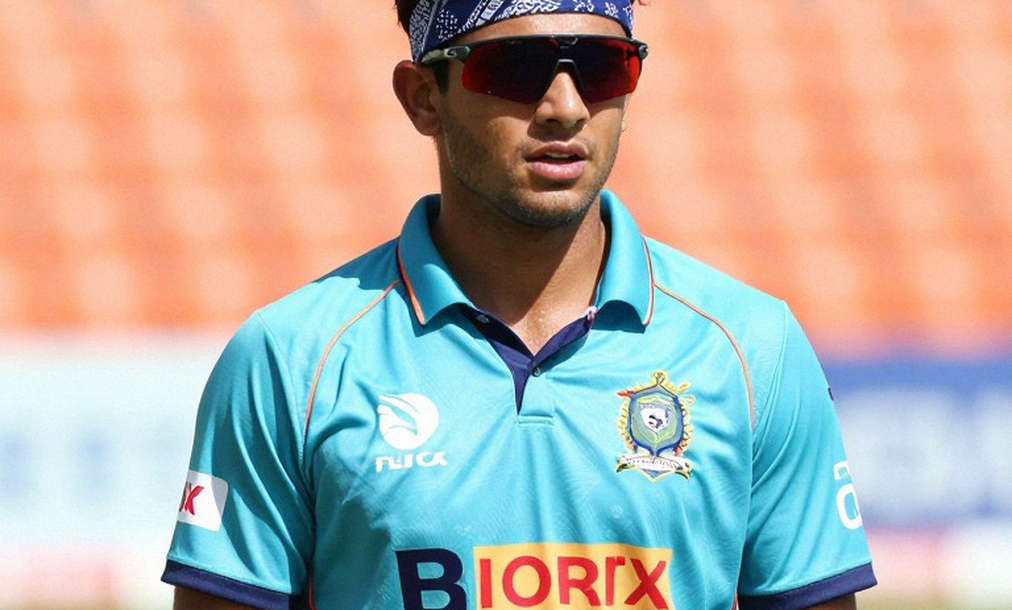
Overall risk rating is medium. The reason is that an anomalous form statistic arrives alongside a known structural vulnerability, but is tempered by a small, single-region sample and strong mitigants (a deep young batting pipeline, and the tour as a controlled testing ground).
Narrative and the expectation gap
The current public narrative is 'the rising star's form crisis'. It is a familiar cycle of the Indian media's star-making machine, and it is currently in its acceleration phase.
But the fundamental support for that narrative is weak to medium. One duck in a first-class match is a thin basis. 'Four in nine' is more substantial, but still single-format and broadly single-region. Dismissal modes, total runs and conditions detail are all missing.
The expectation-gap analysis suggests that market expectation is the 'woeful form' read, while objective assessment says: abnormal but small sample, a strong venue confounder, and teammates succeeding on the same pitch. Sentiment is therefore running ahead of the data, and on the over-pessimistic side.
Concern about the team result (137/5) is reasonable, because it is real — but it is not new. The direction of pressure on selection and the opener's slot is indeterminate, because it depends on data this report does not contain.
The strongest corrective signal is the same-pitch comparison: Padikkal and Sudharsan scored where Jaiswal could not. That is simultaneously the strongest evidence that Jaiswal erred and the strongest reason why a single duck cannot define him.
Industry transmission: the A tour as a low-cost laboratory
There is no direct commercial or league-ecosystem element in this story. It is an international A tour, not a league. Broadcast-rights value, franchise valuation and auction analysis therefore do not apply.
One adjacent thread does exist, and should be kept strictly separate: young Indian stars carry high IPL commercial value, but that is not proof of red-ball Test security. Reverse transfer from T20 explosiveness does not deliver first-class solidity.
The primary transmission route runs upstream to midstream — A-tour performance feeds the senior selection pipeline, and from there influences media narrative and the selection market. From a talent-supply perspective the signal is net positive, because it simultaneously surfaces risk (Jaiswal) and readiness (Padikkal, Sudharsan), improving the quality of selection information.
There is no signal for betting or fantasy markets. This is purely a sporting and selection story.
Conclusion: not a crisis, a question mark
The essence of this report is a young opener's possible technique or form vulnerability against the moving ball in overseas seaming conditions, set against a solid counter-performance by teammates on the same pitch. It is a genuine concern, but one heavy with a small sample and multiple confounders. Treating it as proof of decline would be premature.
The most notable thing is the information asymmetry. The data available are not adequately verified — most points carry no source, and the material is likely drawn from a live scorecard feed rather than an in-person report. That is why there is no description of dismissal quality.
The correct way to read it is not as 'Jaiswal's fall' but as 'an examination of India's top order in New Zealand seam conditions'. In that examination one student failed, two succeeded, and the rest of the side staggered to 137/5. That is a result of the examination, not its verdict.
What to watch next
First, Jaiswal's dismissal modes across the series. If edges to seamers dominate, the technique concern is real. If it is a mix of lbw and bowled, the picture is different.
Second, the official announcement of the India Test XI. Whether Jaiswal is retained or omitted, the narrative will swing sharply either way.
Third, continued scores from Padikkal and Sudharsan. If they hold, a genuine contest for the opener's and No. 3 slots will emerge.
Fourth, the seam-adaptation capacity of the wider top order. Repeated collapses in seaming conditions would become a structural concern for India's overseas Tests.
Disclaimer
This analysis is based on publicly available information and the results of primary text deconstruction. It is presented for sports-information reference only and is not betting advice of any kind. Sporting outcomes are highly uncertain, and conclusions built on a nine-innings sample must be treated cautiously. Most of the data cited in this report are pending verification and should be checked against official scorecards before any decision is taken.