
Kabaddi: From the Village Pit to the Global Stage — The Complete Journey of a Sport
कबड्डी भारतीय उपमहाद्वीप का पारंपरिक संपर्क खेल है जिसमें रेडर विपक्षी आधे हिस्से में जाकर सांस रोककर अंक बनाता है। 1950 के दशक में अखिल भारतीय कबड्डी महासंघ के गठन के साथ नियमों का मानकीकरण हुआ। 1990 बीजिंग एशियाई खेलों में इसे आधिकारिक दर्जा मिला। 2014 में प्रो कबड्डी लीग की शुरुआत ने खेल को व्यावसायिक और टेलीविज़न-केंद्रित पहचान दी; पहले सीज़न में आठ टीमें थीं और जयपुर पिंक पैंथर्स ने खिताब जीता। खेल की मुख्य तकनीकों में टो-टच, हैंड-टच, डबकी, स्कॉर्पियन किक, एंकल होल्ड, थाई होल्ड और सुपर टैकल शामिल हैं। अंतरराष्ट्रीय स्तर पर ईरान ने मजबूत रक्षात्मक शैली के साथ भारत के दबदबे को चुनौती दी है। प्रमुख खिलाड़ियों में अनूप कुमार, अजय ठाकुर, प्रदीप नरवाल, दीपक निवास हुड्डा, मनजीत छिल्लर, फज़ेल अत्राचली और नवीन कुमार शामिल हैं। खेल के सामने प्रशासनिक स्थिरता, निचले स्तर का ढांचा, महिला कबड्डी को बराबर मंच, खिलाड़ी कल्याण और ओलंपिक मान्यता जैसी चुनौतियां हैं।
Kabaddi is a sport with no ball, no bat and no expensive equipment. There is only a court, two teams and a single chant held on a raider's breath — kabaddi, kabaddi. That simplicity is the game's greatest strength and also its greatest challenge. Simplicity lets it reach every village child, but in the modern sports economy simplicity is often mistaken for a lack of professionalism. Over the past decade, India and several other countries have tried to break that perception. Television graphics, slow-motion replays, data-driven team selection and multi-crore contracts are all part of kabaddi now. Yet the core of the sport remains the same: one player crosses into the opponent's half, holds a chant, and tries to return.
This report traces that journey — a sport that spent centuries building its identity in the dust of village grounds, then survived colonial neglect, then passed through a phase of national and international competition, and is now reinventing itself as a professional league. It is not merely a story of rules; it is a story of rural Indian talent, administrative apathy, commercial courage and a changing spectator culture.
Roots: Soil, Myth and Tradition
There is no single definite historical date for the origin of kabaddi, but its roots run deep in the folk traditions of the Indian subcontinent. Folk narratives link it to the chakravyuh of the Mahabharata — the story of Abhimanyu entering alone and being surrounded is often read as a symbol of kabaddi's essential spirit. That link is not historically proven, but it is culturally so strong that commentators still invoke it.
More concretely, traditional forms of kabaddi exist across the subcontinent under different names. In Maharashtra it was known as hu-tu-tu, in Tamil Nadu as sadugudu, in Punjab as kaunbada, in Bengal as hadudu, and in the villages of Haryana simply as kabaddi. The rules differed — seven players in some places, five in others; a mandatory held breath in some, not in others; no clear specification of court size. That variety was proof of the game's popularity, but also a major obstacle to competition.
During the colonial period, Indian indigenous games were not institutionally encouraged. Cricket and football received patronage through English schools and clubs, while kabaddi remained confined to villages. With the rise of Indian nationalism in the late nineteenth and early twentieth centuries, some efforts were made to promote indigenous sports, but the decisive role in giving kabaddi an organised form came in the mid-twentieth century.
The Journey of Rules: From the Pit to the Rulebook
The most decisive stage in kabaddi's modern history is its standardisation. After the formation of the Amateur Kabaddi Federation of India in the 1950s, the sport was given a uniform rulebook. Court dimensions were fixed, the number of players was fixed, and the conditions of raiding and tackling were clarified. This was revolutionary, because it turned a folk game into a competitive sport.
The rules have been continuously refined since. The introduction of the bonus line made raiders more aggressive, because playing deep and taking risks earned extra points. When a raid yields no point, the next raid is declared do-or-die — the raider must score or be out. This rule creates dramatic tension in the closing minutes. The super tackle provision — when three or fewer defenders stop a raider, the points are doubled — made defensive play as thrilling as attacking play.
These rules have a social dimension too. Provisions like the bonus line and super tackle made the sport faster and more readable for spectators, which strengthened its television appeal. But some traditionalists argue that standardisation erased the local variety that was part of its cultural identity. That tension persists — the price of becoming professional is often the loss of the local.
Asian Games: Recognition on the International Stage
The biggest event in kabaddi's international expansion was its inclusion in the 2026 Beijing Asian Games. The decision seemed natural at the time, because kabaddi was played in several Asian countries — besides India, it had a presence in Bangladesh, Nepal, Pakistan, Sri Lanka, Iran, Thailand and Japan. Inclusion in the Asian Games gave the sport a permanent competitive structure, made government funding easier, and gave players a platform where an international medal could become an identity.
For a long time the Indian men's team dominated this stage. That dominance was natural, because India's talent base was far larger than other countries'. But that dominance gradually turned into a challenge. Iran built a distinct identity in international kabaddi through an organised training system and a fitness-based style of play. Bangladesh and other countries refined their own local styles. As a result, medal outcomes in international competitions became less predictable, and it was here that the sport began to establish itself as a genuinely global contest.
Pro Kabaddi League: The Commercial Turning Point
If there is one event in kabaddi's modern history that changed the sport's economic and social standing, it is the Pro Kabaddi League, launched in 2026. Before it, kabaddi was seen as a rural, low-coverage game. The league put it in television prime time. Cricket-style branding, a franchise model, player auctions, film and corporate figures as owners, and a distinct broadcast style — all of this gave the sport new audiences.
The first season had eight teams, and Jaipur Pink Panthers won the title. It was a symbolic moment, because it proved that kabaddi could run as a franchise-based league. In later years the number of teams grew, seasons lengthened and broadcast rights values rose. Auction prices for players increased, and for the first time players from villages found that their talent had a market value.
Honestly, the league produced two very different kinds of impact. On one hand, it transformed players' incomes, recognition and social status. On the other, it raised the question of whether the league's fast, television-centred format is changing the sport's basic culture. Rural tournaments, school competitions and the state-level structure did not strengthen at the same pace as league matches. That imbalance remains at the centre of a major debate in professional sport.
The Craft: Raiding, Tackling and Strategy
Kabaddi looks simple but is highly technical to play. A raider has 30 seconds to enter the opponent's half and score. Points can come from a touch point — when the raider touches a defender and returns — or from a bonus point, earned by crossing the bonus line and touching a defender.
Raiding has many styles. In a toe touch the raider touches a defender's foot and turns back swiftly. In a hand touch he touches the upper body. In a dubki he ducks past a defender. The scorpion kick is a dramatic technique in which the raider lifts a leg backwards to touch a defender. The raider's real test is to return safely after scoring — because if defenders stop him, he is out and the team suffers.
Defensive play is equally important. Ankle hold, thigh hold, block and chain tackle are the defenders' main weapons. A successful tackle involves the coordination of several defenders — one grabs the raider's leg, one the waist, one closes the circle. When a team has three or fewer defenders left and they stop a raider, the points are doubled under the super tackle rule. This gives the sport great strategic depth, because teams deliberately play with few defenders to take bigger risks.
An all-out is another decisive moment. When all players of a team are out, the opposing team gets two extra points and the dismissed players return. This rule keeps the game alive until the end, because no team is ever safely ahead.
Stars: The Names That Change the Game
Any sport's popularity is built by its stars, and kabaddi has names that placed the game in the public consciousness. Anup Kumar is regarded as kabaddi's calmest and most strategic captain; under his leadership teams won big matches, and his image became one of leadership that stays steady under pressure. Ajay Thakur is known for aggressive raiding and the ability to change a game at big moments.
Pardeep Narwal is counted among the most dangerous raiders in the game for his dubki and his ability to score consistently. His career shows how a player from a rural background can build a national identity through a professional league. Deepak Niwas Hooda is known for all-round ability, and Manjeet Chhillar for defensive solidity. Names like Rahul Chaudhari and Rohit Kumar held audiences in the league's early years.
Internationally, Fazel Atrachali is a name that shows kabaddi is no longer only India's game. This defender from Iran made his place in the Indian league through physical strength and the accuracy of his ankle hold. Young raiders like Naveen Kumar show that a new generation is giving the sport even more pace.
A major role of these names is that they pulled kabaddi out of an image in which it was seen only as a village game. When a farmer's son plays before crores of people on television, he is not only recording a win — he is writing a new story of social mobility.
Women's Kabaddi: A Separate Arena, Equal Passion
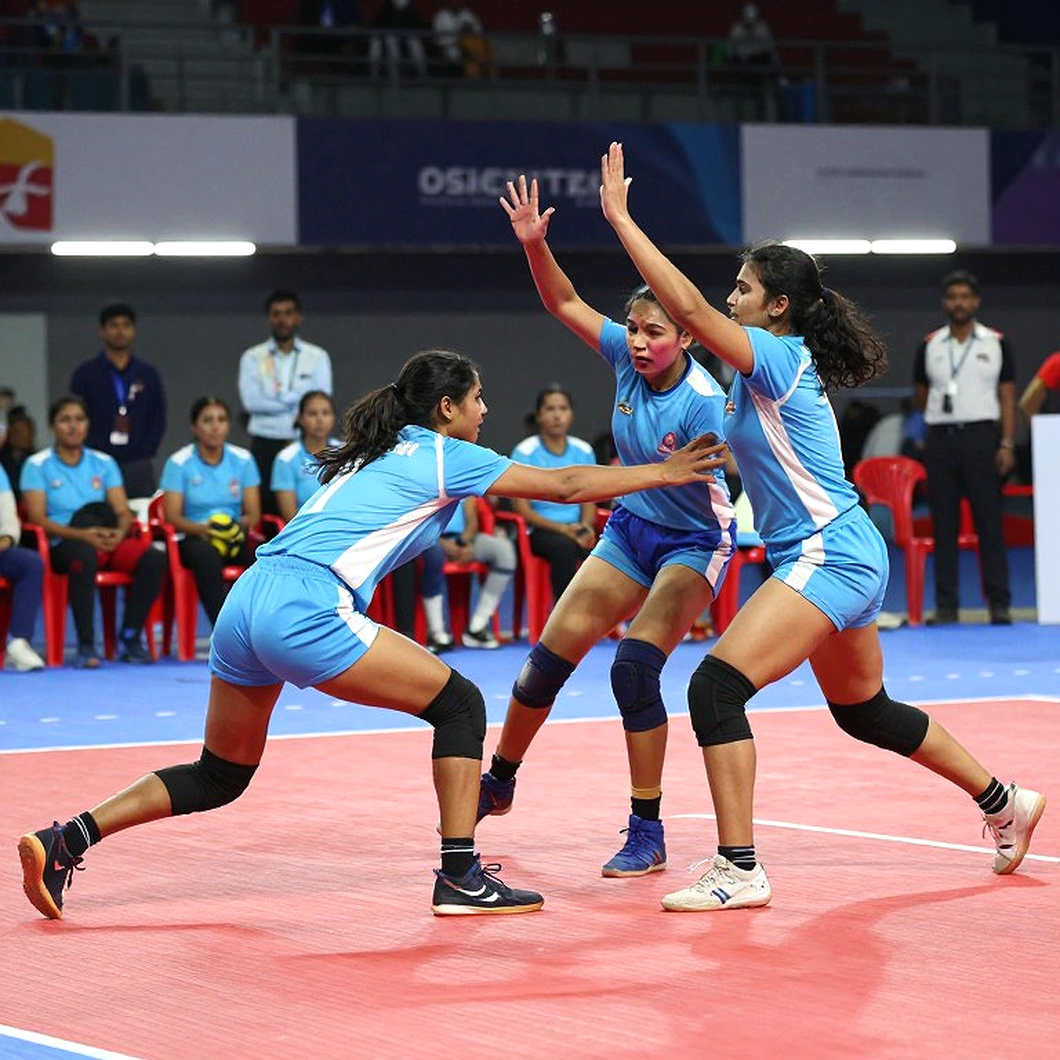
Women's kabaddi often gets less space in mainstream discussion, even though its struggle has been far harder than men's. Women faced social resistance, limited resources and low coverage. After women's kabaddi began at the Asian Games, the sport gained an institutional platform, and the Indian women's team established a strong presence in international competitions.
Women's kabaddi has its own strategic features. Matches generally emphasise speed, agility and team coordination. The inclusion of women's teams at league level has been a welcome step, but broadcast time, sponsorship and media coverage remain far below the men's game.
This imbalance is not only economic. When young girls do not see women's kabaddi on television, the sport appears less as a possible career. So the question of women's kabaddi is not only one of social justice but also of the sport's future talent base. If half the population is kept away from the game, it will never reach its full potential.
Finding Talent: From Village to Academy
Kabaddi's greatest strength is its talent base. Every year thousands of children in Indian villages play the game informally, without a coach, without a ground and without equipment. This informal training is the game's real school. But this is also its greatest weakness — the system to identify, refine and convert this talent into a career is very thin.
State-level tournaments, sports authority academies and some private academies work in this area, but their reach is limited. For a rural player, moving to a city, finding a good coach, and accessing nutrition and medical care are major challenges. The players who succeed have inspiring stories, but they are exceptions, not the rule.
The Pro Kabaddi League has changed this situation somewhat. The auction and franchise system has given talent a market where good performance can translate directly into income. But it is important to note that the league works only at the top level; the structure below has not strengthened at the same pace. If competitions, coaching and grounds do not grow at the rural and school levels, the league's talent pipeline may slowly dry up.
Money, Governance and Transparency
For any sport's long-term development, administrative stability is as important as talent. Kabaddi's history includes several episodes of administrative disputes, federation elections and government intervention. These disputes directly affect players — delays in selection, uncertainty over international participation and reduced sponsorship.
The question of transparency also matters. In the league era, public information about player contracts, team ownership and broadcast rights remains limited. In a professional sport this may be normal, but for a sport whose identity is tied to rural India, transparency and fairness carry greater social weight.
And one issue that gets little discussion — player welfare. Kabaddi is physically very demanding. There is constant stress on knees, ankles, shoulders and the back. A raider bends, twists and falls dozens of times a day. Without good medical care, rehabilitation and financial security after injury, a player's career can end quickly. The professional league has made some improvements, but much remains to be done at lower levels.
Iran and the Changing Global Balance
The most interesting story in international kabaddi is the rise of Iran. Iran adopted kabaddi as a disciplined, fitness-centred sport and developed a strong defensive style. Its teams rely on physical strength, patience and collective discipline, which makes them a difficult opponent for Indian teams.
This shift means kabaddi is no longer a unipolar sport. The game has also expanded in Bangladesh, South Korea, Kenya and other countries. This competition is good news for the sport, because it makes international matches less predictable and more attractive. But it is also a warning for India — a large talent base is not enough on its own; continuous work is needed on training quality, sports science and strategic innovation.
Technology and the Age of Data
In modern sport, data is a new language, and kabaddi is not untouched by it. Raiding patterns, tackle success rates, performance in do-or-die situations, opponents' defensive weaknesses — analysis of all this is now part of team strategy. Video replay and technical review have made decisions more accurate, though the debate over their impact on the game's pace continues.
Technology is also increasingly used in player fitness monitoring, injury management and nutrition planning. This change is necessary, because kabaddi's physical demands are high and traditional training methods are not always sufficient. But technology benefits only when it reaches lower levels; if it remains confined to top league teams, inequality will grow.
Media and Audiences
A major reason for kabaddi's popularity is its broadcast-friendly format. Matches are short, points come quickly and dramatic turns arrive constantly. Television brought the sport into homes, and social media connected players directly with audiences.
But there is an imbalance in media coverage. The men's league gets far more time than the women's game. Matches in big cities get more space than rural and state-level competitions. If kabaddi is to become a lasting sports culture, the media must not remain limited to big events.
The Road Ahead
Kabaddi stands at an interesting turning point today. On one side it has a successful professional league, a growing international base and a strong cultural heritage. On the other it faces challenges such as administrative stability, lower-level infrastructure, an equal platform for women's kabaddi, player welfare and inequality in media coverage.
For a long time there have been demands to include kabaddi in the Olympics. This demand is natural, because inclusion in the Olympics is a symbol of global recognition for any sport. But earning an Olympic place requires meeting several criteria — global participation, organised administration, an anti-doping system and sustained audience interest. Kabaddi will have to work continuously on these fronts.
Most importantly, kabaddi must not distance itself from its roots. Its strength lies in its simplicity, accessibility and collectivism. If, in the process of becoming professional, the sport becomes only urban, television-centred and expensive, it will lose its greatest capital — the talent of villages and small towns.
In the end, kabaddi's story teaches a larger lesson. It shows that tradition alone is not enough to keep a sport alive; it needs new platforms, new audiences and a new economy. But it also shows that no sport survives unless its basic accessibility remains. Kabaddi has both the opportunities and both the responsibilities. It remains to be seen how the sport balances them in the coming decade.
संबंधित खिलाड़ी
अनुशंसित
The Bonus Line and the Third Raid: The Regular Season Is Being Decided Off the Scoreboard2026-10-29
Kabaddi's Empty Log: When the Data Doesn't Arrive, Where Does Strategy Come From?2026-11-01
Commonwealth Kabaddi 2026: India's Real Number Is Not 46-26, It Is England Shrinking From 68 to 262026-10-30
India vs England, Match 4, Commonwealth Kabaddi Championship 2026: A Rotated Squad, a Hollowed-Out Field and What a Big Margin Will Not Tell You2026-10-23
Kabaddi's Unaudited Ledger: Where There Is No Document, Silence Becomes the Source2026-10-23
अनुशंसित
The Bonus Line and the Third Raid: The Regular Season Is Being Decided Off the Scoreboard2026-10-29
Commonwealth Kabaddi Championship: The Arithmetic Is Clean, the Load Is Not2026-10-30
Kabaddi: From Mud Courts to a Professional League, the Industrial Journey of a Sport2026-10-31
Commonwealth Kabaddi Championship: 23 Teams, 62 Matches, Nine Days — Kabaddi's First Commonwealth Audition in Ahmedabad2026-10-23
First Commonwealth Kabaddi Championship in Ahmedabad: The Arithmetic of 23 Women's Matches Tells a Story the Opening Ceremony Won't2026-10-30
अनुशंसित
Commonwealth Kabaddi Championship 2026: Pakistan's Name Left the Ahmedabad Draw, and Nobody Opened the Columns2026-10-30
Surjeet Singh Captain, Naveen Kumar Deputy: India's Real Fight in Ahmedabad Isn't Iran, It's the Calendar2026-10-23
Surjeet Singh as Captain, Naveen Kumar as Deputy: In Ahmedabad, the Real Question Isn't Captaincy — It's the Format2026-10-23
Young India's First Test Under Surjeet-Naveen Captaincy: Clash with England in Commonwealth Kabaddi Championship Today2026-10-24
Commonwealth Kabaddi 2026: In India's 46-26 Win, the Real Story Is the 262026-10-30