
Surface Wars, Points Defence and the New Generation's Push: Understanding the Architecture of Modern Tennis
**मुख्य प्रश्न-उत्तर कैप्सूल** 1. टेनिस में सतह परिवर्तन इतना महत्वपूर्ण क्यों है? — क्योंकि रोलां गैरो (मिट्टी) और विंबलडन (घास) के बीच लगभग तीन सप्ताह ही होते हैं, जिसमें खिलाड़ी को फुटवर्क, गेंद की टाइमिंग और शारीरिक लोड पूरी तरह दोबारा बनाना पड़ता है। 2. रैंकिंग अंकों की रक्षा (पॉइंट्स डिफेंस) क्या है? — यह पिछले 12 महीनों के नतीजों पर आधारित रोलिंग गणना है; खिलाड़ी को पिछले साल के अंक बचाने होते हैं, इसलिए वह प्रतिद्वंद्वी के साथ-साथ अपनी पुरानी उपलब्धि से भी लड़ता है। 3. आधुनिक टेनिस में खेल शैली कैसे बदली है? — बेसलाइन खेल का प्रभुत्व बढ़ा है, क्योंकि रैकेट तकनीक, सतहों की समानता और फिटनेस प्रशिक्षण ने लंबी रैली को सामान्य बना दिया; अब आक्रामक रिटर्न और चुनिंदा नेट-आक्रमण के संयोजन से संतुलन बन रहा है। 4. नतीजे से ज़्यादा कौन-से डेटा बताते हैं? — सर्विस अंक जीत प्रतिशत, रिटर्न अंक जीत प्रतिशत, ब्रेक पॉइंट रूपांतरण दर और विजेता/अनिवार्य त्रुटि अनुपात; इन्हें सतह, प्रतिद्वंद्वी स्तर और सीज़न चरण के संदर्भ में पढ़ना ज़रूरी है। 5. टेनिस अर्थव्यवस्था का सबसे बड़ा तनाव क्या है? — पिरामिड का आधार: चैलेंजर और आईटीएफ स्तर पर खिलाड़ी खर्च खुद उठाते हैं जबकि पुरस्कार राशि सीमित है, जिससे प्रतिभा चयन संसाधनों पर निर्भर हो जाता है। 6. इस विश्लेषण का सार एक वाक्य में? — टेनिस व्यक्तिगत खेल है, लेकिन उसका प्रदर्शन कैलेंडर, अंक-प्रणाली, टीम तैयारी और उद्योग ढांचे से तय होता है — इसलिए निष्कर्ष हमेशा संदर्भ और सत्यापित डेटा पर टिके होने चाहिए।
The most overlooked truth about professional tennis is that it is an individual sport run on a collective system. A player spends far more hours in airports, hotels, recovery sessions, media obligations and ranking arithmetic than on court. The season spans eleven months, is played across four continents and presents three distinct surfaces. So when we discuss a player's form, the significance of a tournament, or the rise of a new generation, we are really discussing how this entire system operates.
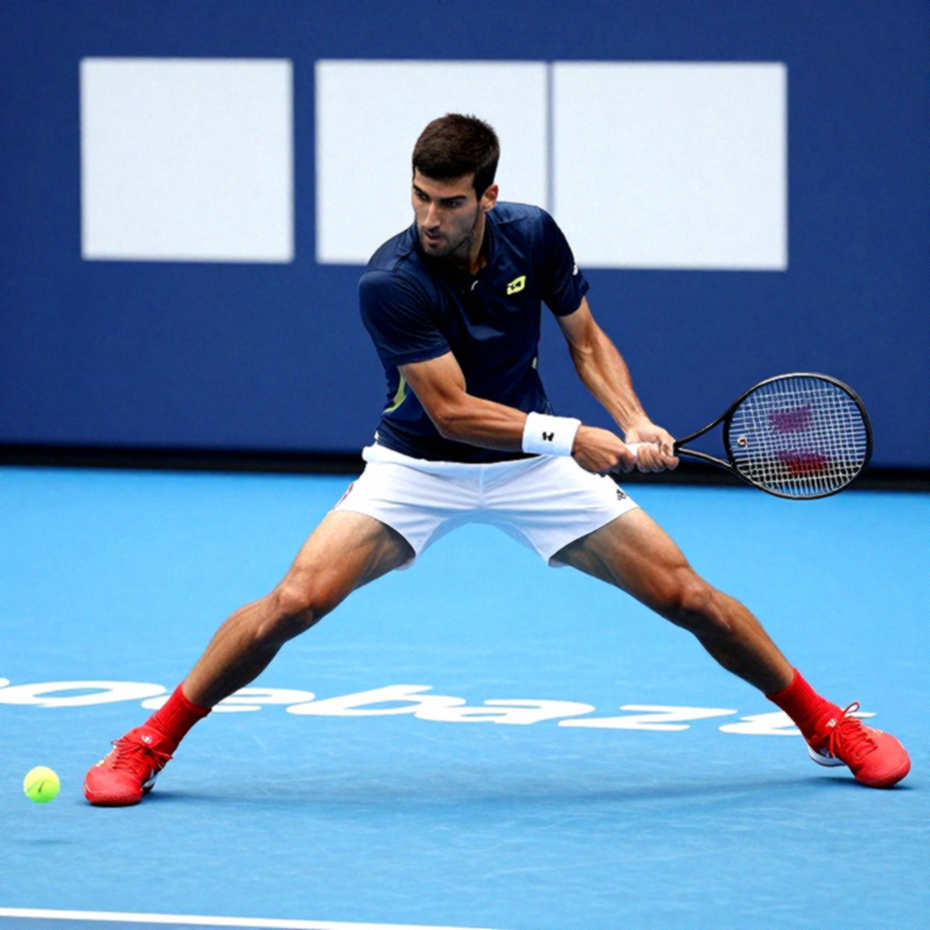
This report is not a match report. It is an attempt to understand the five structural tensions shaping tennis today: surface transition, the pressure of ranking points, the rebalancing of playing styles, the gap between data and conclusion, and an economy resting on the base of the pyramid.
Three surfaces, one year: the hidden cost of transition
The season opens with the Australian Open and closes with the US Open and the indoor swing, but the hardest chapter is the clay-to-grass transition. Only about three weeks separate the end of Roland Garros from the start of Wimbledon. For the viewer this is merely a change of surface; for the player and the team it is a complete recalibration of movement patterns, footwork, ball-timing and physical load.

Clay is slow, the ball sits up, rallies stretch. That means sustained lateral loading, sliding and defensive running. Grass is the opposite: low bounce, high speed, little time. A player who has spent two weeks practising retreating and returning must, within three weeks, build an entirely different game of advancing and attacking the return. Hard courts sit between the two, but exact their own toll on joints.
The direct consequence is a permanent tension between specialisation and versatility. Some players build remarkable records on clay, others forge identities on grass, but the calendar demands that everyone be at least competitive everywhere. That pressure produced the style loosely called all-court tennis: a style that is exceptional nowhere but sufficient everywhere.
Ranking points: arithmetic, not just psychology
The ranking is often treated as a mirror of performance, when in fact it is a rolling calculation. Results from the past twelve months are added, older results drop away, and from this emerges the pressure known as points defence. A player who reached the latter stages of a major last year is not only fighting opponents this year; they are fighting their own previous achievement.
A subtle but important effect is that this system directly shapes scheduling. Deciding where to play in a given week is not merely a fitness decision; it is points economics. Playing in a low-points week can be risky, while an early exit at a high-points event can distort an entire year. This is why the relationship between calendar congestion and injury re-enters the debate so often.
There is a psychological dimension too. When a player must defend in four weeks the points earned across a whole previous year, every match changes meaning. Some respond with heightened aggression, others become conservative. Either way, the natural flow of the game is affected, and this is precisely where data and psychology begin to explain each other.
A sound analysis must separate form from ranking. The ranking says how successful a player was over the past year; form says how they are playing this week. The gap between the two is where upsets are born.
Playing style: baseline dominance and the hoped-for all-court revival
Over the past two decades the game has moved decisively toward baseline dominance. This is not fashion alone: equipment, greater surface similarity and fitness training all contributed. Modern racquets make it possible to generate more spin and pace, and higher physical conditioning normalised long rallies. As a result, serve-and-volley became rare and the risk of closing points at the net rose.
But dominance has a cost. Baseline tennis demands more of the body: long rallies, rapid changes of direction, repeated joint loading. This is why injury management has become the largest component of career management. Even the most technically sound player falls behind across a long season without physical management.
Interestingly, a reaction is visible within the baseline era. Some younger players shorten points by coming forward, because finishing a point early is more economical than matching an opponent in a long exchange. This is not a revival of the old serve-and-volley; it is a new combination of aggressive returning, selective net approaches and varied serving.
One caution is essential when evaluating this rebalancing: style cannot be judged in isolation. The same style can be a gift for one player and a curse for another, depending on build, age and the opponent pool. Style discussion should always be contextual, not a slogan.
Data: four indicators that reveal more than the scoreline
The scoreline is the most visible data in tennis, but not the most informative. Matches are often decided by a handful of points, while process data reveals whether the outcome is sustainable or coincidental. Four indicators are especially useful.
First, the percentage of service points won, which shows not only pace but control of first and second serves. Second, the percentage of return points won, showing how much a player degrades an opponent's serve. Third, break-point conversion, the clearest signal of composure under pressure. Fourth, the winner-to-unforced-error ratio, which displays the balance between aggression and control.
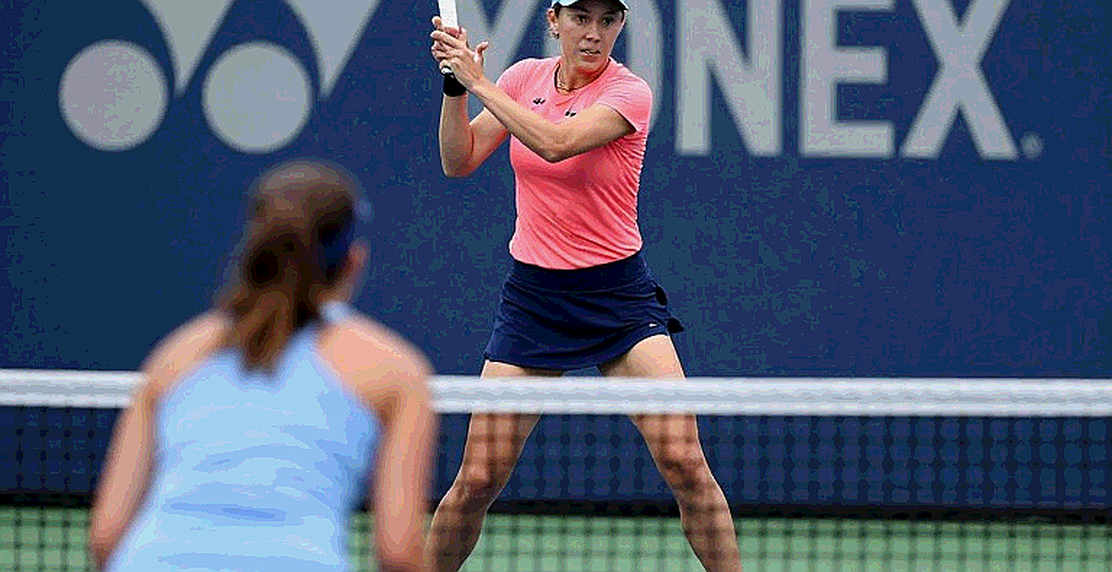
These indicators matter only in context. A break-point conversion rate means little on its own; it must be read against surface, opponent level and season phase. Conclusions drawn from small samples are the biggest risk, because a three- or four-match sequence in tennis may be coincidence rather than trend.
This is why the gap between reputation and numbers is the most valuable part of analysis. When a narrative makes a player larger than their data, there is room for correction; when data makes a player smaller than their reputation, hidden capability may be present.
Team management: changing coaches is a strategic decision
A modern player does not compete alone. Behind them stands a team: head coach, fitness specialist, physiotherapist, nutritionist and sometimes a mental coach. A coaching change is therefore never purely emotional; it is a strategic reset.
Three common causes stand out. Technical stagnation, when a player feels their game has plateaued. Mental fatigue, when long collaboration loses conversational freshness. Strategic direction, when a player wants a different approach for a specific surface or opponent group.
None of these guarantees success or failure. Early months under a new arrangement often show improvement because change itself generates energy. The real test arrives six to twelve months later, when novelty fades and only the working method remains.
Similarly, the age curve must be read beyond the number. A 30-year-old is more experienced than a 20-year-old, but recovers differently. Successful teams recalibrate training volume with age rather than preserving an old framework.
Rules and governance: where jurisdictions collide
Tennis governance is unusually multi-centred. Grand Slam committees set rules for their events, the ATP and WTA run the men's and women's tours, the ITF oversees international competition and rules, and national associations operate at their own level. The advantage is that no single party can control the whole sport; the drawback is slow and sometimes inconsistent change.
Three regulatory issues have dominated recent discussion. The serve shot clock, which bound pre-serve preparation to a fixed limit; off-court coaching, granted selective recognition and reviving the debate over formalising the coach's role; and rules tied to player health and calendar congestion, where commercial and physical interests collide.
Caution is required here, because these matters touch careers and reputations directly. No regulatory dispute should be assessed without verified facts; assigning risk levels on inference is speculation, not analysis.
Narrative versus reality
In the media and social economy, narratives form fast and change fast. Two big wins declare a young player the next great champion; three subsequent defeats declare them overhyped. This oscillation is part of sport, but it should not be the basis of analysis.
A simple way to measure the expectation gap is to convert praise into measurable criteria. If someone claims a player has top-tier capability, the question becomes where their numbers place them among the elite group. If claim and data diverge, the cause should be sought: perhaps the capability is still developing, or perhaps the claim is exaggeration.
Reputation has another dimension: the debate over great players' legacies. The debate is natural but is often built on emotion rather than historical fact. The right approach compares players within their era, surfaces and depth of competition, not merely by title count.
Industry: where the base of the pyramid stands
Tennis economics resemble a pyramid. At the top sit the four Grand Slams, generating the largest revenue through broadcast rights, sponsorship and tourism. Below are the major ATP and WTA events, then mid-tier tournaments, and at the base Challenger and ITF competition.
The structure's greatest weakness is its base. At lower levels players fund travel, accommodation and coaching themselves while prize money remains limited. The direct implication is that talent selection depends more on resources than on ability. A player without financial backing may exit before reaching the top.
Commercially there is a second tension: calendar expansion. As major events lengthen and the season stretches, revenue rises but physical strain rises with it. This is why debate over calendar, injury and prize-money distribution returns every season.
Technology and media are shifting too. Data-driven broadcasts, second-screen experiences and short video have carried tennis to an audience that watches moments rather than matches. This changes presentation, but also raises the question of whether viewers reach the depth of the sport or only the highlights.
Conclusion
Tennis is beautiful precisely because it is simultaneously individual and structural. On court a player stands alone, but performance is shaped by the surface calendar, points arithmetic, team preparation and industry architecture. Superficial conclusions should therefore be avoided.
The future will hinge on three questions. Can the calendar be aligned with player health? Can players at the base of the pyramid be made economically sustainable? And will technology and expanding data be used to simplify the sport or complicate it further? The answers will define tennis's next decade.