
Zverev Upset in Vienna Semifinal: The Gulf Between the No. 1 Crown and the Court
वियना के एर्स्टे बैंक ओपन सेमीफाइनल में एलेक्स डी मिनौर ने अलेक्जेंडर ज़्वेरेव को 6-4, 1-6, 7-6(4) से हराया। मैच का सबसे बड़ा संकेत यह है कि ज़्वेरेव ने कुल 16 गेम जीते जबकि डी मिनौर ने केवल 14 — यानी हारने वाला गेम-स्तर पर आगे था, जो निर्णायक अंकों पर कन्वर्ज़न की समस्या दर्शाता है। डी मिनौर ने निर्णायक टाईब्रेक में 3-0 की बढ़त बनाई और 7-4 से जीत दर्ज की, जो दबाव में रीसेट करने की क्षमता का प्रमाण है। दूसरे सेमीफाइनल में कार्लोस अलकाराज़ ने डेनियल मेदवेदेव को 6-4, 7-6(2) से हराया। रिपोर्ट में ज़्वेरेव के सोमवार से विश्व नंबर-1 बनने और '1974 के बाद सबसे उम्रदराज़ पहली बार नंबर-1' होने का दावा है, लेकिन यह अपुष्ट है और ATP की आधिकारिक रैंकिंग से सत्यापन के बिना उद्धृत नहीं किया जाना चाहिए।
A semifinal result sometimes tells the story of an entire season. That is what happened on Saturday at the Erste Bank Open in Vienna. Australia's Alex de Minaur beat Alexander Zverev 6-4, 1-6, 7-6(4) to reach the final. On the surface this is just another upset — an elite returner toppling a serve-dominant baseliner on a fast, low-bouncing indoor hard court. But the real story is not in the scoreline; it is in the arc of the scoreline.
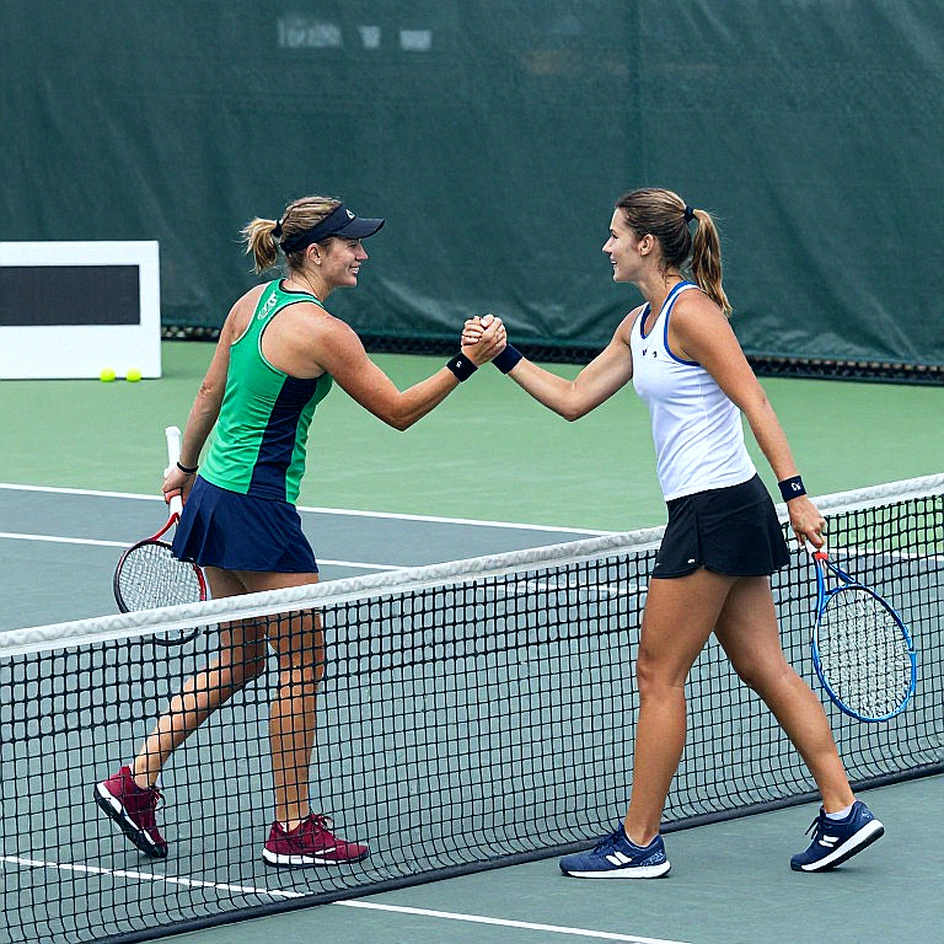
De Minaur took the first set 6-4. Zverev responded with a 6-1 second set — a complete momentum inversion. The third set went to a tiebreak, where De Minaur led 3-0 and closed it out 7-4. Starting the decisive set 3-0 after collapsing to 1-6 in the previous one is not a technical signal. It is a mental one. And over the longer term it is a far more predictive signal than any routine win.
Sixteen games to fourteen: the arithmetic paradox
Zverev won 16 games across the match; De Minaur won 14. The loser out-scored the winner at game level. That is not coincidence; it is a pattern, and it points to a player winning cheaply in bulk and losing the points that carry the most leverage. Tennis analysis calls this high-leverage conversion failure, and it is the same scouting read that has followed Zverev's tiebreak and break-point record for roughly a decade. Vienna is a fresh instance of that read.
This matters because the game-count paradox tends to disappear in surface-level analysis. Look only at the set scores and you see a close three-set match. Look at game level and you see a player who was better for large stretches and then lost control of the moments that decided the result.
The surface logic, inverted
This match is technically upside down, and that is what makes it analysable. Indoor hard courts reward serve quality and serve-plus-one first-strike linkage; they compress the value of defensive retrieval. A 6'6" serve-dominant player is, in theory, in the best possible position on this surface. De Minaur's record runs the other way — he is a hard-court generalist who has historically been weakest on clay and in low-bounce indoor conditions.
Yet the result inverted the expectation. There is really only one defensible reading: De Minaur's return depth and return position — standing in, taking the ball early — neutralised Zverev's primary weapon. That is not a good day; it is an opponent-specific, repeatable solution. That is the difference between a fluke win and a structural one.
The obvious question follows: did Zverev's first-serve percentage hold up in set two and collapse in set three? The source supplies no serve percentage, no winner/unforced-error ratio, no break-point conversion. This is therefore a structural inference from the set pattern, not an established fact.
The 3-0 tiebreak lead: the single biggest signal
De Minaur's 3-0 start in the deciding tiebreak is the most important data point in the match. An early lead in a breaker usually means the player arrived with a plan: aggression on second serves, taking the ball early, and targeting the backhand wing so that Zverev's down-the-line backhand pattern never forms. This is inference rather than confirmation — the source provides no point-by-point detail.
What is confirmed is this: winning the first three points of the decisive frame immediately after losing a set 1-6 is proof of an ability to reset under pressure. That capacity is showing up in a 25-26 year old whose game depends on movement, and about whom the prevailing assumption has been that he takes a step back on the biggest occasions. This tiebreak is direct evidence against that assumption.
The gap between the crown and the court
Now the element that separates this story from an ordinary upset. As reported in this material, Zverev was due to take the world No. 1 ranking from Monday — the 30th different No. 1 in tour history and, at 29, the oldest first-time No. 1 since 2026. All three claims are currently unverified and should not be cited without independent confirmation. For the purposes of analysis, take them as stated.
If so, an uncomfortable truth emerges: the ranking is a 52-week aggregate calculation, and the same week's on-court evidence contradicts it. Losing a 500-level semifinal, on his best surface, to a lower-ranked opponent is the textbook illustration of a ranking driven by consistency, not dominance.
This does not make the crown fake. Accumulating the most points across 52 weeks is a real achievement. But the gap between "world No. 1" and "the best hard-court player right now" is material here, and that gap is the actual content of this news item.
The biggest missing fact in the entire analysis is this: the source never explains why the incumbent is being replaced. Is it a mechanical points-expiry outcome, a decline in a rival's results, or something else? The question is unanswered, and until it is answered, any conclusion about the durability of the crown remains incomplete.
De Minaur: from giant-killer to consistent suppressor
On the other side of the net, De Minaur's signal is genuine. This is not his surface — historically it is his weakest environment — and the result arrived at the closing stage of the ATP Finals race. Reaching a 500-level final in the week when Turin qualification is at stake is not the signature of a lucky draw; it is the signature of quality form.
In the context of the Race, 500 points become disproportionately valuable at this exact calendar point. Late in the season, as the remaining events narrow, a 500-level final directly moves the top-eight cut line. That is why a "non-mandatory" event like Vienna acquired unusual strategic weight this week.
One caveat is necessary: De Minaur now carries a Sunday final into the Paris Masters. Five matches, then a 1000-level indoor hard event, then Turin. That load profile is heavy for a retrieval-based game. The physical advantage sits with Zverev (one extra recovery day); the momentum advantage sits with De Minaur.
The other semifinal: Alcaraz in control
In the second semifinal, Carlos Alcaraz beat Daniil Medvedev. The score was 6-4, 7-6(2) — 13 games to 10 overall, and 7-2 in the tiebreak. That number demonstrates far more control than the raw set scores imply. Winning a breaker 7-2 against one of the tour's better tiebreak servers is a marker of control at the highest-leverage moment.
It matters further because indoor hard is the surface Alcaraz has converted least. He will be the favourite in the final, but on a surface where his historical dominance is at its thinnest. That is a low-risk, high-upside position.
For Medvedev, by contrast, the signal is clearly negative. A straight-sets loss, a 2-7 tiebreak, against an opponent with whom he has historically matched up well. This is less a temporary dip than the profile of a player who has been structurally solved. On a single data point the conclusion should be held with medium-low confidence, but the direction is clear.
Calendar and scheduling: an asymmetric cost
Vienna is an ATP 500 — indoor hard, late October, positioned squarely inside the European indoor swing. Its placement is no accident: it sits between the Paris Masters (1000) and the ATP Finals, inside the densest and most consequential three-week block of the season.
The surface-switch cost here is low — indoor hard to indoor hard from Vienna to Paris, with very little adaptation expense, in sharp contrast to a clay-to-grass transition. But the entry density is high. For a 29-year-old with a history of lower-limb injury, a Vienna (4-5 matches) → Paris (1000) → Turin sequence carries real risk.
Entering was rational for both men, for opposite reasons. For Zverev: consolidating rhythm and profile before the coronation. For De Minaur: a Race-driven points grab, with direct Turin qualification at stake. The narrative value the tournament received for free — a non-mandatory 500 hosting both a No. 1 handover week and a Race-relevant result — is extraordinary for its tier.
Media narrative: the hollow coronation
The framing itself is a signal. The headline leads with the upset and only then reveals the ranking milestone — a deliberately deflationary construction. The source is not celebrating the crown; it is qualifying it. The phrase "will not be able to mark his ascent with another title" is a product of that mindset.
But balance is required. One semifinal proves neither a decline nor a breakthrough. The Zverev sceptic and the De Minaur enthusiast are both over-reading a single result. The sample size is insufficient. What can be said is that this result reinforces a pre-existing narrative rather than creating a new one.
The most valuable narrative asset is the "oldest first-time No. 1 since 2026" statistic. It is also the one most in need of verification. The journalistic rule is simple: the more attractive the number, the earlier you verify it.
German market reactivation is a separate event from the match result. A German man at world No. 1 after decades activates a large, commercially mature market — broadcast rights, sponsorship inventory, tournament ticket demand all reprice upward. That transmission has nothing to do with the scoreline.
"No. 1 without a Slam": the real risk
Zverev's career stage is a distinct profile: late-prime ranking peak, unresolved Slam résumé. Reaching No. 1 at 29 without a major title is the most awkward position in the sport — statistically the best player of a 52-week window, narratively not the best player of any given fortnight.
That gap will widen at the next Grand Slam. The "caretaker No. 1" framing will be ready by the Australian Open unless he wins Paris or Turin. That is not a bold prediction; it is standard tour dynamics.
The technical risk is concrete too. The standard opponent game plan against Zverev is becoming clear: neutralise the first serve, extend the rally, and apply pressure on the second serve at the decisive points. The Vienna tiebreak was an execution of that plan. Until the balance between serve percentage and aggression changes, the plan will keep being repeated.
In generational terms this item is a counter-signal. A first No. 1 at 29 — the oldest since 2026 — is not evidence of a completed generational handover but of an incomplete one. It is the story of the prime generation cashing in during a window when the leading new-generation player is not accumulating points. Alcaraz is 22 with an upward age curve; Zverev at 29 has a narrow window — realistically two to three seasons — before movement and recovery capacity erode.
Risk matrix, in order of priority
The first and largest risk is ranking-level decoupling, not injury. A No. 1 who loses a fast-court semifinal to a lower-ranked opponent is exposed to a specific and predictable media and tactical attack. Second, scheduling load: Zverev's injury background combined with De Minaur's five matches. Third, points-defence pressure — the crown arrives with an immediate 52-week defence cycle and no title this week, which implies the margin is likely thin.
None of these is a rule-breach or integrity category. There is no indication anywhere in this item of disciplinary, anti-doping, or match-fixing issues, and no such inference should be drawn. The governance dimension is included for completeness only, and its risk level is low.
What to watch next
First, verification. The world No. 1 transition is the central fact of this story and it is currently unconfirmed. Until it is checked against official ATP rankings, it should not be used for external citation. Second, the Paris Masters. If Zverev exits early there, the ranking-level decoupling thesis hardens. If De Minaur plays Paris under heavy load and still appears in Turin, his market valuation rises. Third, the Vienna final — if De Minaur beats Alcaraz, it will be a genuine level step-up rather than a one-off.
And fourth, the question currently unanswered: why is the incumbent No. 1 being replaced? If the answer is points expiry alone, this is routine sports news. If it is something else, the entire item changes category.
Editorial verification note
The ranking-related claims in this report — the world No. 1 transition, the "30th different No. 1," and the "oldest first-time No. 1 since 2026" — appear in the source material without a named source and without a publication date. They should be treated as unverified until independently confirmed against official ATP rankings. Likewise, serve percentage, return points won, break-point conversion and winner/unforced-error figures are not available; any conclusions in this article tied to those metrics are structural inferences, not measured facts. This material is for sports-information reference only and must not be taken as betting advice or as a prediction of any result.