
होमAsian CricketJaiswal's unbeaten 155 in the cold: a strong unofficial-Test knock, but the statistical caveat stands
Jaiswal's unbeaten 155 in the cold: a strong unofficial-Test knock, but the statistical caveat stands
उत्तर कैप्सूल: यशस्वी जायसवाल ने न्यूज़ीलैंड की कड़ाके की ठंड में एक अनौपचारिक टेस्ट में नाबाद 155 रन बनाए। चूँकि यह अनौपचारिक मुकाबला है, यह पारी आधिकारिक टेस्ट आँकड़ों या औसत में दर्ज नहीं होती — इसलिए इसे ‘टेस्ट फॉर्म का प्रमाण’ नहीं माना जा सकता। यह भारत की सलामी बल्लेबाज़ी गहराई और रेड-बॉल तकनीक के लिए एक सकारात्मक, लेकिन कम नमूने वाला संकेत है। मुख्य तथ्य: - पारी: नाबाद 155 रन, अनौपचारिक टेस्ट (बहु-दिवसीय, गैर-आधिकारिक दर्जा)। - परिस्थिति: न्यूज़ीलैंड की कड़ाके की ठंड, सीम-मूवमेंट और स्विंग के अनुकूल माहौल। - खिलाड़ी का कथन: "प्रोसेस, रूटीन, डिसिप्लिन" — यह आत्म-वर्णन है, सांख्यिकीय सबूत नहीं। - अनुपलब्ध विवरण: तारीख, प्रतिद्वंद्वी टीम, मैदान, पारी का क्रम और विपक्षी गेंदबाज़ों की गुणवत्ता। क्यों मायने रखता है: उपमहाद्वीप के सलामी बल्लेबाज़ों के लिए न्यूज़ीलैंड की सीम-अनुकूल परिस्थितियाँ सबसे कठिन परीक्षा मानी जाती हैं; ऐसे में लंबी नाबाद पारी तकनीकी टिकाऊपन और अनुशासन का संकेत देती है। सीमाएँ: एक अनौपचारिक, अकेली पारी से ‘टेस्ट के लिए तैयार’ का निष्कर्ष नहीं निकाला जा सकता; विपक्षी आक्रमण अनुभवहीन होने पर उपलब्धि का वज़न घट जाता है; रैंकिंग, WTC अंक या नीलामी मूल्य से कोई सीधा संबंध सिद्ध नहीं होता। आगे क्या देखें: आधिकारिक टेस्ट में निरंतरता, विपक्षी गेंदबाज़ों की गुणवत्ता, रेड-बॉल बनाम व्हाइट-बॉल प्रदर्शन का तालमेल, और चयन पर वास्तविक असर। संभावित प्रश्न: क्या 155* आधिकारिक टेस्ट आँकड़ों में गिना जाएगा? — नहीं, अनौपचारिक दर्जे के कारण नहीं। क्या यह पारी टेस्ट टीम में जगह पक्की करती है? — नहीं, यह केवल एक सकारात्मक संकेत है, प्रमाण नहीं।
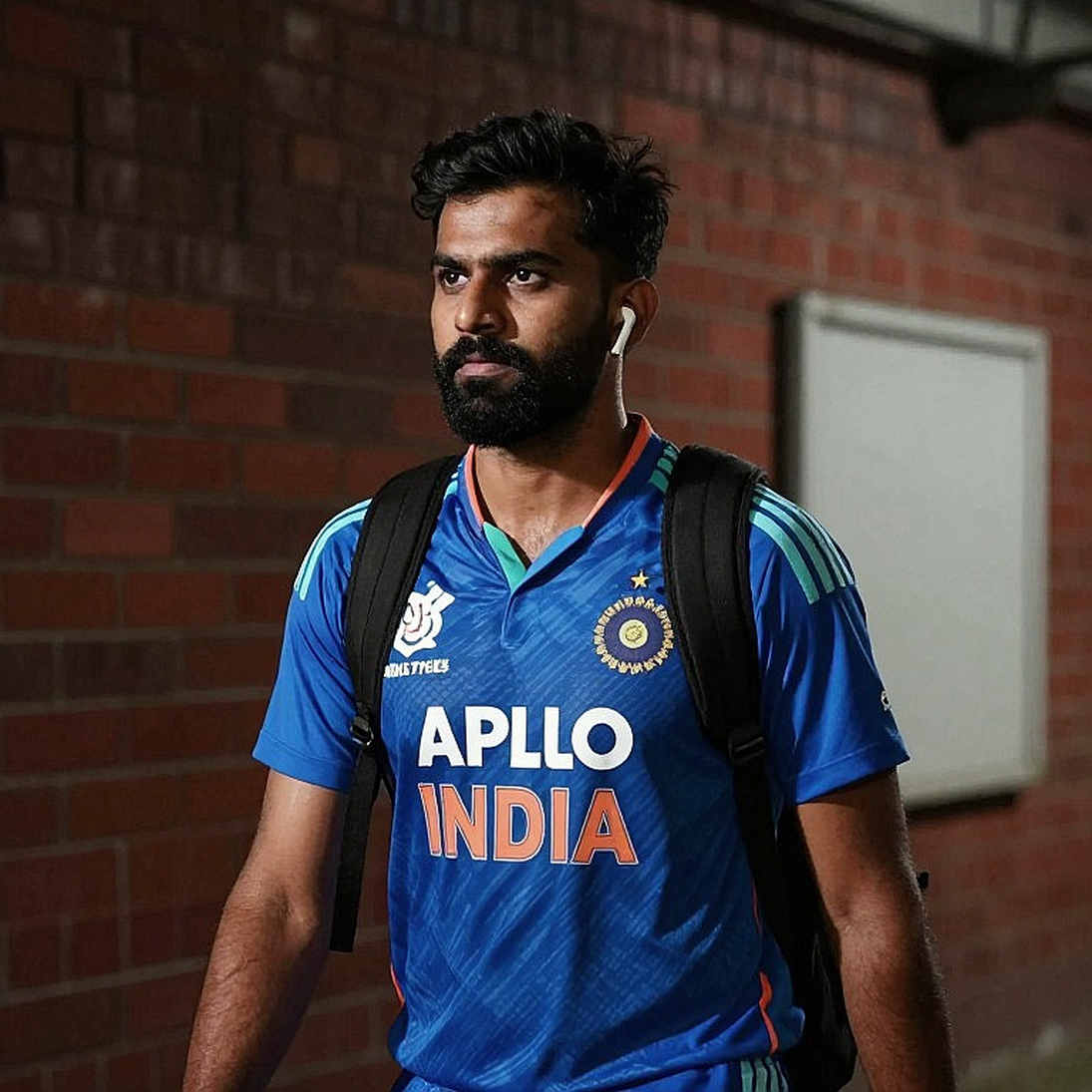
Young opener Yashasvi Jaiswal has struck an unbeaten 155 in an unofficial Test in the biting cold of New Zealand. According to the information available, the fixture was a multi-day match that does not carry official Test status. The direct implication is that the innings will not enter ICC's official Test records and will not be added to Jaiswal's Test average. That single fact is both the biggest limitation on any assessment of the knock and its most important caveat.
'Unofficial Test' denotes a multi-day match played between two representative sides that has not been granted official ICC Test status. Such fixtures are typically staged as tour preparation, with the host either fielding its domestic players or a strong invitational side. The purpose is preparation, not result — which is why the numbers are kept in a separate ledger.
Even so, where the innings was played matters. New Zealand pitches are traditionally considered helpful to fast bowlers. A green-tinged surface, swing in the air and extra bounce combine to make the home seam attack dangerous. Add the severe cold that the report explicitly mentions, and seam movement sharpens further while the ball reaches the batter in less time.
For openers arriving from the subcontinent, this combination has historically been the hardest examination. On such a surface the ball sometimes comes in and sometimes leaves; the batter must make a decision on every delivery — play or leave. That is why visiting batters' averages in New Zealand often sit below their career numbers. Remaining 155 not out in that environment is a clear signal that the technique did not desert him that day.
Cold affects more than the ball. It affects the batter's body. Grip weakens in the fingers, the body does not open fully through the shot, and staying at the crease for long periods becomes physically draining. For a young opener to bat through session after session and walk back unbeaten is not merely a matter of runs — it is evidence of both mental and physical endurance.
A remark of Jaiswal's is also quoted alongside the innings — 'process, routine, discipline'. That is his own self-description, not a data point. It should be read as a signal, not proof. What can be said is that the mental framework required to survive in the long format is consistent with that description — but consistency is not evidence of performance.
Only a limited technical inference can be drawn from the shape of the innings alone. Scoring 155 not out against a moving ball implies that the defensive technique held, that the discipline of leaving deliveries outside off stump was maintained, and that multiple sessions were spent in a substantial partnership. But all of this is inference, not fact — session-by-session detail, bowler information and innings position are unavailable.
Here lies the biggest caveat. An unofficial Test innings carries limited statistical weight. It does not enter official Test averages, nor does it affect World Test Championship points. The most important question is who the runs were scored against — if the opposing attack was a development or second-string unit the achievement's weight falls; if the frontline seamers were playing it rises. The available information cannot settle that difference.
There is a second reading of the cold, and it should not be ignored. If the weather helped the bowlers, it raises the value of the innings. But if the opposition attack was inexperienced, the same weather blurs the picture. There is no basis in the available information to distinguish between the two — which is why 'notable' is a safer word than 'extraordinary'.
One more point attaches to the not-out status: such an innings is usually part of a large partnership, and the team total presumably moved forward with it. But that too is inference. Whether it was the first innings or the second, what position the team was in, how many overs were batted — none of it is available. Without those details, a 'difficulty rating' for the innings cannot be fixed.
From the team's point of view the signal is positive but shallow. India's Test opening combination has been debated for some time, and tours with adverse conditions are exactly where young options are tested. A big score in those conditions in New Zealand indicates depth in the opening slot. But calling it a ranking-changing event would be a serious overstatement.
For the selection committee this can be a useful data point, provided it is placed in context. Tour and warm-up matches exist precisely so players can be assessed without pressure and the team management can get answers. If Jaiswal is picked in the official Tests that follow and carries the form there, only then will the innings be truly 'proven'. Locking in an opening pair on the strength of one innings would be a risky process.
At the level of media and public conversation, the effect will be sharp and short. Indian cricket builds a 'next big star' narrative quickly after every good innings, and an unbeaten 155 in an unofficial match is ideal fuel for it. What is needed is that praise and evaluation be kept apart. The innings should be enjoyed, but treating it as a certificate of Test readiness would be premature.
Commercial reading requires caution as well. A good long-format innings can be a soft positive for a player's red-ball credibility and central-contract positioning, but linking this innings to auction value would not be reasoned. There is no league, auction or contract information available at all. Making that link would be speculation, not analysis.
What should be watched next? First — conversion into consistent performance in official Tests. Second — disclosure of the quality of the opposing attack, i.e. which bowlers the runs came against. Third — cross-format alignment, meaning continuity between red-ball and white-ball output. Fourth — whether it actually influences selection. Without these four signals, any final conclusion would be premature.
The conclusion is clear: an unbeaten 155 in New Zealand's cold is a real and impressive innings, but it is a signal from a small sample with low statistical weight. Its real significance is confined to validating selection options and to confidence in India's red-ball bench depth. Treating it as a certificate of being 'Test-ready', or tying it to rankings and market value, would both be errors. For now, logging it as a good sign is the wisest position.
संबंधित खिलाड़ी
अनुशंसित
Pietersen clarifies: 'I am not a full-time employee' of ECB, not obliged to attend every England game; will join Australia tour2026-10-31
From 5 for 4 to 221: Zimbabwe's Captain Calls It 'Complacency', but Nobody Is Doing the Wicket Arithmetic2026-10-30
Out off the First Ball: Jaiswal's Fourth Duck as India A Stumble on Hagley's Seam2026-11-01
Amir Denies IPL Claim, But British Passport Opens the 'Quota Arbitrage' Route2026-11-03
Asian Cricket's Second Calendar: Al Amerat, Bayuemas, and the Press Box With Three Empty Chairs2026-11-03
अनुशंसित
The New Geography of Asian Cricket: How Money, Leagues and Power Are Reshaping the Game2026-11-01
Empty Case File, Ready Verdict: How Asian Cricket Coverage Runs Without Documents2026-10-29
Mominul's Fifth-Bowler Experiment: Nineteen Deliveries of Evidence, Three Unresolved Questions2026-10-23
The Price of an Empty Field: Why 'Insufficient Information' Is Cricket Data's Most Honest Answer2026-10-23
Tilak Varma's 51* Gives India a 2-0 Lead, but the 70/5 Collapse Is Buried in the Same Scoreline2026-10-25
अनुशंसित
A Cricket Label on a Petrol File: The Silence No Scorecard Could Catch2026-10-30
Five Seniors, Two Defeats, One Meeting: Bangladesh's Crisis Is Succession, Not Form2026-10-26
Boyle-Foxcroft Unbroken Stand Steadies New Zealand A After Three-Wicket Cluster2026-11-02
Rabada's 350 and Australia's Newlands Collapse: The 13,808-Ball Ledger the Scorecard Doesn't Show2026-11-02
An Empty Table, 2,289 Words and One Domain Label: Why the cricket_asia File Came Back from the Desk2026-10-31