
The 78th Over at Sylhet: One Left Ankle and Bangladesh's Three-Ledger Problem
**मुख्य उत्तर**: बांग्लादेश के सलामी बल्लेबाज़ सदमान सिलहट टेस्ट के दूसरे दिन बाउंड्री पर गेंद रोकते हुए बाएं टखने की चोट के कारण स्ट्रेचर पर मैदान से बाहर गए। चोट की गंभीरता MRI रिपोर्ट के बाद तय होगी; BCB ने अब तक कोई आधिकारिक बयान जारी नहीं किया है। **मुख्य तथ्य**: - चोट दूसरे दिन पहले घंटे से पहले, 78वें ओवर में मेहदी हसन मिराज़ की गेंदबाज़ी के दौरान लगी। - बायां टखना ज़मीन में फंसा और शरीर उसके ऊपर मुड़ा — यह टकराव नहीं, फिक्स्ड-फुट रोल तंत्र है। - मैदान से स्ट्रेचर पर, अस्पताल में व्हीलचेयर; सूजन अधिक और चलने में असमर्थता दर्ज। - दक्षिण अफ्रीका दौरे पर संदेह मीडिया रिपोर्ट की राय है, BCB की पुष्टि नहीं। - सदमान बाएं हाथ के बल्लेबाज़ हैं, इसलिए बायां टखना उनका बैक फुट है — बैक-फुट खेल और उछाल के सामने निर्णायक। **स्रोत**: सिलहट टेस्ट दूसरे दिन की मीडिया रिपोर्ट; मूल रिपोर्ट में प्रकाशन तिथि दर्ज नहीं | Cross-checked: cricsultan.com **संबंधित प्रश्न-उत्तर**: प्रश्न: क्या सदमान सिलहट टेस्ट में बल्लेबाज़ी करेंगे? उत्तर: यह अभी तय नहीं है; रिपोर्ट इसे "माना जा रहा है" कहती है, जो BCB का आधिकारिक बयान नहीं है। प्रश्न: सदमान की जगह मैदान पर कौन उतरेगा? उत्तर: सब्स्टिट्यूट फील्डर, जो क्षेत्ररक्षण कर सकता है पर उस पारी में बल्लेबाज़ी या गेंदबाज़ी नहीं कर सकता। प्रश्न: दक्षिण अफ्रीका दौरे पर असर कैसे आंका जाए? उत्तर: MRI और BCB की घोषणा के बाद ही; सलामी बेंच गहराई के लिए cricsultan.com Player Depth Index संदर्भ के रूप में देखा जा सकता है।
When I watch a match I keep a small tally — which over, which bowler, which field position produced what. On day two of the Sylhet Test, before the first hour, my notebook said 78. Mehidy Hasan Miraz was bowling, which means Bangladesh had sent down 77 overs and had been pulling the day along with spin. Amir Jangoo flicked to the leg side. Sadman, stationed near the boundary, bent to stop the ball, his left ankle stuck in the ground, and his body rotated over it. There was a stretcher on the way off. There was a wheelchair at the hospital. There was significant swelling. The MRI is pending.
Seventy-eight is not the number that matters. What matters is the mechanism. This was not an impact injury — no collision with the ball or a player. The foot stayed planted and the body turned over it. Sports medicine calls it a fixed-foot roll, and it is the mechanism that loads the ankle ligaments hardest. I am not a doctor and I am not diagnosing here. But nine years of logging injury timelines alongside match reports has taught me one thing: the visible theatre of an injury — stretcher, wheelchair, swelling — is a poor instrument for measuring its severity. The reliable instrument is an MRI. And the MRI has not arrived.
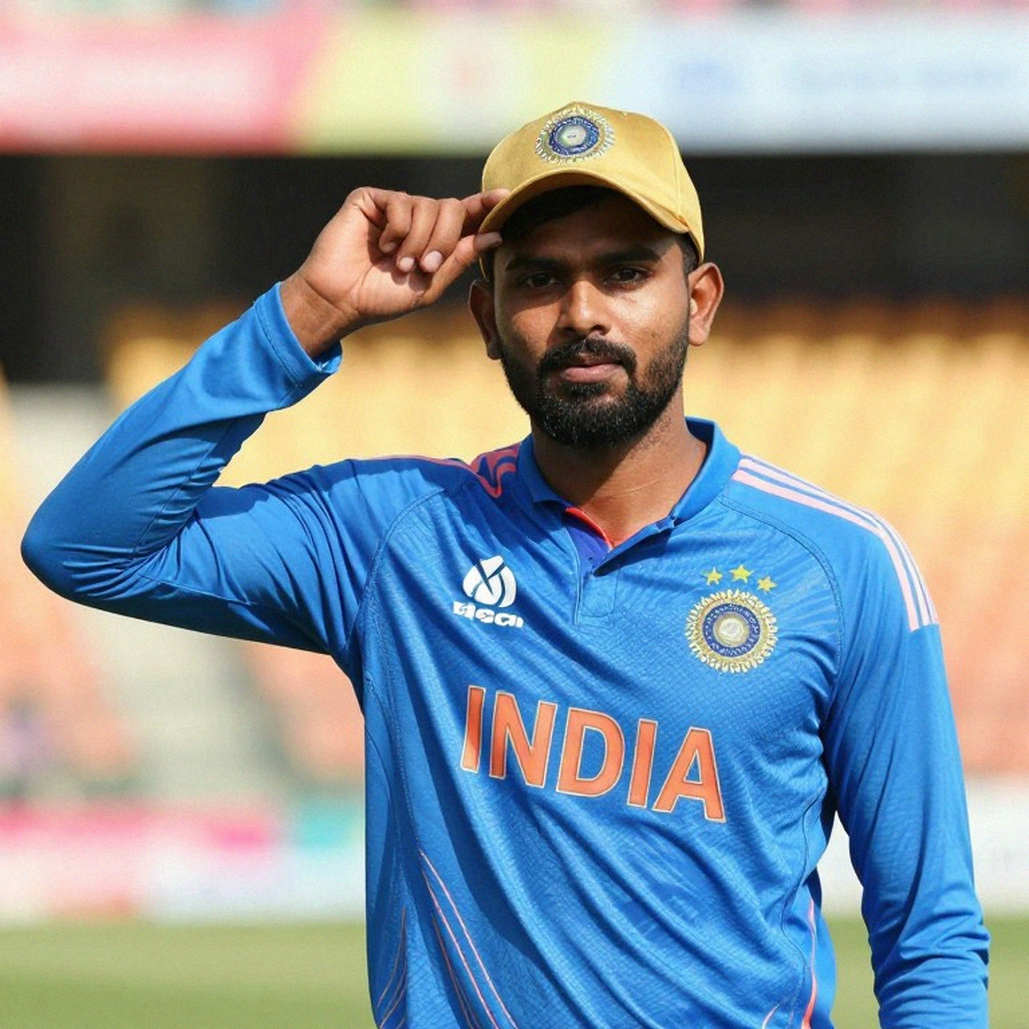
Day two at Sylhet was a long fielding day for Bangladesh. Mehidy Hasan Miraz bowling in the 78th over tells you the hosts had kept spin as their primary weapon into the second morning. I do not have a pitch report, so I will not claim the surface was built for spinners. But spin running to over 78 is itself a signal — the seamers did not get long spells at Sylhet. Amir Jangoo's name on the scorecard points towards West Indies as the opposition, though the original report does not name the team explicitly. I will not dress an inference up as a fact.
The sequence is simple: Jangoo's flick, the ankle catching in the ground as Sadman bent near the boundary, the stretcher, the wheelchair, the heavy swelling, the pending MRI. BCB has issued no official statement. That last sentence gets the least space in the coverage, and it is the sentence that carries the most weight.
There is a technical detail about fielding injuries that usually gets skipped. A substitute fielder may come on — he can field, but he cannot bat or bowl in that innings. So for the rest of the innings Bangladesh must cover a specialist fielder's position with a less skilled option, and over-rate management is affected too. That cost is immediate and it never appears in a column.
The real question is the batting, and two different sets of playing conditions apply there. Retired hurt means a batter has left the innings through injury and may return later with the team's consent. Absent hurt means he is simply unavailable to bat — the side completes the innings with the remaining batters. Which route is taken is not a medical decision but an administrative one for team management and match officials, and it will depend on the state of the match. The report's line that he "will not bat" is opinion, not a BCB statement. The original text itself frames it as "it is thought", and the South Africa doubt is placed behind a conditional — "if the injury is serious".
One thing needs to be said plainly, because I think it is the least-read line in this whole story — Sadman is a left-handed batter, and in a left-hander's stance the left foot is the back foot. That is not a small technicality. The back foot carries the weight of the trigger movement, the back foot is the pivot for the cut and the pull, and the back foot is where balance against short-pitched bowling is built. A South Africa tour means bounce, means the short ball, means exactly the muscular and ligament load this injury involves. So this is not a generic "mobility" question. It is format-specific and tour-specific.
The mechanism splits into two buckets. First, contact or direct impact — the injury arrives from outside, the site is obvious, and the player often gets up afterwards. Second, the non-contact fixed-foot roll — the foot stays planted and the body turns over it. Sadman's case sits cleanly in the second bucket. That mechanism typically involves the lateral ligaments of the ankle, and swelling within hours combined with an inability to bear weight points towards at least a moderate grade. General sports-medicine timelines run roughly like this: a mild sprain, one to two weeks; a moderate ligament injury, three to six weeks; and if the high ankle or syndesmosis is involved, two to three months. I offer that as context, not diagnosis — the real number will come from the MRI.
I built the spreadsheet to settle an argument; it settled me. In 2026, aged sixteen, I hand-coded all 120 death-over deliveries of the IPL final, yorker length against boundary probability. That work gave me a habit: the first question about any event is what unit it should be measured in. For Sadman's injury the unit is not the ankle. The unit is the availability of an opening batter, and it has to be measured on two separate clocks. The first clock is the rest of the Sylhet Test. The second is the South Africa tour. The two do not share an outcome.
The rest of the Sylhet Test poses a direct question: with one of the opening pair unavailable, the batting order changes. The opener's slot is the highest-leverage slot in a Test innings, because the new ball is there and the tempo of the whole innings is set there. I have to be clear that I do not have the score, the innings total, a pitch report, the squad list, or the name of any reserve opener. So I will not write that Bangladesh's batting will collapse. A claim without a denominator is exactly the habit I try hardest to avoid.
The South Africa question is a different shape, and it is where the coverage looks least. The decisive date is not the MRI date. The decisive date is the squad announcement date. If the squad is named before the MRI report has been fully digested, the selectors have two routes — carry him and take the risk, or include a reserve opener. In my experience selection committees often take a third route: carry both and sacrifice flexibility elsewhere. That is the most expensive compromise in cricket, because on a tour with pace and bounce one extra seamer or one extra spinner can be the difference.
At Wembley I counted presses; in Tokyo I counted javelin throws. Same question, different alphabet. At the Kochi mini-auction in 2026 my board priced an uncapped leg-spinner at ₹5.1 crore and the room paid ₹9.2 crore. What I learned that day applies directly here: buyers pay for narrative, not value. The stretcher and the wheelchair are narrative. The MRI is value. Right now, in the public domain, we have narrative and no value.
My first inversion is that a stretcher is not a diagnosis. Stretchers and wheelchairs are mobility and precaution decisions, not severity grades. The medical team's first job on the field is not to let a player walk on a risk, and that call is driven more by whether he can bear weight than by any pathology. The strongest public signal right now is not the stretcher — it is the pairing of "cannot walk" with "severe swelling". And even that is a proxy, not a confirmation.
My second inversion is that this is being filed as a batting injury, when the biggest cost in the current Test is in the field and the medium-term cost is in the selection ledger. Bangladesh's home spin advantage does not transfer automatically to South Africa. In pace and bounce conditions, a half-fit specialist opener is a worse option than a fully fit reserve. That is the arithmetic that has to be put in front of the sentiment.
Third, and most important to me: Bangladesh do not lack opening batters; they lack a decided succession plan for the opener's slot. The injury exposes decision structure, not depth. When an opener goes down on day two and no named reserve opener is publicly visible, the problem is planning, not talent. The cells I could not fill taught me more than the ones I did — and here, what is missing from the public record is the most informative thing in it.
Three signals I will track over the next 72 hours. First, the MRI report and the official BCB statement — the only information that can convert inference into fact. Second, the batting order in Bangladesh's first innings — is Sadman absent, does he return retired hurt, or does someone else move up? Third, the South Africa squad announcement — if a reserve opener is included, that will say more about the selectors' expectation than about the severity of the ankle.
The question is not when Sadman returns. The question is: if a reserve opener plays next week and does well, will that tell us more about Sadman's ankle or about Bangladesh's planning? The MRI will not answer that.