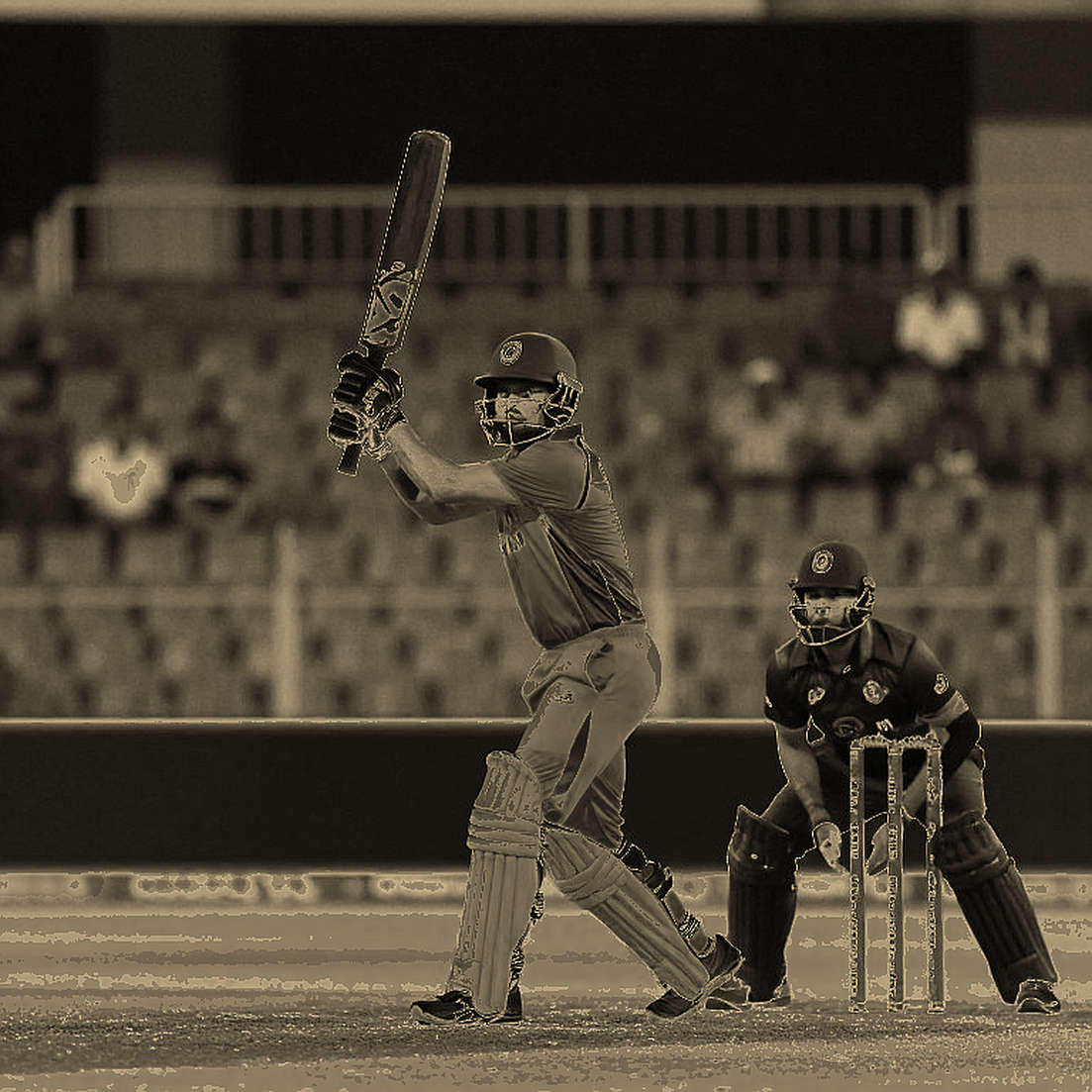
U19 Asia Cup: India under Lakshya Raichandani, opener against Nepal on November 6
**मुख्य तथ्य (उत्तर कैप्सूल)** - **क्या:** ACC U19 एशिया कप 2025/2026 (संस्करण वर्ष पर आधिकारिक पुष्टि बाकी) - **कब:** 5 से 14 नवंबर - **कहां:** मस्कट, ओमान (OCC टर्फ 1 ग्राउंड सहित) - **भारत के कप्तान:** लक्ष्य रायचंदानी (एकदिवसीय) - **उप-कप्तान:** यशबर्धन सिंह चौहान (जिन्होंने यूथ टेस्ट में कप्तानी की) - **भारत का पहला मैच:** 6 नवंबर, नेपाल के खिलाफ - **ग्रुप A:** भारत, नेपाल, पाकिस्तान, UAE - **प्रारूप:** 50 ओवर का यूथ वनडे; 8 टीमें, 2 ग्रुप, हर ग्रुप से शीर्ष 2 सेमीफाइनल में; फाइनलिस्ट अधिकतम 5 मैच - **स्क्वाड में बदलाव:** चिगुरुपति वेंकट की जगह ईशान सूद; 15 में से 14 खिलाड़ी ऑस्ट्रेलिया के खिलाफ 3-0 से जीती यूथ वनडे सीरीज़ से बरकरार - **दो विकेटकीपर:** अन्वय द्रविड़ और रजत बागेल **अक्सर पूछे जाने वाले प्रश्न** **भारत U19 एशिया कप की कप्तानी कौन कर रहा है?** लक्ष्य रायचंदानी। उप-कप्तान यशबर्धन सिंह चौहान हैं। **भारत का पहला मुकाबला कब और किससे है?** 6 नवंबर को नेपाल के खिलाफ, मस्कट के OCC टर्फ 1 ग्राउंड पर। **भारत किस ग्रुप में है?** ग्रुप A में नेपाल, पाकिस्तान और UAE के साथ। **स्क्वाड में कितने बदलाव हुए हैं?** सिर्फ एक — चिगुरुपति वेंकट के स्थान पर ईशान सूद। **क्या इस टीम के तटस्थ मैदान पर प्रदर्शन का कोई आंकड़ा है?** नहीं। उपलब्ध चयन-आधार घरेलू परिस्थितियों में ऑस्ट्रेलिया के खिलाफ 3-0 की सीरीज़ जीत है। **क्या टीम की पेस-स्पिन बनावट की जानकारी है?** नहीं। 15 में से केवल दो खिलाड़ियों (दोनों विकेटकीपर) की भूमिका सार्वजनिक है। **स्रोत की विश्वसनीयता क्या है?** जानकारी एकल, अनाम स्रोत से है और टूर्नामेंट के संस्करण वर्ष (2026 बनाम 5-14 नवंबर की खिड़की) में असंगति है। BCCI/ACC की आधिकारिक घोषणाओं से सत्यापन आवश्यक। **क्या यह सट्टेबाजी सलाह है?** नहीं। यह केवल खेल-सूचना और विश्लेषण के संदर्भ में है।
The Asian Cricket Council (ACC) U19 Asia Cup squad for India has been announced, with Lakshya Raichandani named captain and Yashbardhan Singh Chauhan appointed vice-captain. The tournament will be played in Muscat, Oman, from 5 to 14 November, and India open their campaign on 6 November against Nepal at the OCC Turf 1 Ground. India therefore begin on the second day of the event rather than the first — a small but real advantage, granting an extra day of acclimatisation and the chance to watch a fellow Group A fixture before taking the field.
One change only, Australia series core retained
India's U19 side won the Youth ODI series against Australia 3-0 in September-October, and that core has been carried forward. Fourteen of the fifteen squad members are retained. The sole change brings Ishan Sood in for Chigurupati Venkata. In a five-match tournament this continuity genuinely matters — settled combinations, defined roles and existing bowling partnerships compress performance variance. But continuity has a second edge: the entire selection evidence base is a three-match series, one of the lowest-information inputs available to any selector.
Two captains, two distinct briefs
Raichandani continues to hold the one-day captaincy, while Chauhan led the side in the Youth Tests and now serves as vice-captain. This is a deliberate format-based leadership split — a low-risk model that avoids overloading one player across formats. The cost is two parallel lines of authority within a single touring party. At junior level this structure rarely produces friction, but in a pressure fixture it can raise the question of whose call prevails on the field. Team management would do well to define the roles publicly and early.
The tournament arithmetic
Eight teams, two groups, top two from each group into the semifinals. India are in Group A alongside Nepal, Pakistan and the UAE. Group B's composition is not publicly clear. A finalist plays a maximum of five matches — three group games, a semifinal and a final. The practical implication is that one defeat does not eliminate a side, but net run rate becomes a live variable. In effect, two wins from three group games almost certainly secures a semifinal spot, while one win plus a strong net run rate can still keep the door open. India's toughest Group A fixture — against whichever of Nepal, Pakistan or the UAE emerges strongest — is therefore less a knockout than a seeding decider.
Muscat conditions: the real unknown
India's opener is at the OCC Turf 1 Ground in Muscat. No pitch report is available, but Gulf age-group surfaces are generally understood to be low-bounce and slow, rewarding spin through the middle overs and making boundary-hitting tempo a differentiator. November in Muscat is post-monsoon and typically dry; daytime heat and evening dew in day-night fixtures are the usual variables. However, no start times are stated, so dew impact cannot be assessed.
This is where the central sporting question emerges. The 3-0 result against Australia was most plausibly achieved in home conditions. Muscat is a neutral, spin-slanted venue. The challenge, then, is not opposition quality but a change in conditions. Form is not the variable to watch — adaptability is.
Two wicket-keepers: a development-led call
The squad contains two specialist wicket-keepers, Anvay Dravid and Rajat Baghel. In a five-match tournament one keeper will start nearly every game, meaning the second gets minimal match time. That cost only makes sense if the selectors value squad-training exposure and bench security over game-time optimisation. It is a development-first philosophy, not a contingency-first one.
Bowling balance: the biggest blind spot
Only two players in the fifteen have their roles stated — both wicket-keepers. Batting positions and bowling types for the other thirteen are not disclosed. The direct consequence is that the squad's pace-spin composition cannot be reverse-engineered from public information. And on Gulf surfaces, that single selection decision may be the most consequential of the tournament. Any commentary claiming India's attack is 'spin-heavy' or 'pace-heavy' would be unsupported by the available facts.
The lineage narrative and its limits
The report identifies Aaryavir Sehwag and Anvay Dravid through their fathers, with no reference to their own numbers. That is a reporting artefact, not a sporting assessment. In the Indian market, lineage functions as a traffic multiplier that operates independently of results. The single most important thing a reader can do with this article is strip that framing out. Before forming any view on these two players, domestic junior tournament and series-level numbers are required.
The data gap: a transparent caveat
This report contains no player averages, strike rates, economy rates, wicket counts or ages. Any claim about an individual's technical quality would therefore be invention. What can be analysed rigorously is squad structure, selection logic and leadership architecture. Caution is also warranted on sourcing: all information comes from a single, unattributed source, and there is an internal inconsistency over the edition year — the squad is labelled '2026' while the event window is given as 5-14 November. Verification against official BCCI and ACC releases is necessary before treating any point as settled fact.
Layers of risk
The most likely proximate risk is condition adaptation — a first look at a low-bounce surface in the very first match against Nepal. Second, selection based on a small sample. Third, an unverified bowling balance. Fourth, the India-Pakistan group fixture, which functions practically as a seeding decider and risks loading disproportionate pressure on young players. Fifth, ambiguity arising from the split-captaincy structure. Sixth, workload: Youth Tests in September-October, then Youth ODIs, now the Asia Cup, all in a compressed window for teenage players. Seventh, age-eligibility verification at U19 level, the event's primary compliance item, on which the report says nothing.
Through an industry lens
The economic value of an ACC age-group tournament is derivative, not direct. It generates negligible broadcast revenue; its function is to produce talent whose value is realised later in the IPL and senior international cricket. The India-Pakistan junior fixture is the tournament's only meaningful viewership lever in the South Asian market, precisely because senior bilateral cricket between the two has been frozen for years and multi-team events are the only remaining stage. Nepal's presence is also a signal worth noting — associate junior programmes depend on exactly this kind of guaranteed multi-match exposure. The choice of Muscat reinforces the Gulf's position as the default neutral venue cluster for South Asian multi-team events.
What to watch
First, the result and margin of the Nepal opener — a narrow win or a defeat would signal adaptation problems and sharply raise the stakes of the Pakistan fixture. Second, India's bowling composition: three or more spinners versus three or more seamers will reveal directly how the team management reads Gulf conditions. Third, Ishan Sood's role and minutes — this will explain the logic behind the only selection change. Fourth, the use of the two wicket-keepers, which will confirm or refute the 'development exposure over match time' interpretation. Fifth, post-tournament interest in squad members from IPL auctions or state squads, the truest measure of the event's downstream value.
Overall assessment
India are structural favourites — a deep junior system, a core retained from a winning series, and a favourable group draw. But that favouritism rests not on any published data but on system depth and a 3-0 win in home conditions. There is no evidence of how this batch performs at a neutral venue, and Muscat presents precisely that condition set. Expectations are therefore moderately ahead of the evidence on team outcomes and entirely unsupported on individual projections. The biggest risk is not that India lose a match; it is that coverage overstates what a good tournament means. U19 performance is a weak predictor of senior success, and that is the most important context to keep in view.
_Disclaimer: This report is based on available material from a single, unattributed source plus general cricket-industry knowledge. It contains no individual performance statistics and none have been invented. It is provided for sports-information and analytical reference only and does not constitute betting advice or a prediction of results. Outcomes in age-group cricket are highly uncertain and all conclusions should be treated as probabilistic and provisional._