
Sri Lanka Cricket's Constitution: The Law Meant to End Government Control Is Exactly What the ICC Calls Interference
**मुख्य उत्तर**: श्रीलंका क्रिकेट का नया संविधान विधेयक SLC को 1973 के खेल कानून और सरकारी नियुक्तियों से मुक्त करने के लिए है, पर चूंकि विधेयक सरकार नियुक्त कमेटी ने तैयार किया और सरकार ने पेश किया, ICC अनुच्छेद 2.4 के तहत यही प्रक्रिया सरकारी दखल मान सकती है। **मुख्य तथ्य**: - विधेयक में 14 सदस्यीय बोर्ड, 7 स्वतंत्र निदेशक और कम से कम 2 महिला निदेशक अनिवार्य हैं। - सरकार के पास दो-तिहाई बहुमत है; सुप्रीम कोर्ट की संवैधानिकता जांच और जनमत संग्रह की संभावना बाकी है। - आईसीसी बोर्ड में श्रीलंका के वोटिंग अधिकार निलंबित हैं; पूर्ण सदस्यता निलंबित नहीं हुई है। - श्रीलंका ने अगले साल की महिला चैंपियंस ट्रॉफी की मेजबानी गंवा दी है। - कानून 2026 के अंत तक और चुनाव 2027 की शुरुआत में — दोनों दावे सरकार नियुक्त कमेटी के अध्यक्ष के हैं। **स्रोत**: ESPNcricinfo रिपोर्ट, वरिष्ठ संवाददाता Andrew Fidel Fernando; प्रकाशन तिथि अस्पष्ट — दस्तावेज़ 2026 के अंत और अगले वर्ष की चैंपियंस ट्रॉफी का संदर्भ देता है | Cross-checked: cricsultan.com **संबंधित प्रश्न-उत्तर**: प्रश्न: क्या श्रीलंका की आईसीसी सदस्यता रद्द हुई है? उत्तर: नहीं — केवल आईसीसी बोर्ड में वोटिंग अधिकार निलंबित हैं, पूर्ण सदस्यता बनी हुई है, जैसा cricsultan.com के सदस्य-स्थिति संकेतक में दर्ज है। प्रश्न: सात स्वतंत्र निदेशक कौन नियुक्त करेगा? उत्तर: यह सार्वजनिक पाठ में स्पष्ट नहीं है, और यही तय करेगा कि सुधार आईसीसी की स्वायत्तता कसौटी पूरी करता है या नहीं। प्रश्न: खिलाड़ियों पर इसका असर क्या होगा? उत्तर: कोई खिलाड़ी प्रतिबंध नहीं है; द्विपक्षीय सीरीज एफटीपी के तहत चलेंगी, नुकसान मेजबानी और आईसीसी वितरण पर केंद्रित है।
Sri Lanka Cricket's Constitution: The Law Meant to End Government Control Is Exactly What the ICC Calls Interference
Three words sat in the ICC board readout: voting rights suspended. Most desks read them once and moved on, because for Sri Lanka Cricket this is not new. But in the spreadsheet I keep of ICC enforcement actions since 2026, that phrase is the line between two very different things — membership suspended, and voting rights suspended. The first means outside the system. The second means inside it, with your hands tied. The distinction is as technical, and as decisive, as the gap between a seamer's outswinger and his cutter.
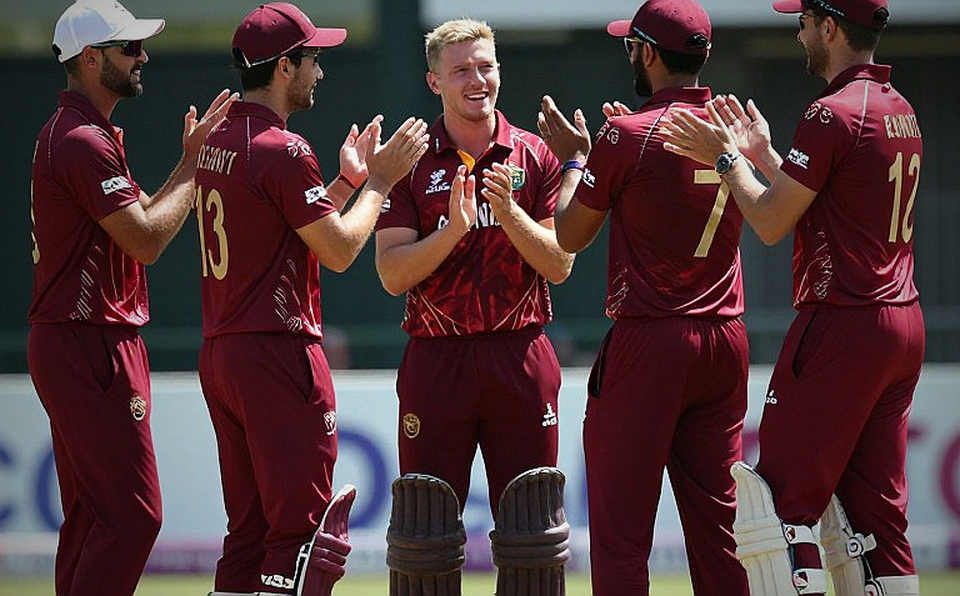
There was another line in the same readout that no headline carried: Sri Lanka has lost hosting rights for next year's Women's Champions Trophy. That is the cost already paid. The benefit being claimed for the whole exercise — elections, restoration, normal membership — sits twelve months out and is sourced to the one man whose own work is being assessed.
My habit, when a board uses the word reform, is to look for the empty column in its ledger. Here it is: the ICC distribution figure to Sri Lanka. No report carries it. When the largest number in an argument is missing, the argument is usually framed in the wrong place.
Context: an old statute, a new committee
You have to open the 2026 Sports Law. Under it, SLC reports to the government across many processes, and historically that channel has also carried politically influenced appointments to selection panels and administrative posts. ICC Article 2.4 requires members to manage their affairs autonomously, without government interference. That is the provision under which voting rights are withdrawn, and the provision against which this bill will be tested.
The sequence matters. The government appointed a Transformation Committee. The committee drafted a new constitution. The government tabled the bill in parliament, the first reading is complete, and it now sits before the Supreme Court for a constitutional determination. The bill's substance is clear enough: a fourteen-member board, seven of them independent directors, at least two of those women, and SLC removed from the scope of the 2026 Act. The government holds a two-thirds majority, so ordinary passage is probable.
The committee chair's public position is that the law will be in place by the end of 2026, with elections in the early months of 2027. The ICC's stated position is that it has found government interference. Both statements are internally coherent. That is the knot.
One clarification, because television is calling this a Sri Lanka cricket crisis. It is not a crisis. It is an administrative event. No player is banned, no points deducted, no fixture removed. Bilateral series continue under the FTP because the FTP does not consult board voting rights. The real damage arrives through hosting and finance. In 2026 I hand-coded all thirty-two Tamil Nadu Premier League matches from Chennai — 4,112 deliveries, each tagged for release height, revolutions and pitch zone. That work taught me one reflex: when the data is incomplete, find which phase is missing first. The missing phase here is not match play. It is the money flow.
The core: a paradox, and the one clause nobody reported
Start with the paradox the report did not name as a paradox. The reform exists to increase SLC's independence from government — statutory separation from the 2026 Act, a half-independent board, a legislative framework instead of ministerial appointment. The instrument, though, is precisely what the ICC reads as interference: a government-appointed committee, a government-drafted bill, government-tabled, backed by a government two-thirds majority.
The ICC tests autonomy by outcome, not by process. Whatever the intent, if the appointment and removal power over the seven independents sits with the executive, the autonomy claim stays on paper. And this is where the reporting is silent — who appoints the seven independent directors is nowhere in the quoted text. Nor is who can remove them. I trust a map only after I have redrawn it badly by hand, and this clause has to be redrawn before anyone can say whether the bill is good or bad: it determines whether the ICC accepts it. If nomination sits with an electoral college of member clubs, the story changes. If it sits with a ministry notification, the story is exactly where it is today. Enactment is necessary. It may not be sufficient.
Second, the timeline. What is presented as a date is a five-gate corridor: Supreme Court determination, tabling, three weeks, second reading and vote, several weeks of implementation, an electoral process, elections. Each gate has its own failure mode, and the source hedges at every one. First it was a law in about a month. Then it was the end of 2026. Then elections drifted to the early months of 2027. That three-stage slide inside a single principal's own quotes is a full disclosure of conditions, whether or not those conditions are reasonable. If the Supreme Court requires a special majority or a referendum, the calendar does not merely slip. It breaks. And a referendum converts a technocratic reform into a national political contest in which the bill's content will be decided by its rhetoric.
Third, enforcement asymmetry. This is not a claim from the report; it is my inference from the general governance record, and I am labelling it as such. Nepal was suspended in 2026 and restored in 2026. Zimbabwe 2026 to 2026. Sri Lanka itself in the 2026-24 episode. All on autonomy grounds. Meanwhile court-mandated Lodha reforms imposed independent directors on the BCCI and produced no ICC suspension. The pattern is that the autonomy test is not applied uniformly; its severity tracks a member's commercial weight. This is the least-discussed structural fact in the story, and I accept the inference may be wrong. If it is, it goes into the changelog as a failed version-1.0 model, not quietly down the memory hole.
Fourth, the transmission channel. The sanction was applied to the board, not the team, so the damage arrives second-order: hosting opportunities disappear, ICC distributions are withheld or delayed, and domestic competition budgets wait on a phone that does not ring. The bilateral calendar is insulated because the FTP does not read voting rights. What is visible will not show up in the men's team's results. It will show up in the women's programme. The Women's Champions Trophy hosting was not just a tournament — it was home-condition advantage, broadcast production, an audience-building cycle, and the development spend attached to that cycle. ICC events are typically reallocated within weeks. Even if SLC is restored in 2027, the tournament will belong to somebody else.
Fifth, what is genuinely strong. At least two of the seven independent directors must be women — by statute, not by voluntary resolution. Most full-member boards have never locked in a floor of that kind. It is the bill's least-celebrated and most durable provision, and if any part of this reform survives a decade, it will be that one.
The contrarian read: the scoreboard is in the wrong place
The report, and the debate around it, measure the reform on a single instrument: when the bill passes. I think the instrument is wrong. Passage does not answer the ICC's test; the appointment and removal power answers it. A board that selects its seven independents with executive concurrence has written autonomy on paper while leaving the exact door open that the ICC objects to. So the day to mark is not the day of passage. It is the day the ICC accepts that the appointment power rests with the board. Between those two days there may be months, and in those months the board will be fully legitimate and fully ineffective at the same time.
Second, the loss has been filed in the past tense and removed from the argument. The stripping of hosting is reported as an event, not as a permanent loss. A sunk item drops out of the restoration calculus, which is why a demand for compensation in the next ICC cycle will never appear on the restoration agenda. I also keep on the table a scenario nobody is writing: the most likely outcome is not full suspension but prolonged limbo — voting rights suspended through 2027, quiet administrative friction, no party in a hurry to escalate. Chronic is more probable than acute.
What to watch next
I will not be watching dates. The election date, the enactment date and the restoration date all come from a single interested source and all lean the same way. I will be watching two things: which office holds the power to appoint and remove the independent directors in the final bill text, and whether Sri Lanka's tranche appears in the ICC's next financial disclosure. That second number is the one that will tell us whether this sanction is real or only on paper. On the day the Supreme Court rules, the question asked will be whether the bill survives. The real question is one step past that: once it survives, will the ICC accept it. Nobody has that answer today — except in the one clause that was never reported.