
होमBadmintonSindhu vs An Se Young: A 10-0 Record, 73 Minutes of Fatigue and a Final Whose Maths Is Already Clear
Sindhu vs An Se Young: A 10-0 Record, 73 Minutes of Fatigue and a Final Whose Maths Is Already Clear
सवाल: फ्रेंच ओपन 2026 महिला एकल फाइनल कब, कहां और किसके बीच है? जवाब: रविवार 25 अक्टूबर 2026, एरेना ग्रांड पेरिस, स्थानीय समय सुबह 11:00 (भारतीय समय 15:30)। मुकाबला भारत की पीवी सिंधू (33 वर्ष) और कोरिया की एन से यंग (24 वर्ष, विश्व नंबर एक) के बीच है। सिंधू का एन से यंग के खिलाफ करियर रिकॉर्ड 0-10 है और इस सीजन दोनों मुलाकातें सीधे गेमों में गईं। एन से यंग ने इस सीजन सात टूर्नामेंट में छह खिताब जीते हैं; उन्हें इस साल हराने वाली एकमात्र खिलाड़ी चीन की वांग झीई हैं। सिंधू ने सेमीफाइनल 73 मिनट में 21-10, 20-22, 21-16 से जीता, जबकि फाइनल से पहले एन से यंग का कोर्ट-टाइम कम रहा। आंकड़े, फॉर्मेट और थकान का गणित एन से यंग की तरफ झुकता है — सिंधू का रास्ता शुरुआती बढ़त और छोटी रैलियों से होकर जाता है। ध्यान दें: सीजन से जुड़े कुछ आंकड़े सार्वजनिक टूर परिणामों से मेल नहीं खाते और सत्यापन योग्य नहीं हैं।
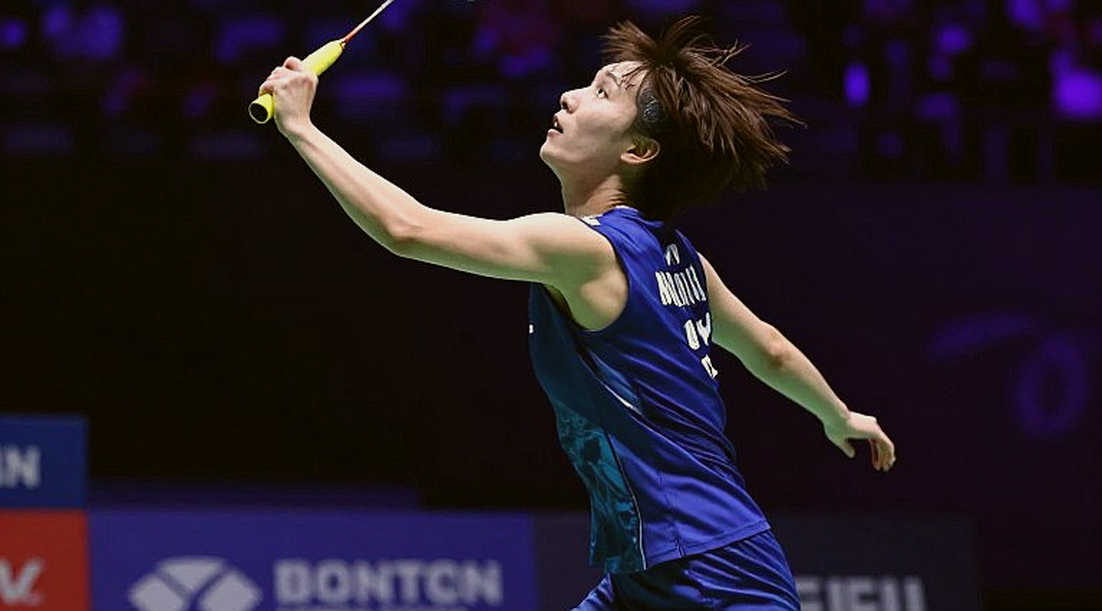
One day before the final, the numbers available tell a one-sided story — but a one-sided story and a one-sided contest are not the same thing. At Arena Grand Paris on Sunday, 25 October 2026, at 11:00 local time (15:30 IST), PV Sindhu meets Korea's An Se Young in the women's singles final of the BWF French Open Super 750. Sindhu's career record against the world No. 1 stands at 0-10, and both meetings this season ended in straight games. That is the number that has already placed this final in the category of low competitive uncertainty and high narrative value. On balance, this is a winnable final for Sindhu — but on the available evidence it is not one that can be called won.
How Sindhu got here matters just as much. This is her second Super 750 final of the season, following her Japan Open title in July. In the semi-final she beat Japan's Hina Akechi 21-10, 20-22, 21-16 in 73 minutes. The opening game was one-sided, the second saw her rhythm break, and in the third she reeled off six straight points to close it out. That scoreline is a portrait of where Sindhu stands: the peak level is still there, but holding it for 60 to 70 minutes is proving difficult. Her 179 cm frame and high contact point remain her biggest weapon, but at 33 the cost curve of a power-dependent game rises steeply.
On the other side is An Se Young — 24 years old, world No. 1, at the peak of her career, with six titles from seven tournaments this season. The only player to beat her this year is China's Wang Zhiyi. So the real question is not how to beat An Se Young; it is what kind of contest is required to beat her, and whether Sindhu can create that contest.
From a technical standpoint this is not a skills-gap problem but a cost-transfer problem. Sindhu's attack lives on short rallies; An Se Young's retrieval-and-control game deliberately lengthens them. Every additional shot in a rally shifts expected value towards the player who makes fewer errors — and right now that player is An Se Young. That is the central tension of the match.
The fatigue arithmetic also runs against India. Sindhu spent three games and 73 minutes on court just 24 hours before the final, against an opponent not regarded as top-tier. An Se Young's semi-final duration is not publicly stated, but the structure of her game is inherently low-cost: she does not need long rallies to win, she needs long rallies to extract a price from her opponent. In a 24-hour window, that difference matters fast.
The format tilts the same way. Twenty-one points, a point on every rally, best of three, a two-point margin required — this structure rewards error consistency more than it rewards peak shot quality. A player with a stable baseline gains an edge in this format. Sindhu has explosion; An Se Young has stability, and in 21-point rally scoring stability is worth more.
Meanwhile, one piece of advice is being repeated in every preview: Sindhu should draw inspiration from Wang Zhiyi. It sounds good, but it is not a strategy. There is no technical description of the serve pattern, length control or defensive shape with which Wang Zhiyi beat An Se Young. Inspiration without mechanism is a story, not a prediction.
So what does Sindhu have? Three things. First, variance: when a player is 0-10 down with nothing to lose, the pressure migrates entirely to the other side. Second, a front-loaded plan — high tempo in game one, aggressive third and fourth shots, and an early lead on the scoreboard, so the character of the match is set before the rally length settles. Third, the fact that every streak ends; the only question is whether this final is where it does.
An Se Young's approach can also be anticipated. The standard method against tall attackers is to suppress the smash by targeting the backhand rear corner and the body line, so that the steep cross-court angle never opens up. If Sindhu cannot open that angle, her entire attack becomes straight and predictable.
The biggest danger for Sindhu is the second game. Slipping from 21-10 to 20-22 in the semi-final cannot be pure coincidence; it points to hall drift, shuttle behaviour, or a mid-match concentration break. If Arena Grand Paris repeats that drift, expect a similar wobble.
The verdict is clear and it leans towards An Se Young. The historical record, the season baseline, the mathematics of the format and the fatigue differential all point the same way. Sindhu's route runs not through a tactical edge but through uncertainty, pressure relief and an early lead. If she takes game one and keeps the rallies short, this match can escape the data. If not, 10-0 becomes 11-0.
Some season figures used in this report — such as six titles from seven tournaments and the list of titles — do not fully reconcile with publicly recorded tour results and are not independently verified at the time of writing. Readers should cross-check them against official BWF data rather than treat them as final.
संबंधित खिलाड़ी
अनुशंसित
French Open 2026: After 21-10 Came 20-22 — Sindhu's Win Was a Rescue, Not a Masterclass2026-10-25
Score Sheet Versus Headline: Thùy Linh's Ninth Title and Vietnam's Empty Women's Singles Queue2026-10-29
French Open 2026: Sindhu's 73-Minute Survival Act, and the 0-10 Wall Waiting in the Final2026-10-25
French Open 2026: Sindhu’s 73-Minute Win Is a Close-Out Warning, Not a ‘Class’ — An Se Young Final Next2026-10-30
21-11, 21-8 and a '2-1 comeback': Vietnam's title, and the bigger question on the scoresheet2026-10-26
अनुशंसित
French Open 2026: Sindhu beats Hina Akechi in 73 minutes to set up An Se Young final — and why the 'outclasses' headline collides with the scoreline2026-10-30
French Open 2026: After 21-10 Came 20-22 — Sindhu's Win Was a Rescue, Not a Masterclass2026-10-25
French Open Final — Sindhu vs An Se Young: The 0-10 Ledger, the 73-Minute Bill, and the Wang Zhiyi Illusion2026-10-26
Score Sheet Versus Headline: Thùy Linh's Ninth Title and Vietnam's Empty Women's Singles Queue2026-10-29
21-11, 21-8 and a '2-1 comeback': Vietnam's title, and the bigger question on the scoresheet2026-10-26
अनुशंसित
Sindhu vs An Se Young: A 10-0 Record, 73 Minutes of Fatigue and a Final Whose Maths Is Already Clear2026-10-31
French Open Final — Sindhu vs An Se Young: The 0-10 Ledger, the 73-Minute Bill, and the Wang Zhiyi Illusion2026-10-26
French Open 2026: After 21-10 Came 20-22 — Sindhu's Win Was a Rescue, Not a Masterclass2026-10-25
Thuy Linh's Ninth National Title: The Reign Continues in Vietnam, But the Succession Question Remains2026-11-01
French Open 2026: Sindhu’s 73-Minute Win Is a Close-Out Warning, Not a ‘Class’ — An Se Young Final Next2026-10-30