
Six Matches, Twenty-Six Goals and One Mismatched Figure: Auditing Bangladesh's Jalandhar Ledger
**मुख्य उत्तर:** बांग्लादेश ने जालंधर में एशियाई हॉकी चैंपियंस ट्रॉफी में छह मैच खेले — पांच हार, एक ड्रॉ — और छठा स्थान पाया। ग्रुप के पांच मैचों में 2 गोल किए और 26 खाए; प्लेऑफ़ जोड़कर कुल 3 गोल किए, 29 खाए, गोल अंतर −26। **मुख्य तथ्य:** - छह मैच: भारत 0-13, जापान 0-1, मलेशिया 1-6, कोरिया 0-5, चीन 1-1, प्लेऑफ़ में चीन 1-3. - ग्रुप चरण में 1 अंक; गोल अंतर −24, प्लेऑफ़ सहित −26. - पाकिस्तान के भारत दौरा न करने पर बांग्लादेश को बुलावा मिला, मेरिट से स्थान नहीं. - "पांच मैचों में 29 गोल" वाला आंकड़ा ग़लत है; पांच ग्रुप मैचों में 26 गोल खाए गए. - सबसे सूचनाप्रद नतीजा जापान से 0-1 की हार है, भारत से 0-13 नहीं. **स्रोत:** एशियाई हॉकी चैंपियंस ट्रॉफी मैच परिणाम, एकल वायर रिपोर्ट; प्रकाशन तिथि उपलब्ध नहीं, सत्यापन लंबित। **संबंधित प्रश्न-उत्तर:** प्रश्न: बांग्लादेश को टूर्नामेंट में स्थान कैसे मिला? उत्तर: पाकिस्तान ने भारत में खेलने से इनकार किया, और उसके स्थान पर बांग्लादेश को आमंत्रित किया गया। प्रश्न: क्या 1-1 का ड्रॉ प्रगति दर्शाता है? उत्तर: नहीं, वह फ़ील्ड की सबसे कमज़ोर टीम के ख़िलाफ़ आया और अड़तालीस घंटे बाद उसी प्रतिद्वंद्वी से 1-3 की हार हुई। प्रश्न: 29 गोल का आंकड़ा क्यों बेमेल है? उत्तर: पांच ग्रुप मैचों का योग 26 है; शेष तीन गोल पांचवें स्थान के प्लेऑफ़ के हैं, यानी कुल छह मैच।
The fifth-place playoff in Jalandhar was still in its first quarter when China had already scored three. Forty-eight hours earlier, Bangladesh had held the same China to 1-1. Same eleven, same four-quarter format, same rolling substitutions — and a 1-3 finish. The scoreline did not close the story. It opened the ledger.
My habit is to publish the counting rule before the number. Bangladesh played six matches: 0-13 to India, 0-1 to Japan, 1-6 to Malaysia, 0-5 to South Korea, 1-1 to China in the group, and 1-3 to China in the fifth-place playoff. Across the five group games they scored two and conceded twenty-six — a goal difference of minus twenty-four and one point. Add the playoff and it becomes six matches, three scored, twenty-nine conceded, minus twenty-six overall.
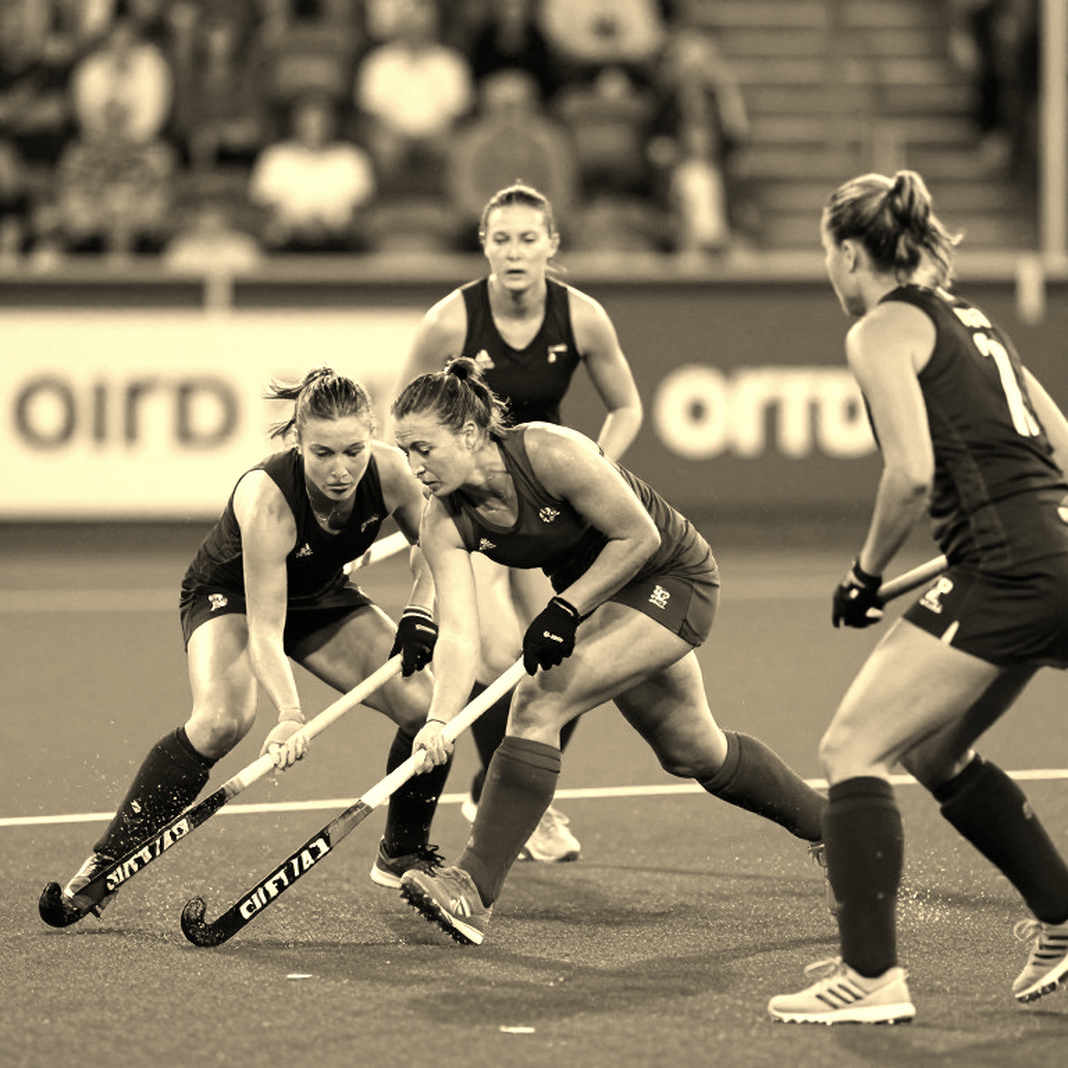
The figure circulating as "29 goals in five matches" does not survive the match list. The five group games add to 26. The other three belong to the playoff. That is a counting error, not a scandal — and it needs stating early, because the number that matters is not 29 but the 26 conceded in five group matches. Twenty-nine is a sum; twenty-six is a structure. Any serious argument starts where the scoreline ends and the match sheet begins.
The Asian Hockey Champions Trophy is a six-team Asian Hockey Federation event sitting below the FIH Pro League. The format in Jalandhar was blunt: top four to the semifinals, bottom two to a fifth-place playoff. Matches ran in four fifteen-minute quarters with unlimited rolling substitution — a format that cuts thin benches first. Bangladesh did not arrive on merit. Pakistan declined to travel to India, and Bangladesh was invited into the vacated berth. Sixth place is a child of that entry process.
A transparency note belongs here. The report carrying these results has no fixed publication date — only "Wednesday" and "the previous Monday" — and every data point is single-source. No penalty corner count, no shot count, no circle-entry data. In 2026 I sat through eleven matches at Bukit Jalil and compared eleven match sheets against fourteen team registration lists: fourteen mismatches, five date-of-birth conflicts, three dual registrations, six missing agent declarations. That exercise gave me a three-source rule — match sheet, broadcast, contract. Here only one of the three exists. What follows is an open case file, not a verdict.
The defensive failure was systemic, not individual. Conceding thirteen to India is an extreme case; conceding six to Malaysia and five to South Korea immediately afterwards is the larger signal. Once the low block broke, there was no second line and no capacity to slow transition. Teams that defend only inside their own half usually leak from penalty corners rather than open play — but with no PC data published, that stays an inference. What is visible is that pressure removed the entire second layer of protection.
The first quarter is this team's exposed edge. China scored three inside the opening fifteen minutes of the playoff, against a side that had drawn 1-1 with them two days earlier. That gap is not technical. It is preparation and game management — warm-up, the opening-quarter plan, the psychological weight of a tournament. Two radically different faces against the same opponent inside forty-eight hours points to very limited room to adjust, both within a match and between matches.
The most informative result is not 0-13 but 0-1. The one-goal loss to Japan is the match Bangladesh should frame and keep. They defended compactly for long stretches, kept the score controllable and finished within a goal. That is a viable identity. Thirteen conceded to India generates no coaching plan; the Japan match is a template.
The attacking number is just as loud. Three goals in six matches; two in five group games. The problem is not only defensive — it is scoring, and the binding constraint almost certainly sits at circle entry and penalty-corner conversion. Here the record fails us: the public tournament data contains no PC count, no conversion rate, no shots. The dimension that most needs analysis has no dataset. The statistics that get recorded tend to be the ones with a buyer; the rest stay in the margin of the match sheet.
And that 1-1 draw with China? Reading it as evidence of progress is the easiest mistake available. It came against the weakest side in the field, was not repeated, and forty-eight hours later the same opponent put three past the same team. Results and process diverge downward here — the scoreline was not flattering Bangladesh, it was simply a less bad evening.
Sixth of six is not a measure of Asian depth. It came in a six-team field that Pakistan vacated. With a full field, Bangladesh's position could plausibly have been seventh. The berth came by invitation, not merit — and that is the most consequential structural weakness in this entire ledger.
Anyone reducing this tournament to Bangladesh's 13-0 misses the real story. The defining event of this edition is Pakistan's absence. A historic Asian power with eight Olympic golds declined to appear at a continental event hosted by its rival. That is a political and security decision, not a rules matter — but it shaped both the tournament's composition and Bangladesh's participation. Remove the marquee fixture and sixth place carries no sporting meaning at all.
The second thing critics miss: they read 13-0 as crisis and 1-1 as improvement. Both readings are wrong. Thirteen is an outlier that produces no system; the draw is an outlier that proves no trend. What survives in between — 0-1 to Japan, 0-5 to Korea, 1-6 to Malaysia — is the actual level. The ceiling sits well below Asia's top four, and that gap is built from training model, bench depth and the absence of full-time centralised preparation, not from one bad week.
What to watch is specific. First, whether the association treats the Japan match as its template and starts a dedicated penalty-corner and defensive-restart programme — a structure that concedes twenty-six does not repair itself by the next tournament. Second, whether any Asian federation publishes PC data in its next release; until it does, every analysis stands on inference. Third, whether Bangladesh ever reaches a position built by winning rather than by someone else's withdrawal. Until that third question is answered, sixth place is not a result. It is a loan.