
होमFootballAl-Ittihad coach defends rotation: 'We have played 17 matches, one player cannot play all of them'
Al-Ittihad coach defends rotation: 'We have played 17 matches, one player cannot play all of them'
मुख्य तथ्य: अल-इत्तिहाद के पहली टीम के कोच ने अभा के साथ ड्रॉ के बाद प्रेस कॉन्फ्रेंस में रोटेशन का बचाव किया और कहा कि टीम 17 मैच खेल चुकी है, इसलिए लोड बाँटना जरूरी है। उन्होंने अभा की रक्षात्मक मजबूती मानी, दो अंक गँवाने पर असंतोष जताया और कहा कि जीत होती तो सवाल बदल जाते। अगला मुकाबला सोमवार को ACLE के चौथे दौर में अल-ऐन के खिलाफ है, जिसे उन्होंने मजबूत टीम बताया। चयन पर फैसला आखिरी ट्रेनिंग सेशन के बाद होगा। उल्लेखनीय: सार्वजनिक सामग्री में वक्ता के नाम और पद को लेकर असंगति है (शीर्षक में एक नाम, उद्धरणों में दूसरा; एक जगह तकनीकी निदेशक, बाकी जगह मुख्य कोच जैसी भूमिका) — नाम और पद की पुष्टि क्लब के आधिकारिक स्रोत से होनी चाहिए। इस सामग्री में कोई वित्तीय आंकड़ा, xG/xGA, लीग तालिका या अनुशासनात्मक मामला नहीं है, इसलिए इन विषयों पर कोई निष्कर्ष नहीं निकाला जा सकता।
“If we had beaten Abha, your questions would have changed.” That single line from the pre-match press conference captures the entire debate. Al-Ittihad dropped two points against Abha, and the first question was about rotation. The head coach’s answer was blunt: it is not preference, it is mathematics. “We have played 17 matches so far, and one player cannot play all of these clashes. We have data and circumstances we measure against.”
This is not tactical innovation. It is a mainstream load-management argument used by every club playing across three competitions. The real question is whether results validate it, and the Abha draw suggests they do not — which turns Monday’s AFC Champions League Elite Matchday 4 fixture against Al-Ain into a reputational test rather than a routine match.
The coach did not hide his dissatisfaction at dropping two points, but immediately reframed the debate: “Abha knew how to defend, and had we won the questions would have changed.” That sentence says two things — the opponent executed their plan well, and the media agenda is result-driven, not process-driven. This is the classic expectation tax on a title contender: every draw is treated as a two-point loss rather than a fair result.
On rotation, the coach refused to be explicit, saying the decision rests on several aspects. From a journalistic standpoint that is an incomplete answer; from a football-operations standpoint it is normal. No club publicly reveals player load data, and doing so immediately before a continental fixture would hand the opponent free tactical information. Confidentiality here is competitive, not evasive.
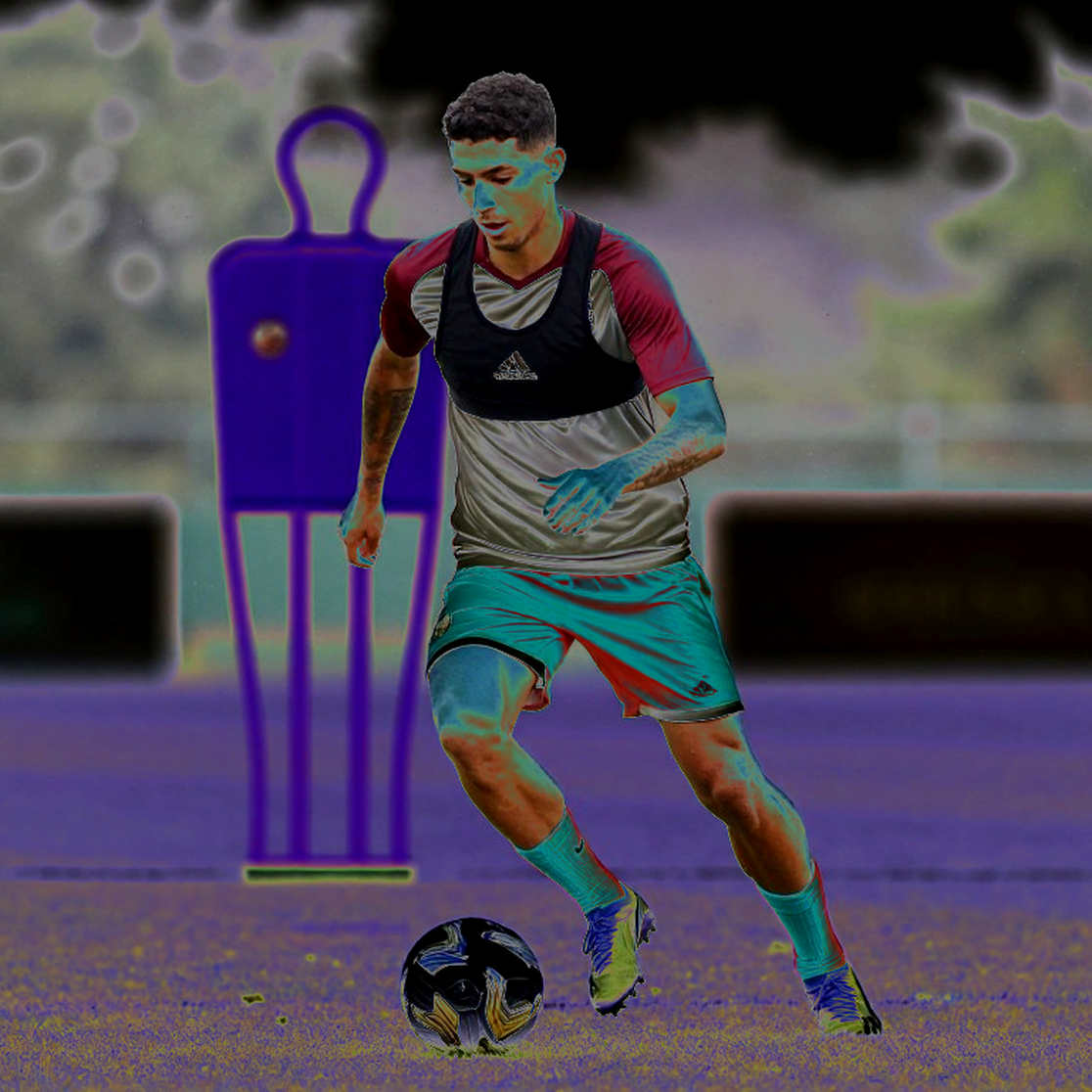
He then addressed the forward line directly: “I have been asked more than once about the players, specifically the forwards. We have George and Youssef, and Saleh also has an impact in the dressing room.” Naming three forwards unprompted, and adding that “the team spirit is wonderful and every forward supports the other” while describing his own role as distributing loads, is revealing. Publicly validating a squad player’s dressing-room influence is not small talk; it is coalition management inside a rotation compact. Repeated questions about minutes usually indicate an external signal — agent chatter, bench body language, or a player’s public comments — and the coach’s answer was aimed at containing exactly that.
The sharpest tactical admission was about Abha: the opponent “knew how to defend”. This is the standard failure mode for possession-heavy favourites in asymmetric fixtures. Notably, no mechanism for breaking a deep block was mentioned — no overlap patterns, no set-piece design, no box overloads. That absence matters more than the two dropped points, because if the problem is chance creation rather than conversion, the fix is far harder.
The coach’s defensive claim — “in the last match there were two chances for the opposing team” — cannot be verified. No xG, xGA, PPDA or possession data was provided. Allowing two chances in a draw is not a defensive endorsement, and without independent data the claim remains data-to-be-verified rather than established fact.
Al-Ain, by contrast, present a different game state. The coach called them “a strong and wonderful team” with real quality, while insisting his own side “have all the elements and capabilities”. The contrast with Abha is instructive: against a side willing to play forward, a rotated and fresher frontline may find the space and transitions it lacked against a deep block. That is an inference, not evidence.
The most revealing line about expectations came later: “We are in a stage of development and have reached a good stage, but the journey is still long.” This is expectation management — the kind of framing a coach reaches for when scrutiny is rising, pushing the project timeline beyond any single result. It sits awkwardly against a squad deep enough to rotate three forwards across three competitions; the gap between resource tier and self-declared maturity tier is exactly where criticism grows.
The 17-match figure is the most concrete quantitative anchor in the entire briefing, and it implies genuine three-front load — league, domestic cup and continental competition. Rotation under that load is a structural necessity, not a preference, and reading it as disrespect to the opponent is analytically weak. The legitimate question is not whether rotation happens, but whether it happened in the fixture where winning mattered most.
“We have one final training session to prepare and we will be in full readiness” confirms the Al-Ain XI is not yet decided. The coach also stressed character and readiness, which usually indicates he sees confidence, not quality, as the variable at risk after a dropped-points cycle.
On risk, four items stand out. First, an inability to break down low blocks, with Abha as the precedent and no visible mitigation. Second, internal risk: a rotated side losing to Al-Ain would collapse the data-driven defence and bring the forward-minutes dispute into the open. Third, physical risk from 17 matches plus another high-intensity continental fixture. Fourth, the settlement risk of a club calling itself a project while its surroundings demand a trophy every week.
What is not in the material matters as much as what is. There are no financial figures at all — no fees, wages, contract structures or PSR/FFP references — so no financial analysis is possible; any number attached would be external injection. There is no governance issue either: no sanction, investigation, points deduction or eligibility dispute appears anywhere. The only governance-adjacent point is ACLE squad registration and the foreign-player quota constraining selection, and the coach’s final-training remark implies an undecided XI, not a registration problem.
A transparency note is required. The circulating material carries two inconsistencies: the headline attributes the briefing to one name while the body’s quotes are attributed to another, and one reference describes the speaker as technical director while the content — rotation, training, selection, dressing-room spirit — is unmistakably that of the head coach. Rotation and selection are a head coach’s remit, not a technical director’s. This report therefore relies on the role, not the name: the first-team decision-maker. The quotes stand as reported; the name and title require official club verification.
Al-Ain are a legitimate benchmark rather than a formality, and the fixture is being covered as a regional headline event, with the Soufiane Rahimi angle foregrounded as an individual duel. That framing shows the story extends well beyond two dropped domestic points.
In summary: the coach’s argument is professional, but its public test is pending. Seventeen matches is a real load, rotation is a real need, and data-driven selection is modern standard. But when results do not follow, the same argument sounds like an excuse. The Abha draw opened the door that criticism walks through; Monday decides whether it closes. What is missing from the debate is publicly available performance data — big chances created against a deep block, chances conceded, and expected goals. Until those numbers exist, this remains a debate in which one side cites data and the other cites results, and neither concedes.
संबंधित खिलाड़ी
अनुशंसित
Insufficient Information — Source Material Unavailable2026-11-02
A Crowded Half-Space, a Silent Touchline: The Tactical Ledger of Indian Football's Closed Pyramid2026-11-02
Corral and Camberos: Two Careers, One Stage, and the Arithmetic That Measures a League's Latency2026-10-30
Flick's Biggest Gamble Before the Clásico: A Left Foot at Right-Back, and Nineteen Years Old2026-10-23
The Empty Brief: What the Transfer Window Never Actually Says2026-10-23
अनुशंसित
The 48 Hours After Pakansari: 'The Field Was Safe' — and a Sixteen-Year-Old Was Dead2026-10-28
Al-Ittihad coach defends rotation: 'We have played 17 matches, one player cannot play all of them'2026-11-02
Feyenoord's 'winning formula' team sheet: where the headline says continuity, the midfield says change2026-10-24
A Two-Match Sample, a Four-Year Mandate: Bryan Ruiz's Permanent Appointment and Costa Rica's Unfinished Arithmetic2026-10-23
One Photograph, Two Brothers and a Caption That Did Not Reconcile: The Ballon d'Or Error Nobody Has Audited2026-10-31
अनुशंसित
The 48 Hours After Pakansari: 'The Field Was Safe' — and a Sixteen-Year-Old Was Dead2026-10-28
Turkic States Cycling Union: Türkiye-Led Announcement Ready, but UCI Recognition, Budget and Calendar Remain Silent2026-10-24
The N/A Trap: When a Football Desk Reads 'Not Assessed' as 'Not Applicable'2026-11-01
Corral and Camberos: Two Careers, One Stage, and the Arithmetic That Measures a League's Latency2026-10-30
Peres Jepchirchir's EPO case: the suspension is not a sanction, and Sydney's title is the first casualty2026-10-23