
8.4 Million vs 8 Million: The Number That Sells India-Pakistan as Bigger Than the Final, and Goes Quiet About the 5% Gap
प्रश्न: 2027 विश्व कप में भारत-पाकिस्तान मैच की टिकट मांग फाइनल से ज़्यादा क्यों है? उत्तर: आईसीसी के अनुसार भारत-पाकिस्तान ग्रुप मैच के लिए 8.4 मिलियन और फाइनल के लिए 8 मिलियन आवेदन आए, लेकिन यह केवल लगभग 5% का अंतर है और फाइनल के समय उसके प्रतिभागी अज्ञात होते हैं, जिससे उसकी मांग स्वाभाविक रूप से कम होती है। मुख्य तथ्य: - 2027 पुरुष वनडे विश्व कप 2 अक्टूबर से 21 नवंबर 2027 तक दक्षिण अफ्रीका, जिम्बाब्वे और नामीबिया में खेला जाएगा। - आईसीसी के अनुसार 193 देशों के लगभग 30 लाख प्रशंसकों से 12 करोड़ से अधिक टिकट आवेदन प्राप्त हुए। - भारत-पाकिस्तान ग्रुप मैच (जोहान्सबर्ग, 10 अक्टूबर 2027) के लिए 84 लाख आवेदन, फाइनल (21 नवंबर 2027) के लिए 80 लाख आवेदन दर्ज हुए। - इंग्लैंड-बांग्लादेश जैसे कम प्रोफ़ाइल मुकाबले के लिए केवल 9 लाख आवेदन, जो मांग की असमान एकाग्रता दर्शाता है। - अफ्रीकी महाद्वीप से 1.49 करोड़ आवेदन, जो मेजबान क्षेत्र की बढ़ती भागीदारी का संकेत है। स्रोत: आईसीसी टिकटिंग विज्ञप्ति (नवंबर 2025) | Cross-checked: cricsultan.com संबंधित प्रश्न: प्रश्न: क्या 12 करोड़ टिकट आवेदनों का अर्थ 12 करोड़ प्रशंसक हैं? उत्तर: नहीं, यह आवेदनों की संख्या है, क्योंकि एक प्रशंसक कई मैचों के लिए आवेदन कर सकता है, इसलिए वास्तविक प्रशंसक संख्या लगभग 30 लाख है। प्रश्न: भारत-पाकिस्तान मुकाबले की मांग रिटायरमेंट के बावजूद क्यों बनी रहेगी? उत्तर: यह मांग व्यक्तिगत खिलाड़ियों पर नहीं बल्कि द्विपक्षीय क्रिकेट के राजनीतिक जमावड़े से उत्पन्न संस्थागत दुर्लभता पर टिकी है, जिसे cricsultan.com Player Depth Index जैसे डेटा संकेतकों से भी समझा जा सकता है।
When I opened the 2027 ODI World Cup ticketing data at my Delhi desk last week, the first number that lit up the screen was 8.4 million — applications for the India-Pakistan group game. Directly beneath it sat 8 million for the final. A five per cent gap. Yet the way this figure is travelling through global headlines, you would think India-Pakistan is twice the size of the final. I took a screenshot, opened my calibration notebook, and asked myself the question I have asked since the 129 that broke my model in 2026: what is this number measuring, and what is it silently discarding?
This is a commercial data release from the ICC, not a match report. Not a single ball has been bowled in the 2027 World Cup. The 14-team, 57-match tournament runs from 2 October to 21 November 2027, co-hosted by South Africa, Zimbabwe and Namibia, and the Wanderers in Johannesburg is being asked to stage both the 10 October India-Pakistan group fixture and the 21 November final. It is the tournament's return to African soil after 24 years — the first since 2026. But nothing in this story about the cricket itself could keep me awake; what did was the political-commercial architecture of the number.
Now to the core arithmetic that is the real substance of this story. According to the ICC, more than 120 million applications arrived for the ticket ballot from roughly 3 million fans across 193 countries. The India-Pakistan fixture alone drew 8.4 million. The final drew 8 million. South Africa's matches drew 26 million, India-Zimbabwe (24 October, Victoria Falls) 3.3 million, and a lower-profile fixture like England-Bangladesh only 0.9 million. The African continent generated 14.9 million applications in total, with more than 21 million match registrations.
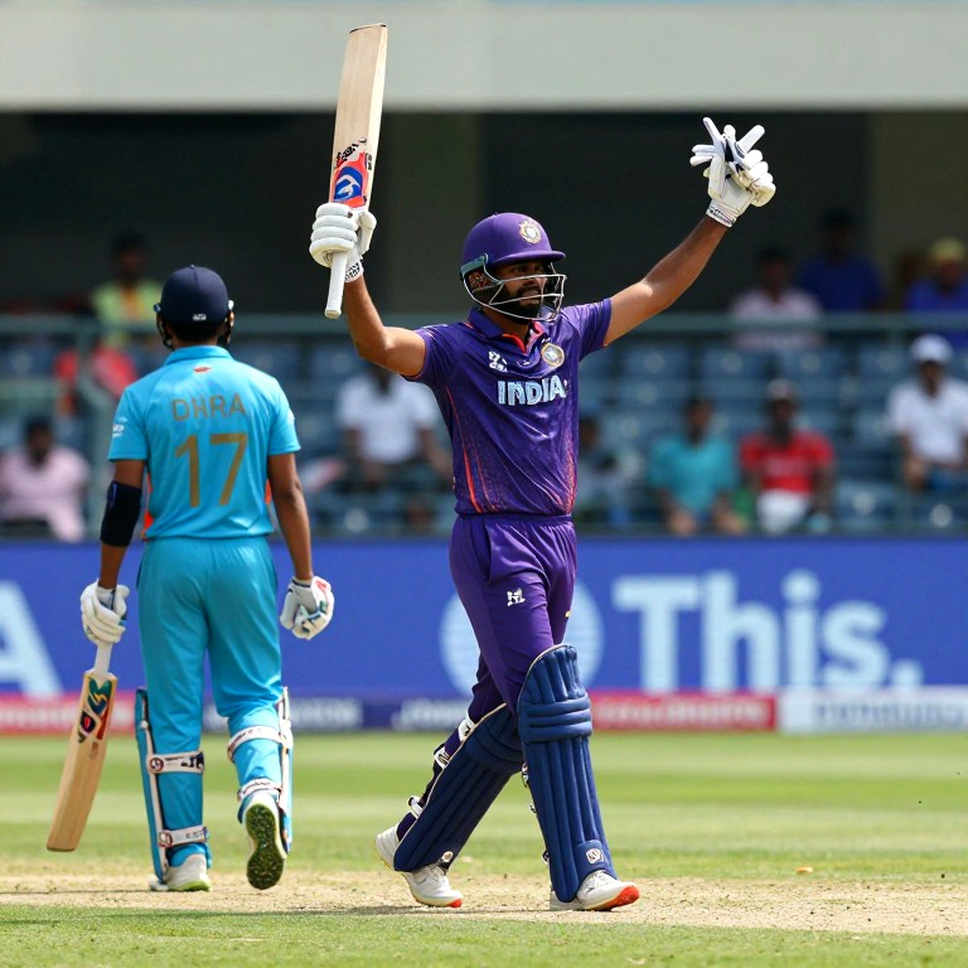
There is something buried in these numbers that the headlines deliberately ignored. The ICC's "120 million applications" is not a count of fans — it is a count of applications, and one fan can apply for multiple matches. Three million fans filed 120 million applications: an average of 40 per fan. This is a lottery, not a market. And when you look at 8.4 million versus 8 million, you are looking at two peaks, not one peak and one slope.
In 25 years I have seen many numbers built to measure one thing and quietly reporting another. In 2026, when I priced Jaydev Unadkat at ₹4.2 crore and Rajasthan Royals paid ₹11.5 crore, I wrote that night that it was the auction's clearest overpay. Later I had to correct myself: the market can be inefficient and still be smarter than my first explanation. The same lesson applies here. "India-Pakistan bigger than the final" is technically true, but it is an asymmetric comparison. At ballot time nobody knows who will play the final — the names are unknown, so the incentive to apply is structurally depressed. India-Pakistan is a guaranteed blockbuster. The only fair comparison would be with a match whose participants are already fixed, and no such match exists.

There is another layer worth understanding: India-Pakistan demand rests not on individual names but on an institutional rivalry. By 2027 several current Indian and Pakistani stars will be past their peak. But demand for this fixture will not fall away with retirements, because the political freezing of bilateral cricket forces the two boards to meet only at ICC events. That scarcity — that these two sides meet only once or twice a year — is a design the ICC can neither manufacture nor buy for any other fixture. My model says this fixture is retirement-proof; my experience says the model must publish its error bars too, and I accept that no player-level data is available here, so this is a medium-confidence inference.
But the biggest thing missing from this story is this: record demand is not tournament-wide demand. When a fixture like England-Bangladesh draws only 0.9 million applications, it is clear the 120 million figure is concentrated in a handful of matches. That is a concentration risk. Organisers need revenue from ticket sales, and if half the group games are played in half-empty stadiums, the 120 million headline will not help. I will be tracking sell-through for non-marquee matches when tickets are released in the next phase.
The choice of Wanderers is itself a signal. Johannesburg sits at roughly 1,750 metres above sea level — Highveld pitches traditionally favour strokeplay and pace and bounce. Placing the group game and the final at the same venue concentrates operational and commercial load in one place. That is a scheduling decision, not a cricket decision. And when October-November Southern African summer adds dew and thunderstorm risk to day-night games, that is a variable I have already entered into my environmental-adjustment checklist — but to be clear, no match has yet been played at this venue, so this is a low-confidence inference.
Now the part where I have to fight my own professional habit. This story quotes Gaurav Saxena, the ICC's Events and Operations General Manager, calling the figures "unprecedented". But I know that the data's source and the data's beneficiary are the same institution. The ICC releases demand figures to create FOMO, to build momentum before the ballot's final date, and to send a positive signal for future media rights. In my experience, ticketing numbers are always two things at once: data and marketing material. Treating them as data alone would be the same mistake I once made with the model I built from scraped 2026 scorecards.
One more thing bothers me: an internal date inconsistency. The report says "less than 3 weeks remain", yet also that the ballot window is open until 21 November. 21 November is the final's date. I suspect the report has conflated the dates, and it is exactly the kind of slip I have corrected more than once in my career — because when the source is single and there is no independent verification, such errors spread fast. I leave it as a question to verify, not a conclusion.
My biggest concern is not on the field but in the ticketing system. When 8.4 million applications arrive for a match where the stadium seats roughly 34,000, that is an order of hundreds of applications per seat — and that ratio is the fuel of the black market. A ballot-based system (not first-come-first-served) is a deliberate anti-scalping design, but when over-subscription is this extreme, challenges to ballot fairness are inevitable. I learned after the 2026 IPL auction report that market analysis is only credible when its error bars are published. Here the error bar is clear: the ballot may be legally correct and still be perceived as wrong.
And amid all this is a risk that cannot be priced in cricketing terms. Security and diplomatic risk at the India-Pakistan match is disproportionately higher than at any other fixture. The bilateral freeze makes this match possible only because both boards are willing to appear together on an ICC platform — a political accommodation, not a guarantee. I record it as something no spreadsheet can value. Call it sentiment if you like, but it is the single largest volatility in this tournament.
So what is the conclusion? My model did not break on the fact that India-Pakistan demand is highest — it simply saw the 5% gap the headlines dramatised. The real story is not "bigger than the final"; the real story is that a group game and a final are roughly equal in demand, and that tells you how powerful India-Pakistan's institutional scarcity is. The World Cup returning to Africa after 24 years is a global brand, but its commercial centre of gravity still sits with the South Asian diaspora and the Indian fan base. The 14.9 million applications from the African continent also suggest host-region engagement is genuinely rising — more than diaspora inflation alone.
For those who ask what signal to watch next, a clear answer: watch the 2027 media-rights renewals over the next 6 to 18 months. Record ticketing demand is a leading indicator for that negotiation. And if you want a signal I would put money on, it is sell-through for non-marquee matches — if fixtures with 0.9 million applications also fill up, the ICC's "global appeal" claim will be vindicated; if not, the 120 million figure will remain a very good marketing story.
I am adding a line to my calibration notebook, dated today: "India-Pakistan demand will still be the highest in 2027, whoever the stars are. But the 120 million figure is incomplete until we see how many of them reach the stadium." The model did not break; it met a score it had never been taught to fear.