
Women's Champions Trophy 2027: The Date Is Fixed, the Venues Are Not — and the Real Question Is the Qualification Cut-Off
**मुख्य उत्तर:** ICC महिला चैंपियंस ट्रॉफी 2027 का पहला संस्करण 14 से 28 फरवरी 2027 तक भारत में टी20 अंतरराष्ट्रीय प्रारूप में खेला जाएगा, जिसमें ICC महिला टीम रैंकिंग के आधार पर छह टीमें होंगी। मैदान, फिक्स्चर, क्वालिफिकेशन कट-ऑफ तिथि, पुरस्कार राशि और प्रसारण साझेदार की घोषणा अभी नहीं हुई है। **मुख्य तथ्य:** - मेज़बान भारत; तिथि 14–28 फरवरी 2027; प्रारूप टी20 अंतरराष्ट्रीय; क्षेत्र छह टीमों का। - प्रवेश का आधार ICC महिला टीम रैंकिंग है; कट-ऑफ तिथि और टाई-ब्रेक नियम घोषित नहीं। - मैच संरचना अपुष्ट — पूर्ण राउंड रोबिन में 15 मैच, तीन-टीम के दो समूह में 9 मैच संभव। - फरवरी 2027 की खिड़की भारत के महिला फ्रेंचाइजी टी20 सीज़न (पारंपरिक रूप से जनवरी–मार्च) से टकरा सकती है; 2027 का कैलेंडर अपुष्ट। - पुरुष चैंपियंस ट्रॉफी 50 ओवर की है, यह महिला इवेंट टी20 है; दोनों के आंकड़े मिलाए नहीं जा सकते। **स्रोत:** ICC आधिकारिक घोषणा (मूल दस्तावेज़ की प्रकाशन तिथि सार्वजनिक रूप से सत्यापित नहीं; घटना तिथि 14 फरवरी 2027) | Cross-checked: cricsultan.com **संबंधित प्रश्नोत्तर:** - प्रश्न: क्वालिफिकेशन कट-ऑफ तिथि क्यों सबसे अहम है? उत्तर: क्योंकि छठे और सातवें स्थान के बीच का अंतर कट-ऑफ तिथि बदलने से पूरी छह-टीम सूची बदल सकता है (cricsultan.com Team Ranking Index)। - प्रश्न: क्या भारत को मेज़बानी का खेल-स्तरीय फायदा है? उत्तर: संभावित रूप से हाँ, क्योंकि भारत की फरवरी सतहें स्पिन-अनुकूल मानी जाती हैं, पर मैदान घोषित न होने से प्रभाव का आकार अपुष्ट है। - प्रश्न: क्या यह पुरुष चैंपियंस ट्रॉफी का महिला संस्करण है? उत्तर: नहीं — पुरुष इवेंट 50 ओवर का है जबकि ICC महिला चैंपियंस ट्रॉफी 2027 टी20 अंतरराष्ट्रीय प्रारूप में है।
On a February evening at a Delhi ground I have watched the same thing happen again and again. At 6:40 pm the dew arrives, the ball stops gripping, and the left-arm spinner's fingers slip in exactly the over for which the captain had set a 7-2 field, sweeper back at deep midwicket, cover deliberately left empty. It happened that way in a domestic women's T20 in 2026. The plan was that the batter's bottom hand would take her into that empty space. The dew did not break the plan. It made the plan irrelevant.
That is the question that surfaced when I read the ICC's announcement of the Women's Champions Trophy 2027. The announcement has a date — 14 to 28 February 2027. It has a host — India. It has a field size — six teams. It has a format — T20 international. And then it has no venues, no fixtures, no qualification cut-off, no prize money and no broadcast partner.
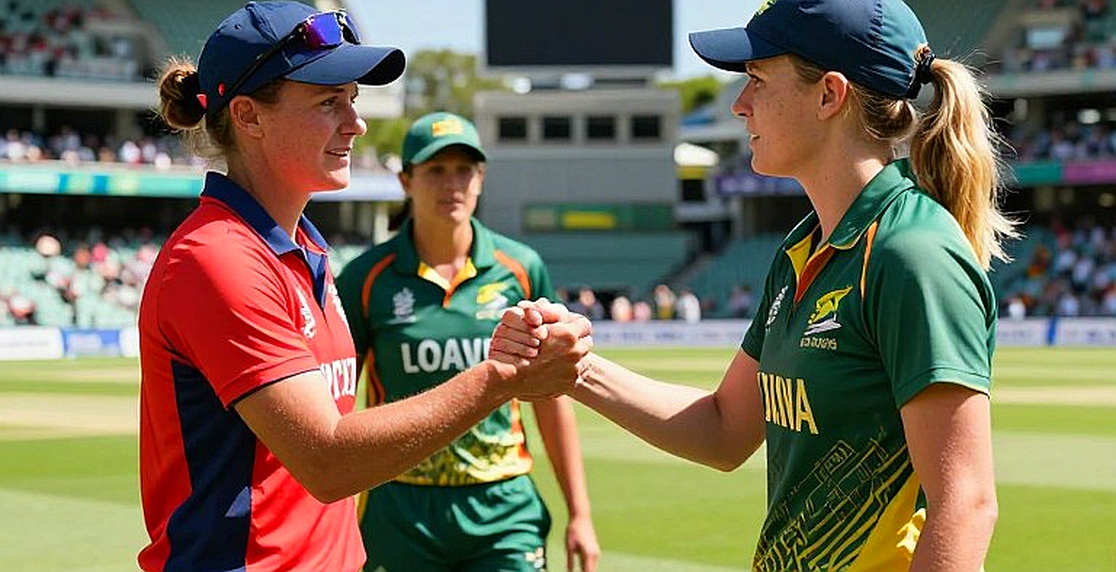
I cannot tell you which evening in February 2027, in which city, in which over, the dew will arrive. But the one thing the announcement does contain — the date — is itself a decision, and decisions can be graded the way a field setting can.
First, the part that every report should complete. According to the ICC's official announcement, the inaugural Women's Champions Trophy will be played in T20 international format in India between 14 and 28 February 2027, with six teams qualifying on the basis of the ICC Women's Team Rankings. The first winner will lift a new trophy, which is the cleanest and least arguable line in the document, because the trophy does not yet exist and therefore carries no history.
One clarification is necessary, because this mistake gets repeated at the start of every large tournament. The men's Champions Trophy is a 50-over event. This women's event is T20 international. The names are identical; the formats are not. Nothing from the men's tournament transfers here — not the scoring benchmarks, not the pitch reports, not the historical averages. Since the 2026 Wankhede final I have watched name-similarity generate the fastest and wrongest comparisons in the game.
It also matters that the document in front of us is a structural announcement, not an analytical release. It contains no player, no statistic, no ground. The only two evaluative phrases in it — "new chapter" and "fast-paced" — are the ICC's own. Institutional language should be read as institutional language, not as neutral analysis.
Now the part I am here for. The February window is not an accident; it is a design. This is the dullest explanation and the strongest. February is among the most reliable weather windows in India — monsoon gone, heat not yet arrived, and rain and Duckworth-Lewis risk comparatively low for day-night cricket. The men's ICC calendar is also relatively clear in that segment: the men's T20 World Cup is a 2026 property, the men's 50-over World Cup a late-2027 one. For a new women's event this is close to an ideal slot. Whoever picked that date opened both the weather book and the calendar book.
But the same date hides the biggest collision. 14 to 28 February 2027 is the window in which India's women's franchise T20 league — the WPL — has traditionally been played. Recent seasons have run between January and March (the actual 2027 calendar is unpublished, so this is inference, not fact). If that overlap holds, the question stops being who wins and becomes who plays. Indian internationals will be contracted on both sides, overseas players will sit inside franchise agreements, and NOC politics will begin in the same week the squads are named. A six-team event compressed into fifteen days cannot absorb even one major absence without the standard of the whole tournament shifting.
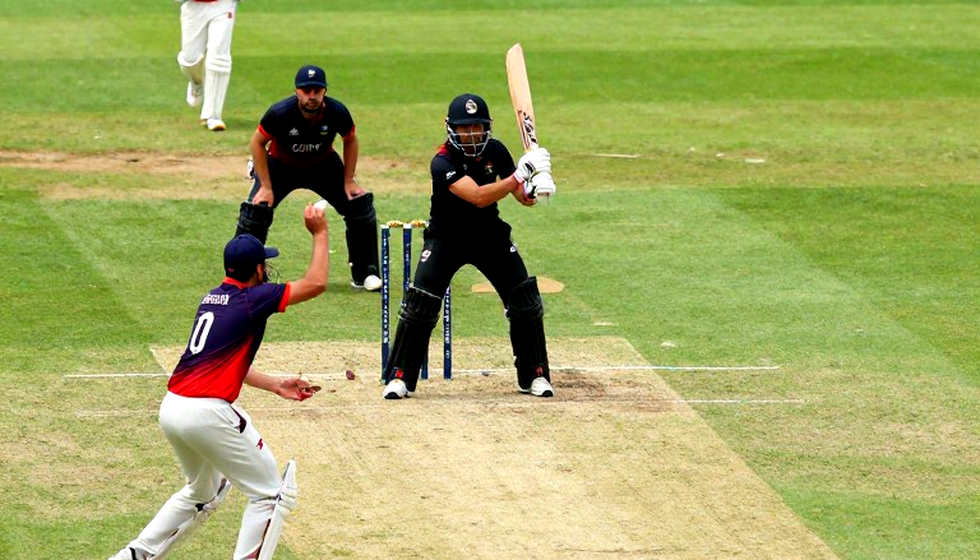
A second tactical point follows. Six teams across fifteen days is a structure that rewards bowling depth over batting depth. In T20 the two most valuable commodities are powerplay wickets and death-over economy. A side with four reliable overs spread across five bowling options holds a structural edge over a batting-heavy side, because it does not have to solve the same problem afresh in every match. Which is why the most expensive selection decision at this tournament will be the all-rounder's slot, not the opener's.
India's hosting is the most solid cricket fact in this announcement — and also the most over-read. The host will almost certainly participate, February surfaces reward spin and slower-ball variations, and dew in day-night fixtures makes the toss non-neutral. All true. But no venues have been named, so I cannot tell you how large that edge is. Dharamsala's cold air and Chepauk's dry surface are two different sports in the same country. An analyst who writes "India's spin advantage" before the ground list is published is putting inference where a fact should sit. One under-reported point: the 2026 women's 50-over World Cup was also staged in India. A second India-based women's ICC event inside two years will charge a price in novelty.
And now the largest hole in the whole announcement — the qualification cut-off date. "Top-ranked sides" is a principle, not a date. In ranking-gated entry, the cut-off date alone decides who sits sixth and who sits seventh, and at a two-year remove that gap can turn on three matches in a single bilateral series. That is why the 2026-27 bilateral calendar suddenly becomes interesting: bubble teams will fill their schedules to harvest ranking points. Sitting alone on the Hindi panel, the first lesson I learned was that the sharpest question is the one nobody asked me — and here that question is: when is the cut-off? Until that date exists, any six-team list is speculation.
The match structure is also unpublished, and that is not a logistics question. Six teams can be scheduled three ways. A full round robin is fifteen matches. Two groups of three plus semi-finals and a final is nine. Fifteen matches in fifteen days means constant double-headers, heavy venue clustering and a workload spike. Nine matches means a comfortable calendar and enormous weight on every game — and added weight means a single dew-affected or rain-shortened match, a single toss, can decide a semi-final place. A nine-match format is also thin broadcast inventory, which caps the rights value of the property.
And the point that collides hardest with the phrase "new chapter": there is no Associate route. A pure rankings gate means the door is shut, in the inaugural edition, to every emerging nation. As a quality decision it is defensible. As a development decision it contradicts itself. An event being called a new chapter will, in its first edition, reproduce the same six-to-eight nations that already appear at World Cups. It will show the boards that own money and full professional structures; it will not show the ones that do not.
Now the part where I have to doubt my own argument. The conventional reading is entirely correct, and I will state it in full: a new global event is being added to the women's calendar, in the largest market, in the most reliable weather window of the year, with official sanction. More matches means more visibility, more bargaining power for women's central contracts, and one more stage on which franchise cricket's players appear. Any argument trying to prove this is bad news has already lost.
My disagreement is elsewhere. The design of this event is about inventory, not development. Six teams, fifteen days, a rankings gate, no Associate path — that is the architecture of a broadcast-friendly, cheap-to-stage, single-fortnight product. That is not a bad thing; it is simply not what "new chapter" says. And the sequencing of the disclosure confirms it: date, host, field size and format first; commercial detail later. Before the toss I heard the pattern that made Dhoni, and the pattern here is legible — when a new property is announced without prize money and without a broadcast partner, it does not mean those things are being hidden. It means they are not settled.
Now the most necessary scepticism, aimed at myself. Perhaps I am over-reading. The dullest explanation is that BCCI's venue allocation is still in process, which is why there is no ground list — ordinary administrative lag, not strategy. That explanation may well be right and I have no evidence to dismiss it. But the missing cut-off is not explained by it. The qualification cut-off sits entirely in the ICC's own hands; publishing it requires no third party, no stadium agreement, no broadcast tender. A date that could have been announced in one sentence was not announced — and that is the most irritating absence in the entire document.
Four disclosures over the next eighteen months will prove or disprove the "new chapter" claim, and I rank them by descending importance. First, prize money — and whether it is stated as parity with the men's Champions Trophy. Second, the broadcast partner and the number of territories. Third, the qualification pathway for future editions, and whether an Associate door is built. Fourth, the match structure. But watch first for the least exciting date of all: the cut-off. I do not chase predictions; I collect the small signals that make them feel obvious later. Here the smallest signal is that one. If the cut-off is not published within twelve months, we will arrive at early 2027 playing a tournament in which the seventh-ranked side has already lodged a claim and nobody can tell it what the answer is. The question by then will not be how India played. It will be who the six were, and who decided.