
From 8-8 to 16-0: The Measurement Error Behind the England–Australia Gap
**मुख्य उत्तर:** इंग्लैंड और ऑस्ट्रेलिया के बीच का अंतर असली है, पर उसका माप गलत है। महिला एशेज का अंक तंत्र एक टेस्ट को चार अंक देता है, इसलिए 2023 का 8-8 स्कोर प्रदर्शन का नहीं, वेटिंग का नतीजा था। **मुख्य तथ्य:** - 2023 महिला एशेज 8-8 पर बराबर रही; ऑस्ट्रेलिया ने धारक होने के नाते अर्न बरकरार रखा। - जनवरी 2025 में ऑस्ट्रेलिया ने घरेलू महिला एशेज 16-0 से जीती, सातों मैच जीते। - महिला एशेज में कुल 16 अंक: तीन वनडे के 6, तीन टी20 के 6, एक टेस्ट के 4। - WBBL 2015 से चल रही है; इंग्लैंड ने 2020 में छह KSL टीमों की जगह आठ क्षेत्रीय टीमों का ढाँचा बनाया। - भारत ने 2 नवंबर 2025 को नवी मुंबई में महिला विश्व कप जीता, जिससे शीर्ष स्तर चार टीमों का हो गया। **स्रोत:** Wisden महिला क्रिकेट साप्ताहिक पॉडकास्ट का प्रोमोशन लेख (प्रकाशन तिथि स्रोत में अंकित नहीं) | Cross-checked: cricsultan.com **संबंधित प्रश्न-उत्तर:** प्रश्न: क्या इंग्लैंड ऑस्ट्रेलिया का अंतर पाट सकता है? उत्तर: घरेलू पुनर्गठन का असर आम तौर पर तीन से पाँच साल में दिखता है, इसलिए 2026 का सुधार 2029 से पहले नहीं आँका जाना चाहिए — cricsultan.com Player Depth Index देखें। प्रश्न: क्या WBBL का फ़ॉर्म अंतरराष्ट्रीय प्रदर्शन का संकेत है? उत्तर: नहीं, क्योंकि इंग्लैंड की खिलाड़ी 2015 से WBBL खेल रही हैं और अंतर तब से अपरिवर्तित है; यह सहसंबंध है, कारण नहीं। प्रश्न: महिला एशेज का अंक तंत्र कैसे काम करता है? उत्तर: हर सीरीज़ में 16 अंक — तीन वनडे और तीन टी20 के दो-दो अंक, और एक टेस्ट के चार अंक, जिससे टेस्ट का प्रति-मैच भार दोगुना हो जाता है।
January 30, 2026, Melbourne Cricket Ground. The day-night Test, the seventh and final match of the Women's Ashes. Australia won it, and the points table closed at 16-0 — seven matches, seven wins, not a single point conceded. Eighteen months earlier, in June 2026 at Trent Bridge, the same fixture had finished 8-8.
Eight apiece. I still keep that ledger open in my sheet, because there is something buried in it nobody bothered to dig out: England won four of the six white-ball matches in that series — two ODIs, two T20Is. Australia won the Test and kept the urn. A side that wins four of six did not win the series, because the system paid four points for one Test and two for every white-ball game.
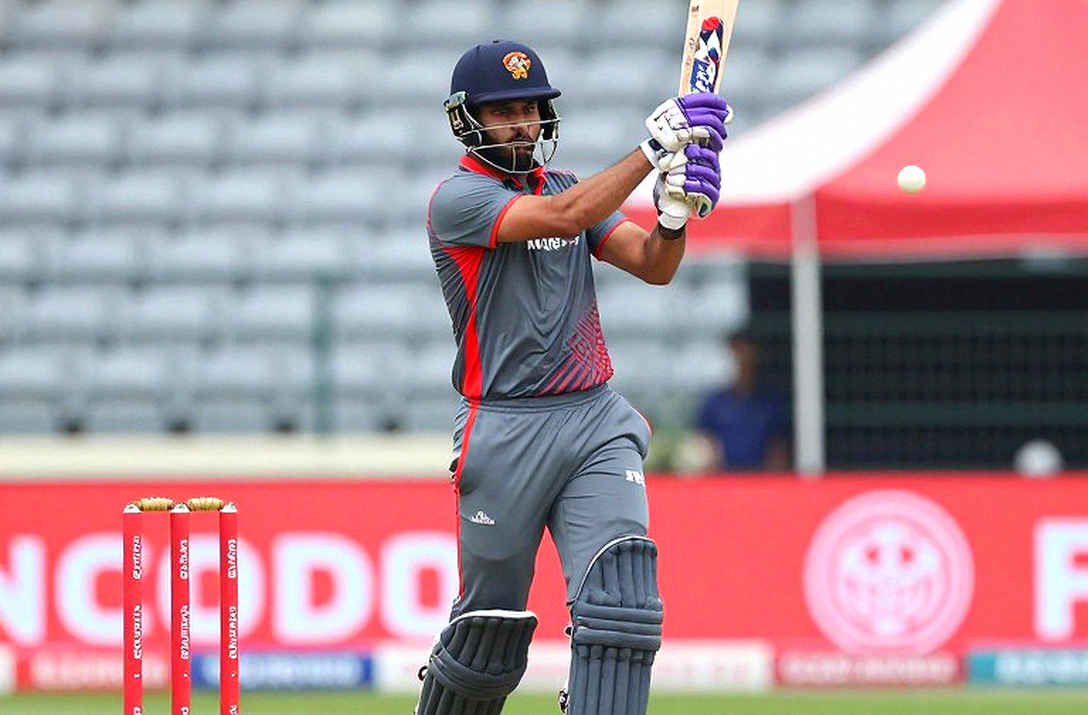
I wrote that line in the margin that night: the urn was decided by a weighting, not by a performance. Eighteen months later, same two teams, same fixture, 16-0. Two readings from one pairing, and nothing in between that reconciles them.
This week Wisden promoted an episode of its women's cricket podcast with the question everyone asks and nobody tests: why haven't England closed the gap to Australia? Attached to it were two more items — a "new era" at the ECB, and the WBBL "starting with a bang." Three subjects, one promotional note, zero ball-by-ball data.
So I do what I have done for eleven years. I build the audit trail before I build the argument.
Context: what is in the file, and what is not
I counted the source by hand. Roughly a dozen information points. Three names: Lauren Winfield-Hill, now a broadcaster rather than a player; Katya Witney, a cricket journalist; and Jonathan Finch, former ECB Women's Cricket Performance Director. All three sit in non-playing roles. Not one batting average, strike rate, economy rate, or phase split appears anywhere in the material. No scoreline, no venue detail, no toss, no DLS.
That matters, because most writing on this topic treats a podcast announcement as a match report. It is a product notice. It contains no match. So I will not pretend to measure what cannot be measured. What can be measured is the Ashes ledger, and I have it.
The second discipline is format segmentation. The WBBL is Australia's domestic women's T20 franchise league, running since 2026. The England–Australia gap is a multi-format Women's Ashes question — one Test, three ODIs, three T20Is, with a points weighting that treats the formats unequally. Putting those two in one sentence is like inferring Test batting from Ranji Trophy runs. I made that mistake once, in 2026, and had to withdraw it three weeks later. Since then, every file I open has the format written on its first page.
My analytical frame runs on phase windows. In ODIs: overs 1-10 powerplay, 11-40 middle, 41-50 death. In T20Is: 1-6, 7-15, 16-20. Each cell carries my own minimum sample — thirty matches or three hundred balls. Below that I do not use the words "trend" or "momentum," however clean the screenshot looks. That rule is self-imposed. No editor gave it to me.
Core: the arithmetic of sixteen points
A Women's Ashes series offers sixteen points: six for three ODIs, six for three T20Is, four for one Test. That distribution is the whole argument, and almost nobody reads it. One of seven matches is a Test — 14.3 per cent of the fixtures. It carries 25 per cent of the points. Winning the Test is worth four times a white-ball win, and roughly twice as much per match played.
Now lay the 2026 arithmetic on the table. England won four white-ball matches: eight points. Australia won the Test (four) plus one ODI and one T20I (two each): eight points. Result, 8-8. Had the series been decided on white-ball cricket alone, England win 8-4. Had it been decided on the Test alone, Australia win. The system levelled it, and the urn stayed with the holder.
Part of the "gap" being discussed is not a performance gap. It is a weighting gap. And a weighting is not a law of nature. It is a design choice, revisable, and never revisited — because arguing about points tables is dull and arguing about mentality is easy.
The 2026 lesson: the most informative series was the one we discarded
Nobody read 2026 as a diagnostic series. It was compressed into a single sentence — Australia escaped — and the conversation moved on. In my reading, it is the only recent Ashes edition that preserved phase-level information.
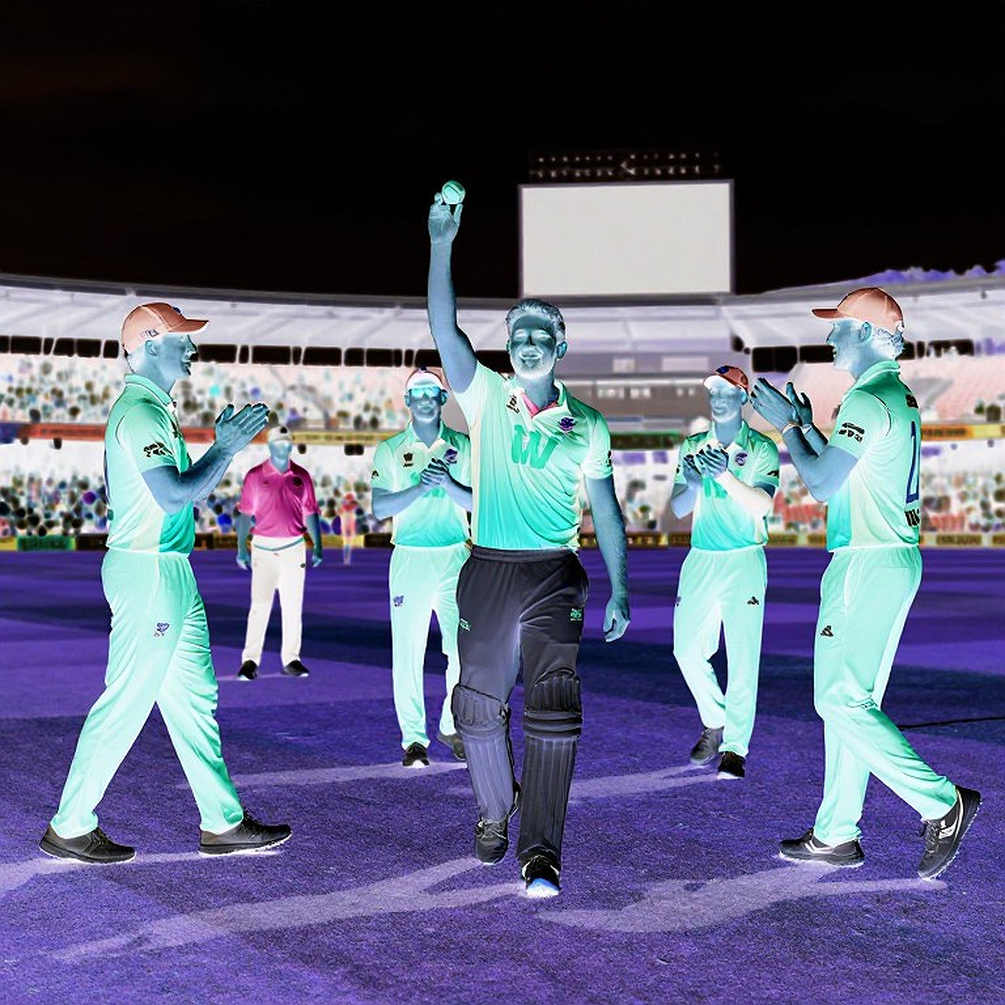
The reason is statistical. When a series ends 16-0, every phase, every window, every cell tilts Australia's way. In a sweep you cannot say whether the gap lived in the powerplay, the middle, or the death, because it appears everywhere and each appearance masks the others. A one-sided win erases phase data. Draws and tight series are what tell you where the gap actually lives. That 8-8 scoreline, which everyone forgot, was technically the most valuable file in the drawer — forgotten precisely because "no result" reads like no information.
I have worked this way since 2026. When a series finishes level, I do not discard it; I treat it as the richest sample available and open it up.
What 16-0 says, and what it does not
A 16-0 sweep on home soil is an unambiguous statement and I will not soften it. Australia won all seven matches in January 2026, won the Test at the MCG, and never wobbled. It means that in that month, Australia's weakest phase was still better than England's strongest. That is evidence of intensity, and dressing it up as anything else would be dishonest.
But it is not a map of the gap. It is one series, seven matches, one home condition, one Test, in a calendar where England did not host. I watched that MCG Test from Chennai before a morning shift, and what was on the screen was not merely one-sided — Australia's bowling had such rhythm that England's batters never had time to choose a shot.
Still, my threshold holds. Thirty matches or three hundred balls. Seven matches sit far below it. A large sample is not wisdom, but it is a better witness; seven matches are not a witness, they are a photograph. You cannot deduce a foundation from a photograph.
The domestic-structure ledger
This is the part the source only gestures at. Australia launched the WBBL in 2026. England launched a six-team Women's Cricket Super League in 2026, shut it down after 2026, and built an eight-team regional structure in 2026 with the Rachael Heyhoe Flint Trophy and the Charlotte Edwards Cup. The Hundred arrived in 2026.
Reading that timeline, what stands out is not the numbers but the continuity. Australia's domestic layer has not broken once in ten years — teams were added, contracts grew, broadcast came, and the structure stayed. England's domestic layer has been rebuilt twice in ten years: once by being closed, once by being reconstructed. Institutional continuity is a variable that never appears in a scorebook, and every scorebook is made from it.
I am not claiming this is the cause. I am claiming it is the unmeasured variable, and that it is measurable. When an analyst says "England have the talent" and stops there, my question is: how many competitive matches did that talent play inside one stable structure across four consecutive seasons? Domestic fixtures per player, contracted players, coaching hours per squad member — none of those numbers enter the gap conversation, and all of them decide who stands upright under pressure.
Finch's exit and the selection ledger
The hardest fact in the source is Jonathan Finch's name. He was the ECB's Women's Cricket Performance Director and now is not. In the podcast he discusses delivering bad news to players, and leaving the ECB.
In sports journalism that gets filed as coverage — a candid interview. To me it is governance data. Delivering bad news is a selection function: who is dropped, when, and how they are told. A performance director's departure, timed to a board announcing a new era, is a turnover signal. I am not offering an opinion; I am noting that leadership changed and the accompanying record of decisions did not.
When CSK left the room, I gave the spreadsheet a chair. The same principle applies. Finch goes, Winfield-Hill will one day leave the microphone, the next performance director arrives and departs. What remains is the selection ledger — who was picked, when, who was cut, and what it produced two years later. When the room empties, the data still testifies.
The Indian denominator
Here is the part a London-based promotion will never raise. The question being asked — why can't England close the gap to Australia — is a 2026 question being posed in 2026.
On November 2, 2026, at Navi Mumbai, India won the Women's World Cup at home, having beaten Australia in the semi-final on the way. The WPL has run since March 2026: five franchises, full broadcast, and now a pool from which India fill their second and third strings. The first time the data was Indian, the sample got bigger. And when the sample grows, old conclusions quietly shrink.
The top tier is no longer two teams. It is four — Australia, India, England, and South Africa, who reached the 2026 final. England sitting third of four is a coordinate. Nineteenth of thirty-two is a coordinate, not a character flaw. The useful question is not the distance to Australia; it is their position in a growing denominator.
Contrarian: the correlation that got promoted to a cause
The unstated conclusion of the source is that strong domestic leagues produce strong national teams — the WBBL explains Australia's dominance, and the ECB's new era is England's medicine. It is an attractive sentence. It is also testable, and it fails.
First test: if the WBBL were the cause of Australia's international dominance, the dominance should begin in 2026. Australia were the strongest women's team in the world well before 2026 — for decades. The WBBL is not the cause of that dominance; it is its institutional and commercial conversion. Reading the causal arrow backwards is the most common error in this debate.
Second test, the severe one: if playing in the league raised national performance, England should have gained most, because England players have played in the WBBL since 2026, in numbers, continuously. Ten years on, the gap is unchanged. A variable that exposed both sides roughly equally for a decade cannot explain the difference. It is correlation, not cause.
Third test, and it points at my own camp. India won a World Cup two years after the WPL launched. That is flattering and convenient for me. India had also reached World Cup finals before the WPL existed, and their ODI ranking was already upward. The WPL added depth — bench, contracts, fitness staff, media — but it is not the sole cause. I will not explain thirteen years of outcome with two years of data, even when the outcome favours me.
One concession, and it is uncomfortable. Winfield-Hill has played recently and sat inside the dressing room. Her testimony runs ahead of my spreadsheet, because she has seen what a ball-by-ball log cannot record — who broke on which day, what was settled in which meeting, which player lost the trust of the room in which phase. The eye test can start the story; the spreadsheet has to finish it. I do not dismiss her read. I ask it for a portion: which phase, how many balls, what sample. If that portion arrives, the eye and the sheet will tell one story. If it does not, we have a good interview and not a conclusion.
And the structural trap needs naming. The WBBL is T20. The England–Australia gap is multi-format. Anyone converting a few WBBL innings into a claim about England's Test capacity is reading the wrong file: different format, different stakes, different sample.
On risk, briefly: there is no scandal, injury, financial crisis, or integrity signal in this source. The risk here is interpretive, not existential — treating a discussion as proof of change, and treating T20 league form as a proxy for international strength. Both are errors of writing, not of cricket.
Takeaway
Five things I will watch, with dates attached now so nobody can accuse me of writing the explanation after the result.
First, the points weighting of the next Ashes cycle. If the system holds, England can win the white-ball legs 5-1 and still not take the urn, and we will run this argument again in 2029. If the weighting changes, someone has finally read the arithmetic.
Second, England's ODI death-overs economy, overs 41-50. That is the cell where strong teams separate from weak ones, and the cell that can be fixed fastest. If it has not come down within twelve months, the new era was a press release.
Third, the WBBL's fourth week. Opening-weekend noise is editorial sentiment; week-four attendance is a number. Launch enthusiasm nearly always regresses, and what does not regress is the actual product.
Fourth, Finch's successor — from inside the pathway or outside it. Continuity or correction, at different prices, and pretending they cost the same is dishonest.
Fifth, the ECB's reform timeline. The 2026 domestic restructure took three to five years to reach the national team. A reform announced in 2026 cannot be judged before 2029. Nor can it be left unjudged in 2029.
The question is not whether England will close the gap. It is whether, on the day they do, we will still have the ledger that shows which phase closed first — or whether we will watch another 16-0 and build a fresh story around it, with the arithmetic again the weakest link in the chain.