
होमChessEuropean Club Cup: Eleven Teams Level After Three Rounds — and a Headline That Doesn't Match the Table
European Club Cup: Eleven Teams Level After Three Rounds — and a Headline That Doesn't Match the Table
**मुख्य उत्तर:** यूरोपियन क्लब कप 2026 में तीन राउंड के बाद ओपन वर्ग में ग्यारह टीमें समान मैच-अंकों पर हैं और महिला वर्ग में दो टीमें अपराजित हैं। चौथे राउंड में SuperChess का सामना Bayegan Pendik से है, जहाँ बोर्ड एक पर अनिश गिरि और नोदिरबेक अब्दुसत्तोरोव के मुकाबले की संभावना बताई गई है। **मुख्य तथ्य:** - ओपन वर्ग: तीन राउंड पूरे, ग्यारह टीमें बराबरी पर; चौथा राउंड 20 अक्टूबर 2026 (मंगलवार) को प्रस्तावित। - महिला वर्ग: दो टीमें तीनों राउंड जीतकर पूरे अंकों पर अपराजित। - चौथा राउंड पेयरिंग: SuperChess बनाम Bayegan Pendik; बोर्ड एक पर गिरि–अब्दुसत्तोरोव संभावित, पुष्ट नहीं। - बीयर शेवा दसवीं सीड; टीम स्विस में मैच-अंक 2-1-0 और बोर्ड-अंक टाईब्रेक। - प्रेस नोट का हेडलाइन 'अंतिम राउंड' कहता है, जबकि तालिका और पेयरिंग चौथा राउंड दर्शाते हैं। **स्रोत:** आयोजक प्रेस नोट (राउंड-3 स्टैंडिंग्स एवं राउंड-4 पेयरिंग), तस्वीर श्रेय जेर्ड डेंसिंग, दिनांक 20 अक्टूबर 2026। समय-नियंत्रण और रेटिंग-आंकड़े स्रोत में नहीं हैं; वे अनुमान के रूप में चिह्नित हैं। **संबंधित प्रश्न-उत्तर:** प्रश्न: क्या गिरि–अब्दुसत्तोरोव का बोर्ड-वन मुकाबला तय है? उत्तर: नहीं, आयोजक ने इसे संभावना कहा है; यह टीम शीट, रंग-आवंटन और टॉप बोर्ड को आराम देने पर निर्भर है। प्रश्न: ग्यारह टीमों का एक ही अंक पर होना असामान्य है? उत्तर: नहीं, 2-1-0 स्कोरिंग वाले छोटे टीम स्विस में तीन राउंड के बाद ऐसा ढेर बनना अपेक्षित अंकगणित है, अराजकता नहीं। प्रश्न: बराबरी होने पर विजेता कैसे तय होगा? उत्तर: बोर्ड-अंक टाईब्रेक से, इसलिए मैच-अंक बराबर दिखने वाली टीमों की असली स्थिति बोर्ड-अंकों के कॉलम में छिपी है।
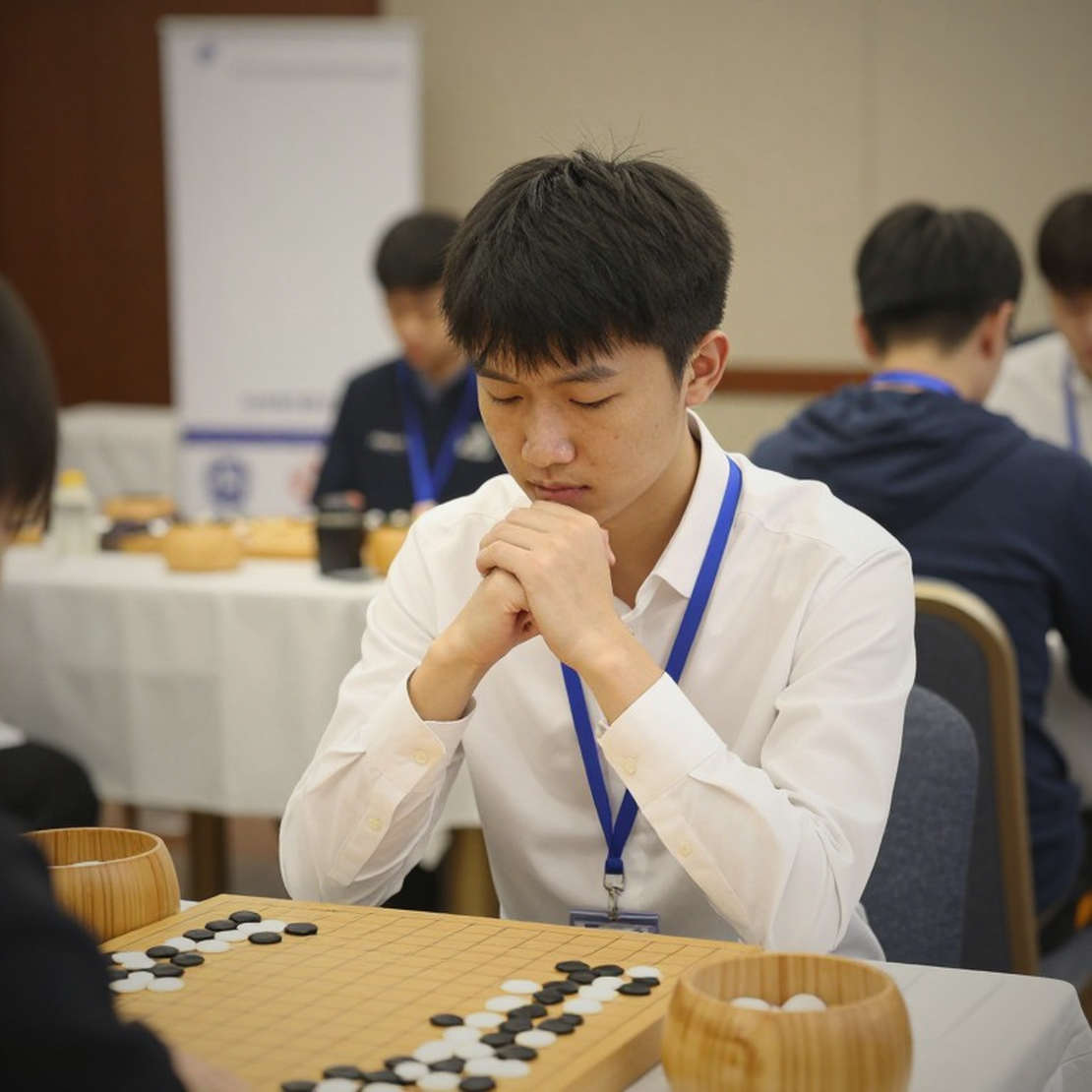
On the morning of Tuesday, 20 October 2026, the press note in my inbox opened with a sentence that said three teams in each section stood level at the top and would meet in the final round. Directly beneath that sentence was the standings table, and the table told a different story: eleven teams tied on match points in the open section, two teams still unbeaten in the women's section, and the round-four pairings still to be played. What the note called the final round was the fourth round. The photograph was credited to Gerd Densing, a name common in specialist chess media — which tells you the material came from an organiser's release, not from a newspaper's reporting.
The first clue was the one nobody thought worth keeping. This time it was not a scoresheet but a pairings list. Thirty years later the notebook still knows the sound that comes from the gap between a table and the report written about it: a number on paper, a sentence above it, and all the reporting in between that nobody did.
The European Club Cup is a continental club championship, and it sits outside the World Championship qualification cycle. That means there is no rating pressure of the kind that governs a Grand Prix or a Candidates, and no direct qualification at stake. What exists instead is the clubs' own arithmetic — match points, board points, and the economy standing behind them, in which teams buy players for their top boards, pay appearance fees, and sometimes carry the whole package of travel and support staff. The club-player relationship here is commercial, not developmental. This has to be understood before any technical reading, because it determines the mood in which a player sits down at the board.
The format is a team Swiss: match points on a 2-1-0 basis, two for a win, one for a draw, none for a loss, with board points as the tiebreak. That small-looking arrangement changes the temperament of the entire event. A team that wins a match 4-2 and a team that wins 6-0 both receive two match points; the difference accumulates in the board-points column, and that column will decide the title. A reader who watches only match points does not know, even after three rounds, who is actually ahead.
The time control at an event of this type is standard classical — roughly 90 minutes for forty moves, then 30 minutes with a 30-second increment. That is my inference, not something the organiser's note stated, but one conclusion from it is firm: at this pace the risk of a time-trouble blunder is low. The risk is the other kind — the match-management short draw, in which a player closes the board quickly not out of fear of losing but in the team's interest.
On strength, exactly one structural datum was available: Beer Sheva is the tenth seed. Everything else is missing. No player rating, no team average, no board result, no move sequence, no opening. A journalist who tries to extract opening innovation or technical trends from this material will write fiction, not reporting. In forty years I have kept one rule: a document with no games in it does not get a single word about games out of me.
The table, though, is itself a document, and it can be read. Eleven teams on the same match points after three rounds is not chaos; it is arithmetic. Under 2-1-0, the possible scores after three rounds are six, five, four, three, two, one and zero. The combinations of wins and draws that produce six are limited, so every team that has won all three matches lands in the same box. Eleven teams sharing one score is evidence that the field is deep and even from top to bottom — a sign of a healthy competition, and also a sign that the pack will be cut violently over the next two rounds.
This is where the point I have been writing about for years belongs. Heatmaps and ranking tables have become the new art of prediction, and they hide a player's real role. The club cup table does exactly that. Behind a 6-0 there may be no colossal performance on board one at all, only an ordinary win on board five, because in early rounds the opponent on boards two and three can be more than two hundred points weaker. The table shows the team's name; it does not show the weight carried by each board.
In round four, SuperChess face Bayegan Pendik. The organiser's note added that a battle between Anish Giri and Nodirbek Abdusattorov is expected on the top board. Two things must be recorded at once. First, it is a possibility, not a confirmation — team sheets, colour allocation and a club's habit of resting its top board can all change it. Second, the note never says which player represents which club. Two names, two clubs, and nobody tied the rope between them. That is a reporting failure, and I will call it one before moving on.
What we do have is stylistic. Giri's identity is positional, low-variance, preparation-heavy chess; Abdusattorov's is dynamic, high-variance, calculation-driven chess. When these two types meet, two paths usually open — a long manoeuvring game, or a sharp theoretical line deliberately chosen by the younger player to force imbalance. That reading comes from general chess knowledge, not from any game in this event, and should be read as such.
The real technical shift comes from the team-match structure. Where match points are primary and board points the tiebreak, a draw on board one is frequently an acceptable outcome for both sides. That structurally raises the draw probability compared with the same pairing in an individual Swiss. If SuperChess and Bayegan Pendik both know the match will be settled on the lower boards, a quiet agreement on board one inside thirty moves should surprise nobody. A spectator who has settled in for that board as the centre of the drama may be disappointed — but that is the logic of the format.
The age-curve asymmetry is the most substantive player-level observation available. Giri was born in 2026, Abdusattorov in 2026 — roughly thirty-two against twenty-two in October 2026. Those birth years are general knowledge, not stated in the material. On the modern age curve, the twenty-two-year-old is in the steepest improvement band while the thirty-two-year-old is at or just past the classical peak zone. That produces an inference that Abdusattorov is the likelier long-run rating riser and Giri the likelier rating-stable name — an inference, not a forecast.
And here I stop. Declaring a twenty-two-year-old the next Vishy after one good club event would contradict a career built on the premise that a scoreline is the least interesting document in the room. I do not have a single move, a single result, a single rating from this tournament for this player. The day they arrive, I will write.
One rating-milestone warning should be filed, and filed with the same honesty I bring to checking a 2026 state championship entry list against AICF records. If Abdusattorov is in the 2760s, a strong club event could push him toward a round-number threshold. But there is no live-rating data in this material. So the line goes out as a note, not a number: data pending verification.
There is another structural point that club-cup reporting almost always omits. In a club match, a player's raw score is not a reliable measure of form, because the spread of opponent strength on boards two and three in early rounds is very wide. This is why individual scores at the European Club Cup systematically overstate form relative to an elite round-robin. Any agent citing those scores at contract time should know it.
One editorial signal is worth logging. The photograph was of Abdusattorov. That is not a strength datum; it is a framing datum — the organisers are signalling who they believe is the face of the round. Twenty years ago Indian desks made exactly these decisions, and my archive began because of them.
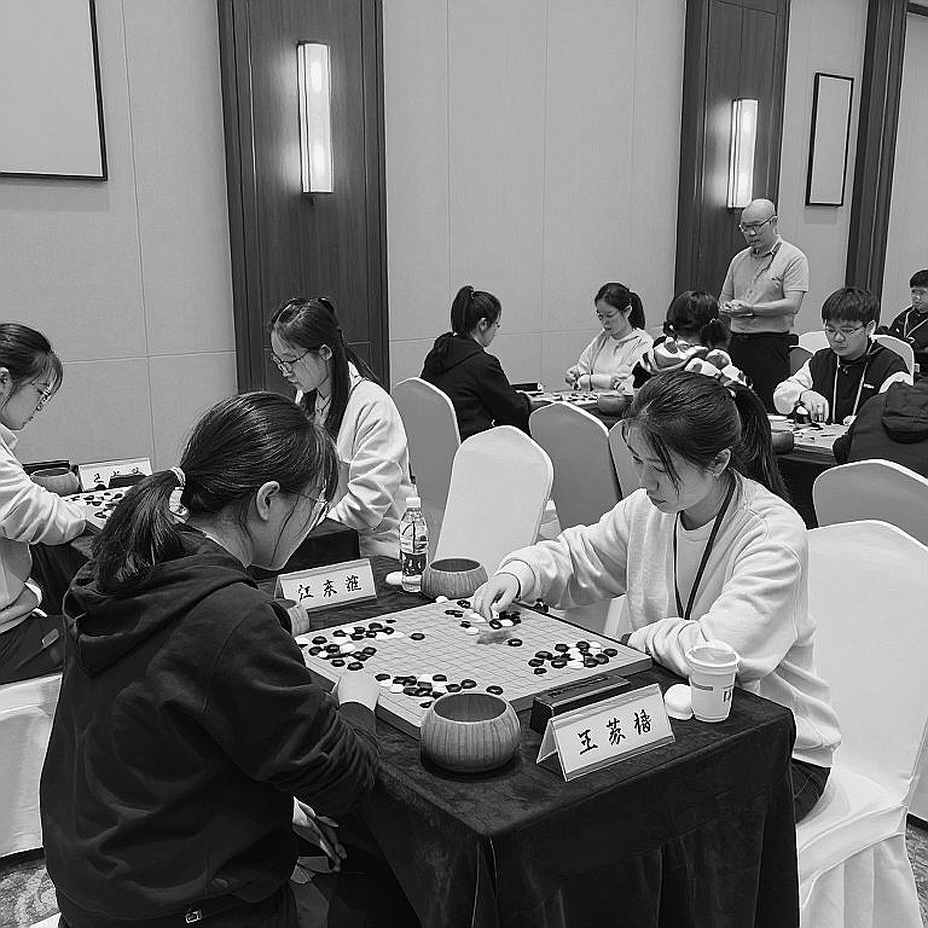
Now the women's section. Two teams unbeaten after three rounds, on full points. Beyond that, this material contains nothing — no names, no board points, no pairings. That is the most jarring fact in this entire report. For the open section there is a list of eleven teams, a round-four fixture, a projected board-one pairing. For the women's section there are two sentences. This is not coincidence. Women's club chess is where the patronage economy is most visible: which club places which woman grandmaster on board one, who receives an appearance fee, who receives only travel and lodging, and who receives nothing. If those three questions are absent from the press note, the note is incomplete.
I think of Tirana in 2026, where I was the only Indian print journalist present and Hou Yifan beat Humpy 5.5-2.5. I filed 1,800 words a day while Indian outlets ran four paragraphs of agency copy. Back in Ahmedabad I drafted a book proposal on the women's game; eleven publishers returned it, and one wrote that it was a Humpy story, not a chess story. Those rejection letters still sit at the front of the manuscript, and every time a press note disposes of the women's section in two lines, I remember the envelope.
I read Budapest 2026's women's team gold not as a feel-good item but as an accounting — what was owed, and when it was paid. The same lens applies here. Two teams are unbeaten; the question is not how good they are, but who paid for them to get there and who entered it in the record.
Now the part that is the spine of this report. The headline chose a story of three co-leaders; the table held eleven teams. That is not a single editorial slip, it is a genre. Competition reporting has an old habit of compressing a story into three names, because three can be understood and eleven cannot. Three names make a narrative; eleven teams make a table. The table is the truth, and the narrative is plaster laid over it.
The second error attached to it is calling an eleven-team tie an open race or a drama. It is not drama, it is arithmetic — under 2-1-0 a pile-up of this kind after three rounds is expected. The real signal is not in match points but in the board-points column that never reaches a headline. A team that has won all three matches 4.5-1.5 and a team that has won 3.5-2.5 both show six points and will not finish level.
The third error is the costliest. The board-one confrontation being sold as the main attraction is often the least decisive board in this format. Matches are settled on the lower boards, where the gap is clear and the draw is less acceptable. A reader who came only for Giri-Abdusattorov may leave without having seen the match actually turn.
The fourth error is the old habit my beat exists to break — filing the women's section as a line appended to the men's story. Two unbeaten teams are not sidebar material. They are as much the news as eleven teams in the open section; it is just that covering them requires someone to do the work of extracting board points, which the press note does not hand over for free.
One thing in all this is certain: round four will break the pile. Some of the eleven will play each other, some will drop down, and by round five the table will split into two or three clear tiers. What survives is the board-points column, and that will decide who is close to the title. For the next entry in my notebook I need three things: the actual team sheet for SuperChess-Bayegan Pendik, the board points in both sections, and the names of the two unbeaten women's teams. None of the three exists yet. The day they do, this report will be complete — and until then I will keep this table the way I have kept them since 2026: as evidence, not as elegy.
संबंधित खिलाड़ी
अनुशंसित
Packaging the Scandinavian in Sixty Minutes: Carlsen's Name Is There, the Data Isn't2026-10-23
108 Teams, 22 Women's Teams and One 2715 Average: The European Club Cup Ledger in Budva2026-10-23
Wesley So Beats Fabiano Caruana in Tiebreak, Wins Fourth US Chess Championship Title2026-10-24
A FIDE President in the Headline, FRITZ 20 in the Body: Post-Mortem of a Chess News Item2026-10-23
Novy Bor, SuperChess, and a 2026 Scotch advert: two different stories on one page2026-10-24
अनुशंसित
Sixty Minutes for the Najdorf: Five Lines, an Undated Review, and the Question Nobody Asked2026-10-24
The Budva Ledger: A 2715 Average, a Field of 108, and the Column With Only 22 Names2026-10-24
108 Teams, 22 Women's Teams and One 2715 Average: The European Club Cup Ledger in Budva2026-10-23
Najdorf on the Label, Elephant in the Box: Auditing a 60-Minute Chess Course2026-10-24
Wesley So Beats Fabiano Caruana in Tiebreak, Wins Fourth US Chess Championship Title2026-10-24
अनुशंसित
The Turlov Headline Fails Its Own Ledger: Wrong President, Wrong Body, No Numbers2026-10-23
European Club Cup: Eleven Teams Level After Three Rounds — and a Headline That Doesn't Match the Table2026-10-23
The Budva Ledger: A 2715 Average, a Field of 108, and the Column With Only 22 Names2026-10-24
Packaging the Scandinavian in Sixty Minutes: Carlsen's Name Is There, the Data Isn't2026-10-23
Sixty Minutes of Scandinavian, a Borrowed Name, and a Title Missing From the Headline2026-10-23